

Most people entering the restaurant business have heard the grim statistic: nine out of ten restaurants fail in their first year. That number gets repeated so often it feels like fact, but it isn't. Actual failure rates sit closer to 17 to 30 percent in year one, which is sobering but far from a death sentence. The real story is that restaurants fail not because the odds are stacked against them by nature, but because most operators go in without the systems, financial clarity, and strategic planning that separate thriving businesses from closed ones. A restaurant startup consultant brings exactly those tools to the table, and this article walks you through what that partnership looks like from concept to launch and well beyond.
Table of Contents
- What does a restaurant startup consultant actually do?
- Restaurant startup costs and the financial reality
- Strategic planning: Avoiding the most costly startup mistakes
- Operational benchmarks: Setting targets and measuring success
- Choosing the right consultant: What to look for and when to hire
- Why most restaurant guides still miss the mark
- How Wits' End can help you launch and grow successfully
- Frequently asked questions
Key Takeaways
| Point | Details |
|---|---|
| Startup costs often underestimated | Most first-timers under-budget by 20-35% and should prepare at least 3 months’ fixed costs in reserve. |
| Consultant-led planning cuts risk | SWOT analysis, feasibility audits, and financial modeling can prevent costly mistakes, especially with location. |
| Benchmarks drive performance | Tracking COGS, labor, and prime cost below 65% is essential for profitability and survival. |
| Timing matters for consulting | Hiring a consultant before launching or during high-stakes changes maximizes their impact. |
What does a restaurant startup consultant actually do?
Now that we've challenged the failure rate myth, let's get specific about what a restaurant startup consultant actually does on the ground, because it's far more than reviewing a business plan and wishing you luck.
A consultant's work typically runs across several distinct phases. The first is concept validation, where they assess whether your idea is viable in your target market, at your price point, and for your intended guest. This involves a real market study, not just a gut check. They look at neighborhood demographics, competitor density, spending patterns, and whether there's genuine demand for what you want to build.
From there, the work moves into feasibility and financial modeling. A good consultant builds out projected P&L statements (profit and loss reports showing revenue against all costs), cash flow forecasts, and break-even timelines based on real benchmarks rather than optimistic guesses. This is where many first-time operators get their first honest look at the numbers.
The operational setup phase follows, covering vendor sourcing, kitchen workflow, staffing structure, and technology choices like POS systems and reservation platforms. Leading consulting firms such as Synergy Restaurant Consultants, TRG, and Aaron Allen and Associates each specialize in different parts of this spectrum, from menu engineering and operations to brand benchmarking and launch discipline. David Scott Peters, widely cited in the industry, is known specifically for profit-first systems that keep operators accountable from day one.
Consultants also support brand development, hiring and training, and launch execution. Many stay engaged post-opening to monitor performance against targets, troubleshoot early issues, and guide the optimization of your training programs and daily operations. The breadth of their role depends on your needs, but the through-line is always the same: they build frameworks so you're not improvising.
Pro Tip: The best time to bring in a consultant is before you sign a lease, not after. The earlier they're involved, the more costly decisions they can help you avoid, and the stronger your foundation will be on opening day.
Restaurant startup costs and the financial reality
Understanding the consultant's role makes it clear why financial realism is non-negotiable. Let's look at just how much it costs to get started and where new operators most often get into trouble.
The numbers are higher than most people expect. Median startup costs for an independent full-service restaurant in the US range from $275,000 to $425,000. First-time operators routinely underestimate their total investment by 20 to 35 percent, often because they budget for equipment and build-out but forget pre-opening labor, training costs, marketing, and a cash reserve to cover fixed costs before revenue stabilizes. Industry best practice is to have at least 90 days of fixed costs in reserve before you open your doors.
| Cost Category | Full-Service Restaurant | QSR / Fast Casual |
|---|---|---|
| Build-out and renovation | $100K to $250K | $50K to $150K |
| Equipment and fixtures | $50K to $100K | $30K to $75K |
| Initial food and beverage inventory | $10K to $25K | $5K to $15K |
| Licensing, permits, and legal | $5K to $15K | $3K to $10K |
| Technology and POS systems | $5K to $20K | $5K to $15K |
| Marketing and pre-opening | $10K to $30K | $5K to $20K |
| Cash reserve (90 days fixed costs) | $40K to $80K | $25K to $50K |
"First-time operators consistently underestimate startup budgets by 20 to 35 percent. Build in your reserve before you build out your dining room."
Beyond initial investment, the ongoing financial benchmarks matter just as much. Full-service restaurants operate on net margins of 3 to 5 percent, while QSR and fast-casual concepts can reach 6 to 9 percent. Prime cost, which is the combined total of food cost and labor cost, should stay below 65 percent of revenue for an operation to remain sustainable. Rent should ideally sit between 5 and 8 percent of gross sales.
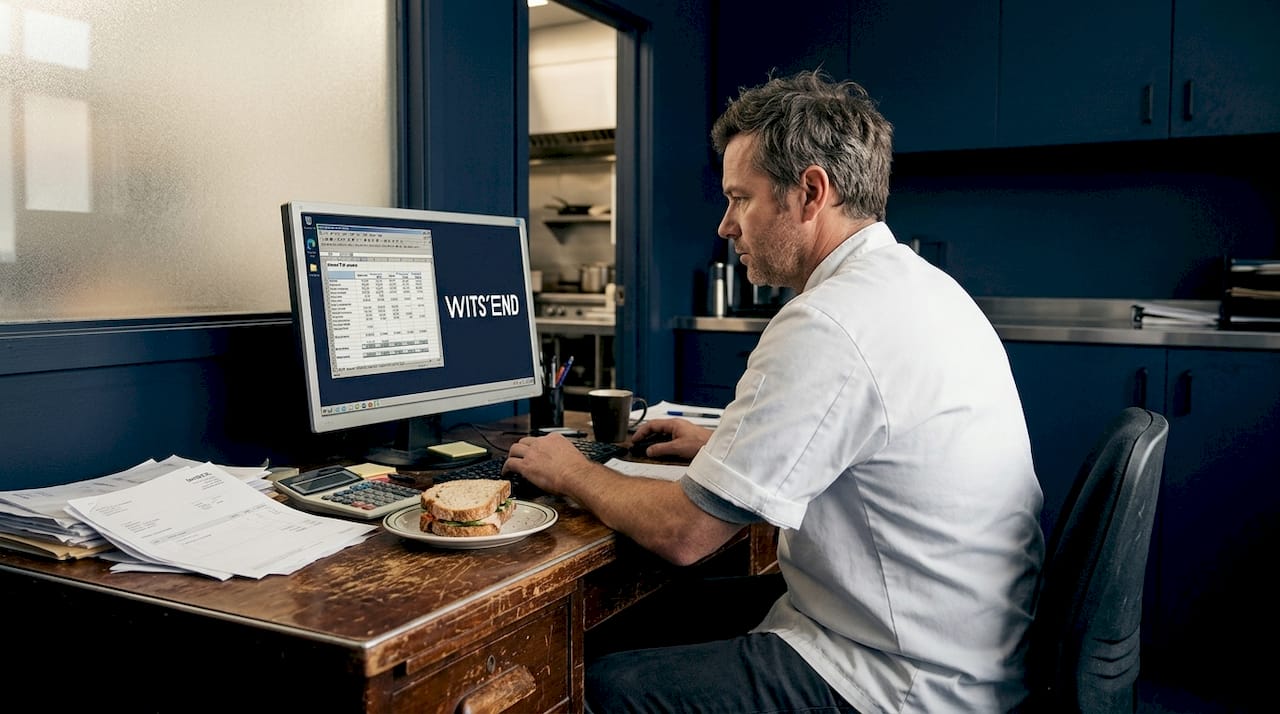
Only 35 percent of restaurants survive past the 10-year mark. That number reflects how many operators never build the financial discipline or the operational consistency to weather slow seasons, unexpected costs, or shifts in local competition. A consultant helps you build those muscles before you need them most. Your brand development services and marketing spend also need to be factored into your financial model from the start, not added as an afterthought once cash flow tightens.
Strategic planning: Avoiding the most costly startup mistakes
With a budget set, the next crucial factor is strategic planning. Here's how a consultant's methods help you avoid missteps that statistics show wreak havoc on first-timers.
The planning tools a consultant uses are not academic exercises. They're decision filters. A SWOT analysis (Strengths, Weaknesses, Opportunities, Threats) conducted before opening forces you to look at real risks like cost escalation, competitor imitation, and seasonal demand swings before they become emergencies. Pre-opening SWOT analysis gives operators a structured way to identify vulnerabilities and address them while there's still time.
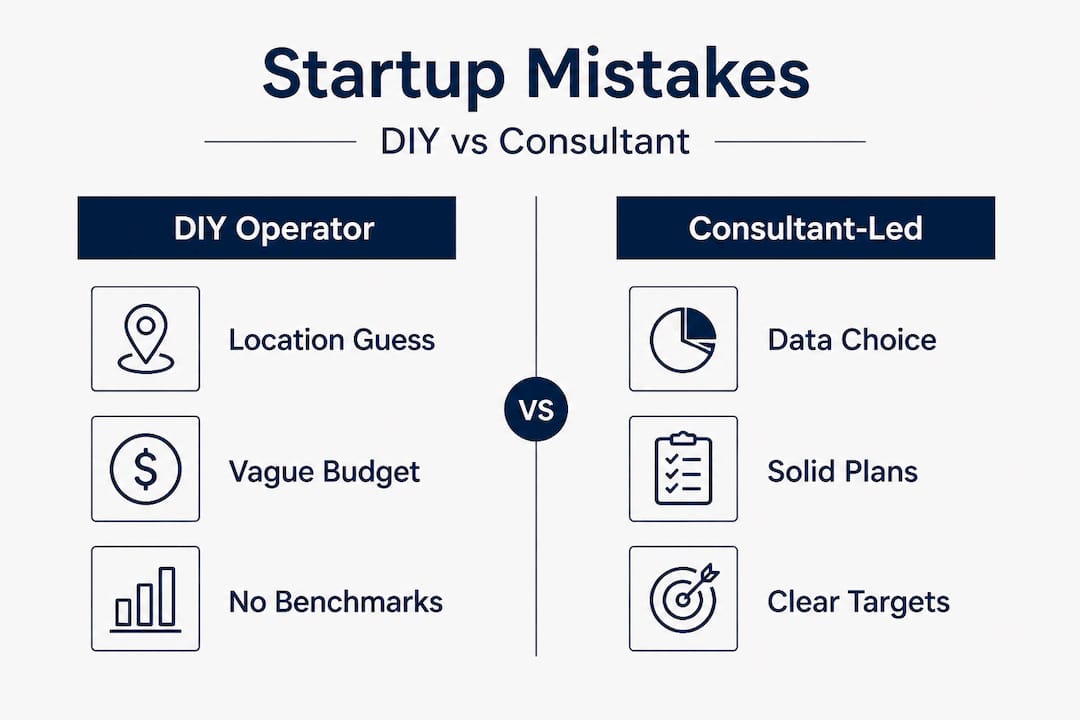
Here's a comparison of what planning looks like with and without a consultant:
| Planning Area | DIY Operator | Consultant-Led Operator |
|---|---|---|
| Location selection | Based on gut feel and price | Feasibility study, traffic analysis, demographic data |
| Financial projections | Optimistic, based on hoped revenue | Conservative, benchmark-driven, stress-tested |
| Competition analysis | Casual review | Formal competitive audit with pricing and positioning data |
| Break-even timeline | Often untracked | Calculated monthly with accountability triggers |
| Cost controls | Reactive (fixed when too high) | Proactive (built into systems from day one) |
One lesson that experienced operators learn the hard way is that location mistakes are nearly irreversible. You can fix a menu. You can retrain a team. You can rebrand. But if you sign a lease in the wrong location, at the wrong rent, for the wrong concept, there's no consultant in the world who can undo that decision without enormous cost. Getting pre-launch planning right is where the real leverage lies.
Even with expert help, first-time operators need 12 to 18 months to build reliable operational systems. That timeline is not a failure; it's reality. What a consultant does is compress the learning curve and reduce the cost of mistakes made during those early months. Your analytics and reporting setup from day one means you're tracking the right numbers during that critical window.
Pro Tip: Schedule a pre-launch audit three to four months before opening, or ahead of your peak season. That's when you still have time to course-correct without sacrificing revenue.
Operational benchmarks: Setting targets and measuring success
Once foundational planning is complete, consultants help operators set targets and measure performance. This is often the difference between just surviving and actually thriving.
Benchmarks are the language of operational accountability. Without them, you're managing by feel. With them, every shift and every week tells a story you can act on. The core metrics a consultant will help you track include:
- Food cost percentage: Typically 28 to 35 percent of revenue, depending on your concept
- Labor cost percentage: Varies by service type, but usually 25 to 35 percent of revenue
- Prime cost: The sum of food cost and labor cost; should stay below 65 percent for sustainable operations
- Rent percentage: Target 5 to 8 percent of gross sales
- Net profit margin: 3 to 5 percent for full-service, 6 to 9 percent for QSR and fast-casual
Tracking these benchmarks through a weekly P&L review and an operational dashboard lets you compare your performance against both your own historical data and industry standards. A consultant builds this reporting structure in the early weeks, so accountability is baked into your routine rather than added later when problems have already compounded.
The prime cost benchmark deserves special attention. Many operators focus intensely on food cost while underestimating how quickly labor costs creep up, especially in the opening months when scheduling is inconsistent and training takes extra time. Keeping prime cost below 65 percent requires discipline on both sides simultaneously. It's not a one-time fix; it's a weekly practice. Your operational optimization work should always connect back to these numbers.
When you hit your benchmarks consistently, you're not just surviving. You're building the track record that supports future growth, financing, and expansion conversations.
Choosing the right consultant: What to look for and when to hire
With an understanding of the impact consultants bring, here's how to vet and select the right one for your restaurant's unique journey.
-
Define your specific need. Are you pre-opening and need feasibility support? Are you post-launch and struggling with cost controls? Do you need a menu overhaul or an operational audit? Knowing what you need makes the search far more focused and productive.
-
Research track record and segment experience. A consultant who spent their career in fine dining may not be the right fit for a fast-casual concept. Ask for case studies in your specific segment, price point, and market type.
-
Demand clear deliverables and timelines. A strong consultant will tell you exactly what you'll receive, when you'll receive it, and what success looks like. Vague proposals are a red flag.
-
Check references and ask for ROI examples. Request introductions to past clients. Ask those clients directly whether the engagement paid for itself, and how quickly.
-
Be skeptical of guarantees. No legitimate consultant can guarantee revenue targets or specific sales outcomes. What they can guarantee is a structured, evidence-based process.
One thing worth noting is that non-local consultants often bring broader industry insight precisely because they've worked across multiple markets. They bring benchmarks, patterns, and best practices that a locally focused advisor may not have encountered. Don't rule out a firm simply because they're not based in your city. Broad perspective paired with your local knowledge is a powerful combination.
The timing of when you hire also matters. Bringing a consultant in during a crisis is always more expensive and less effective than engaging one before the pressure hits. Whether it's brand design and development at the concept stage or operational troubleshooting before a slow season, earlier engagement consistently yields better results.
Pro Tip: Before signing any consulting agreement, ask for a sample deliverable from a comparable past engagement. Seeing their actual work tells you far more than a sales conversation ever will.
Why most restaurant guides still miss the mark
Let's step back and challenge the "just work harder" narrative that saturates most restaurant advice online, because it actively sets operators up for unnecessary risk.
Most guides tell you to perfect your recipe, build a following on social media, and grind through the first year. That advice isn't wrong exactly, but it's dangerously incomplete. What it misses is that chains outperform independents by a wide margin: roughly 20 percent of chain locations fail within 18 months, compared to 65 percent of independents over the same period. That gap isn't explained by better food or harder-working owners. It's explained by systems.
Chains have standardized training, cost control protocols, supply chain agreements, and performance dashboards that run whether the owner is in the building or not. Independent operators who build those same systems into their businesses, even informally, perform at a fundamentally different level than those who rely on passion and effort alone.
The uncomfortable truth is that surviving your slow months matters as much as thriving in your peak season. Most operators pour energy into grand opening momentum and summer revenue, then run into serious cash flow problems when January arrives and covers drop by 40 percent. Conservative cash reserves, a prime cost below 65 percent, and a clear break-even understanding are what keep you open through those months. Knowing how to increase guest count during slow periods is part of that equation, but it only works when your cost structure is already healthy enough to absorb the variability.
Operational discipline, honest data, and the humility to ask for help early are the real differentiators. That's what the best consultants build with you.
How Wits' End can help you launch and grow successfully
If you're ready to give your restaurant the best chance at success, here's how Wits' End can partner with you for proven guidance and growth.
At Wits' End, we work with restaurant operators at every stage, from the first concept sketch to years of running service. Our team has done the work themselves, which means we recommend what we know works, not what sounds good in a proposal. Whether you need brand design and development to build a concept that resonates, task force support to staff and execute a launch, or ongoing business optimization to sharpen your margins and build accountability into daily operations, we have the frameworks, the experience, and the hands-on approach to match. Reach out to start a conversation about where your restaurant is headed and how we can help you get there.
Frequently asked questions
How much does it cost to hire a restaurant startup consultant?
Fees typically range from $100 to $500 or more per hour depending on experience and scope, with project-based engagements often running a small percentage of your total startup budget for end-to-end support.
When should I hire a consultant for my restaurant?
The most effective time to hire is well before opening or before making major changes, though a consultant can also step in to troubleshoot or pivot an existing operation that's underperforming.
What are restaurant startup failure rates in the US?
About 17 to 30 percent of new restaurants close within their first year, and roughly 50 percent within five years, which is far lower than the widely repeated 90 percent myth.
Can a consultant help with ongoing restaurant operations, not just startups?
Yes, many consultants specialize in operational audits and turnarounds as well as menu innovation and scaling, making them valuable partners well beyond the opening phase.
Recommended
- Hotel and Restaurant Business Optimization — Wits End
- How to Increase Guest Count and Revenue with Apps like inKind — Wits End
- Hotel and Restaurant Training Programs — Wits End
- Brand Design & Development — Wits End
- Second-Generation Restaurant Spaces: The Smartest Way to Launch Your Concept | PepperLot Blog
- How to Lease Restaurant Space: Step-by-Step Guide