
A pre-shift meeting is a short, standing huddle where the manager aligns front-of-house and back-of-house on what's different about today's service before the doors open. Memorize this formula: five minutes, one focus, three facts (specials, reservations, safety). Cover these essentials every time:
- FOH/BOH alignment on tonight's floor plan and pace
- Menu 86s and specials, said out loud, not just posted
- VIPs, allergies, and reservation notes that change how a table gets served
Key Takeaways
A five-minute pre-shift built around one focus, specials, reservations, and safety reduces service errors and lifts specials sales more reliably than a longer, unstructured meeting.
| Point | Details |
|---|---|
| Keep it to five minutes | Cover only what changed since the last shift; save training for a separate weekly session. |
| Use a fixed ten-item checklist | Say the same phrasing every night so staff hear one consistent message, not a rotating script. |
| Prepare on a timed schedule | Pull reservations, check 86s, and pick the one focus in the fifteen minutes before doors. |
| Rotate leaders for engagement | Swapping who runs the huddle and opening with a quick win keeps the team from tuning out. |
| Get help implementing it | Wits' End Solutions trains shift leads and audits early weeks to confirm the format is working. |
Table of Contents
- What Is a Pre-Shift Meeting Restaurant Teams Rely On, and Why Run One Daily?
- How Long Should a Pre-Shift Meeting Be, and Who Needs to Be There?
- What Should Every Pre-Shift Checklist Cover?
- How Do You Prepare Talking Points Before Service?
- How Do You Keep a Pre-Shift Meeting Engaging?
- What Does a Complete Pre-Shift Script Sound Like?
- What Mistakes Wreck a Pre-Shift Meeting?
- Why Wits' End Trains Teams on a Seven-Minute Huddle
- How Wits' End Solutions Helps You Roll Out Pre-Shifts That Stick
- Sources
What Is a Pre-Shift Meeting Restaurant Teams Rely On, and Why Run One Daily?
Skipping the huddle costs you more than it saves. Restaurants that run a consistent daily briefing see better alignment between the kitchen and the floor, fewer wrong-order tickets, and higher sell-through on specials because everyone actually knows what they're pushing. Hospitality operations guides consistently link this daily ritual to reduced miscommunication across FOH and BOH and steadier service overall.
Shift changes are a known weak point. Operations research on shift handovers points to the changeover moment itself as the highest-risk window for dropped information, whether that's a forgotten allergy note or a table that never got told the kitchen was out of halibut. Structured handovers with a designated leader and written backup close most of that gap.
The stakes are concrete. A server who doesn't know the salmon is 86'd sells it anyway, the ticket bounces back from the kitchen, the table waits an extra ten minutes, and the tip suffers. That single miss ripples into slower turns for every other table that server is running that night.
Run a huddle, and you catch that before it happens:
- Fewer comped dishes and kitchen returns
- Higher specials and upsell conversion
- Faster table turns because fewer orders get sent back
- A visible morale lift when staff hear wins from the last shift, not just problems
How Long Should a Pre-Shift Meeting Be, and Who Needs to Be There?
Five minutes is the target. Sideworks' research on restaurant briefings backs a tight five-minute format that covers only what changed since the last service, nothing more. A range of five to fifteen minutes is acceptable for a fuller team meeting or a Friday dinner rush with a packed reservation book. Reserve thirty minutes for genuinely unusual circumstances, like a new menu launch or a major staffing change, and treat that as a one-time exception, not a new normal.
Run it before every service, lunch and dinner both. Save deeper training, skill-building, or performance conversations for a separate weekly meeting; the daily huddle isn't the place for it.
- The shift manager or GM leads; the chef or sous chef speaks for the kitchen
- All FOH staff on the floor that shift should attend, plus a kitchen representative
- Late arrivals catch up via a one-line recap on the pass, not a repeat of the meeting
Pro Tip: Set a hard start time and begin without stragglers. The first time you wait for someone, you've taught the whole team that "on time" is optional.
What Should Every Pre-Shift Checklist Cover?
A pre-shift meeting restaurant staff will actually retain needs a fixed order, said the same way every night. Here's a ten-item checklist you can print or paste into a shift note, with a sample line for each:
- Energy check. "Alright team, how's everyone feeling tonight?"
- Today's one focus. "Tonight's one focus: get dessert orders in before the check drops."
- Reservations and VIPs. "Table 12 is a regular, table 6 has a nut allergy."
- Specials. "Special tonight is the seared scallops, $34, pair it with the Sancerre."
- 86'd items. "We're out of the ribeye and the mushroom risotto. Say it that way, don't improvise."
- Upsell push. "Lead with the oyster starter tonight, it's a high-margin item we need to move."
- Station assignments. "Sam and Jordan on the patio, Priya on the bar section."
- Equipment and logistics notes. "The dish pit is running slow, so bus proactively."
- Safety or sanitation reminder. "Wet floor by the service station, mats are down."
- Praise and quick wins. "Last night's team beat our wine sales target, nice work."
Keep this list in one consistent place, whether that's a shared digital doc, a pass-board photo, or a printed sheet clipped near the host stand. Consistency in format matters more than the medium. Our restaurant operations checklist templates give you a ready structure if you want something more formal than a sticky note. Anyone who clocks in late reads the posted sheet and asks one clarifying question, rather than pulling the manager aside mid-huddle.
How Do You Prepare Talking Points Before Service?
The manager, or a delegated shift lead, owns the prep. In busier kitchens, the sous chef pulls the 86 list and the host or reservations lead flags VIPs and allergies, so no single person is scrambling five minutes before doors.
Here's a timed prep sequence that works for most services:
- 15 minutes before: Pull the reservation book and flag VIPs, large parties, and allergy notes as outlined in guest communication best practices.
- 10 minutes before: Check the kitchen board for 86'd items and confirm tonight's specials with the chef.
- 7 minutes before: Pick the one focus for the shift, based on what went wrong or right last service.
- 5 minutes before: Gather the team in the same spot, same time, every shift.
Operations research on shift handovers in other industries backs pairing this prep with a quick floor or kitchen walk-through right before the huddle, so what you say matches what's actually happening on the line.
Pro Tip: Log the one focus and any recurring issues in a shared shift note. A pattern that shows up three nights running is a training issue, not a pre-shift topic.
How Do You Keep a Pre-Shift Meeting Engaging?
Tune-out kills the value of a daily huddle fast. A few tactics keep the room alert without adding time. Rotate who leads the meeting occasionally, since Tableo's research on pre-shift briefings found that rotating leaders and including a quick win raises engagement noticeably. Try a one-question quiz on the night's specials, or a fast taste sample so servers can describe a dish instead of reading it off a card.
Avoid these engagement killers:
- Lecturing instead of briefing
- Covering details that only apply to one section or one server
- Correcting someone's performance in front of the whole team
Pro Tip: Stand in the same spot, same time, every shift, and ban phones during the huddle. The ritual sticks when the format never changes.
What Does a Complete Pre-Shift Script Sound Like?
Here's a seven-minute script Wits' End Solutions uses when standing up new restaurant openings for clients. Copy it into your shift notes and adjust the names.
- Opening (0:00 to 0:30): Manager: "Alright team, gather up. How's everyone feeling tonight?"
- Numbers and reservations (0:30 to 2:00): Host or manager: "We're at 85 covers tonight, three large parties, table 14 is a regular's anniversary."
- Specials and 86s (2:00 to 3:30): Chef or sous chef: "Special is the branzino, $32. We're out of the lamb chop and the beet salad."
- Tonight's one focus (3:30 to 4:30): Manager: "Focus tonight is dessert timing, get the order in before dropping the check."
- Station assignments (4:30 to 5:30): Manager: "Sam and Jordan on the patio, Priya on the bar section."
- Open Q&A (5:30 to 6:30): Manager: "Any questions before we hit the floor?"
- Close (6:30 to 7:00): Manager: "Let's have a great one. Positive attitudes, big smiles."
A structured, repeatable format with the same sections in the same order every night is what makes a pre-shift work across different managers and different locations, not any single clever line inside it.
To shorten to four minutes, drop the open Q&A and fold station assignments into the specials segment. To stretch to ten, add a brief training tip or a guest-feedback recap at the close.
What Mistakes Wreck a Pre-Shift Meeting?
A few habits derail the huddle fast, and each one has a quick fix.
- Starting late. Set a hard start time and begin without stragglers.
- Reading off a printed sheet in a monotone. Talk to the team, use the sheet as a memory aid only.
- Covering items that apply to one server. Pull that aside for after the meeting.
- Disciplining someone publicly. Move it to a private, separate conversation.
- Never writing anything down. Log the focus and any recurring issue in a shared note so patterns surface.
If a topic keeps resurfacing night after night, it belongs in a training session or a one-on-one, not the daily huddle.
Why Wits' End Trains Teams on a Seven-Minute Huddle
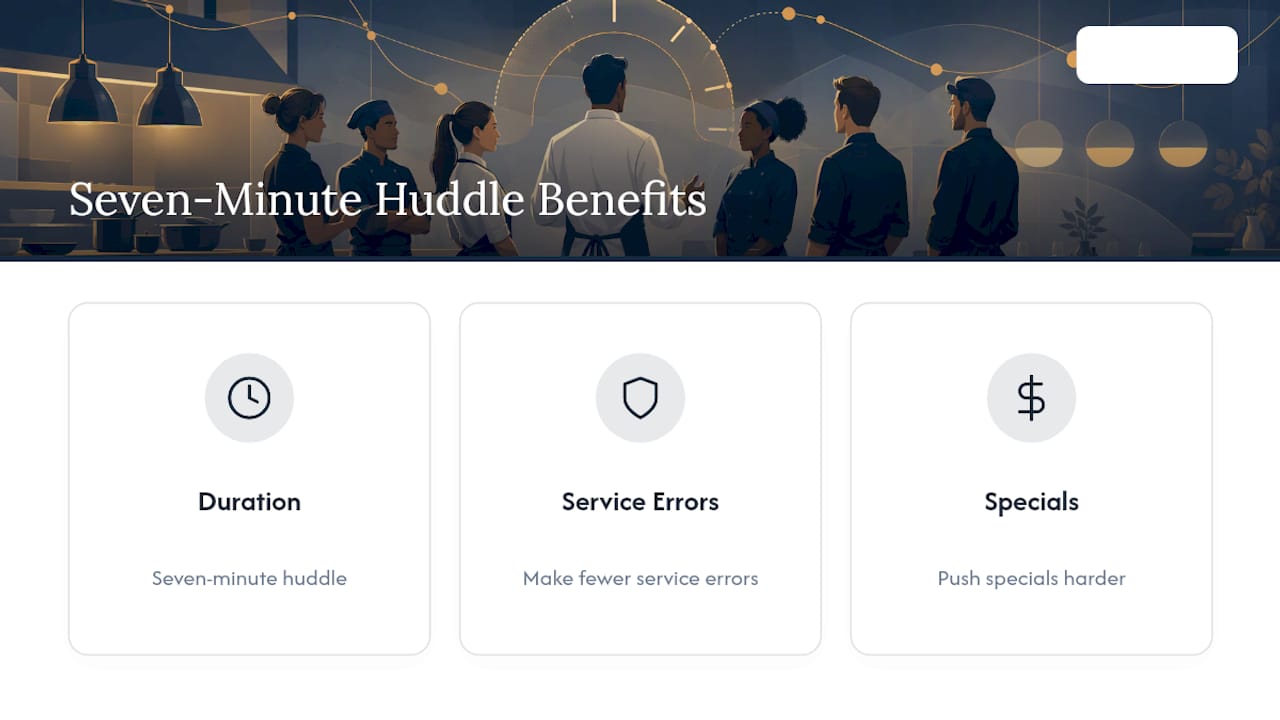
Running pre-shifts across client openings and turnarounds has shown us the same pattern repeatedly: teams that get a tight, structured huddle make fewer service errors and push specials harder than teams left to improvise...
How Wits' End Solutions Helps You Roll Out Pre-Shifts That Stick
Building a five-minute format is easy on paper. Getting a team of fifteen servers, three cooks, and a rotating host staff to actually run it the same way every night for six months is the hard part, and that's where most restaurants lose the habit within a few weeks. Wits' End Solutions helps you implement the checklist, train your shift leads to run it without a script, and audit the first several weeks of service to see whether specials sell-through and voided tickets actually move. If you want a structured starting point, our manager and team training programs build the pre-shift habit directly into your onboarding, and you can request a short operational audit through our main services page to see where your current shift handovers are leaking information.
Sources
- How to Build a Pre-Shift Meeting That Actually Works | Sideworks
- How to Lead Better Pre-shift Briefings For Your Restaurant | Tableo
Check your reservation system and kitchen board daily. They're your best source of real talking points, better than any generic script.