
Good food is not enough. That might be the most important thing we can tell you as a restaurant operator, and it’s also the truth most owners resist hearing. Guests decide whether to walk through your door, return after their first visit, and recommend you to friends based on far more than what’s on the plate. Your brand shapes those decisions before a single dish is served. This guide clarifies what restaurant branding actually means, why it has such a direct effect on guest behavior and revenue, and what you can do right now to strengthen yours.
Table of Contents
Key Takeaways
| Point | Details |
|---|---|
| Branding drives loyalty | Consistent branding builds trust and repeat business among guests. |
| Impact goes beyond marketing | Branding shapes long-term perception, while marketing offers short-term boosts. |
| Modern strategies work | Leverage storytelling, social media, and unified guest experiences for stand-out results. |
| Success leaves clues | Study real-world branding wins to avoid common pitfalls and accelerate your own growth. |
What is restaurant branding really about?
To understand why branding is vital, we first need to clarify what it actually includes. A lot of operators confuse branding with marketing, and that confusion costs them. Marketing is what you do to get attention. Branding is what people think and feel when they encounter your business, whether they’ve heard of you before or not.
Your brand includes your visual identity, the name, logo, colors, typography, and photography style you use consistently across every touchpoint. It includes your messaging, the words you use on your menu, your website, your social media, and even how your host greets guests at the door. It includes your story, why you exist, what you believe about food and hospitality, and what makes your place different from the one across the street. And critically, it includes the guest experience itself, from parking to payment.
Here are the core elements every restaurant brand needs to define:
-
Visual identity: Logo, color palette, typefaces, plating style, and photography
-
Voice and messaging: How you write, speak, and communicate your values
-
Guest experience: The physical environment, service style, and emotional tone of every visit
-
Origin story: Why you opened, who you are, and what drives your team
-
Consistency: Delivering the same promise every shift, every table, every channel
“Your brand is not your logo. Your brand is what your guests say about you when you’re not in the room.”
That quote captures something essential. Branding shapes perception before guests taste the food. When someone sees your Instagram, reads your menu online, or walks past your storefront, they’re already forming an opinion. The question is whether you’re guiding that opinion intentionally or leaving it to chance. Operators who invest in brand development essentials early in the process build a foundation that every other decision can stand on.
How branding shapes customer perceptions and behavior
Now that we’ve identified what branding entails, let’s explore why it has such a dramatic impact on your guests. The psychology here is real and well-documented. Humans are visual and emotional decision-makers. When your branding is cohesive and professional, guests read it as a signal of reliability. When it’s inconsistent or unclear, doubt creeps in before they’ve even ordered.
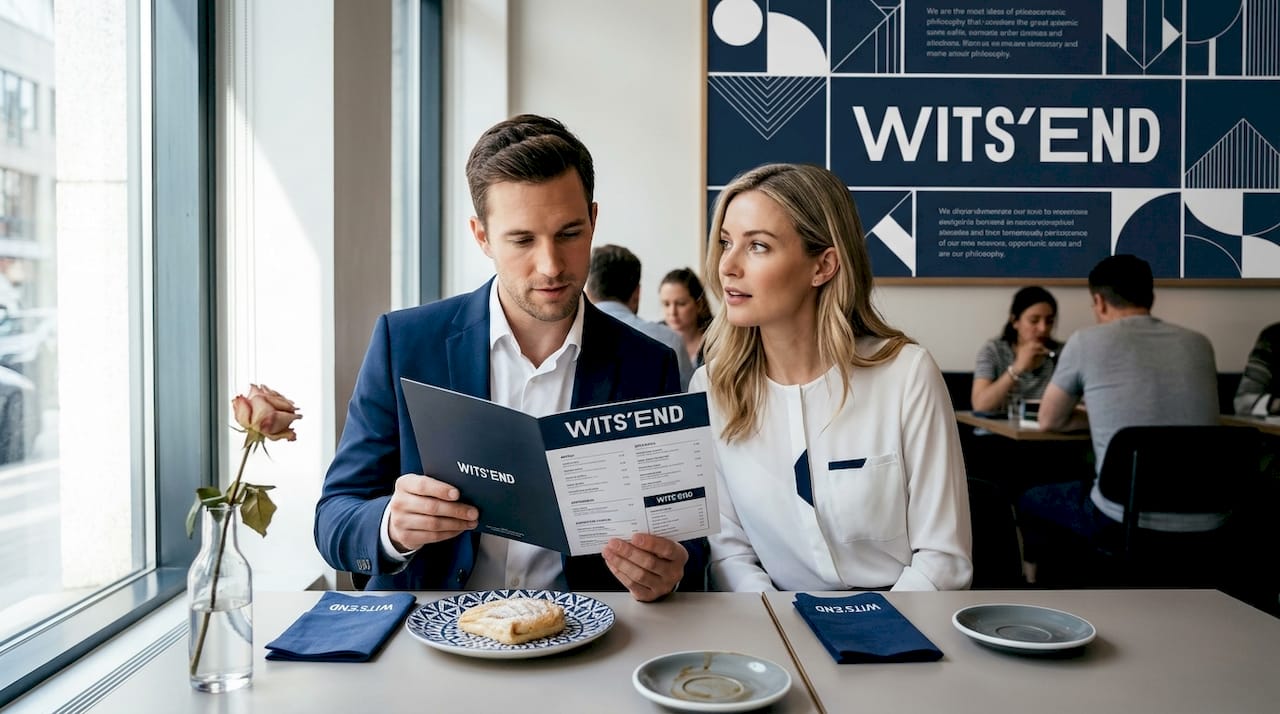
First impressions happen fast. Research consistently shows that people form opinions about a business within seconds of visual contact. Your logo, color choices, and overall aesthetic communicate quality, price point, and personality almost instantly. A warm, earthy palette with handwritten fonts signals something different than a stark, minimalist black-and-white design. Neither is wrong. But both need to be intentional and consistent with what guests will actually experience inside.
| Branding element | Effect on guest behavior | Measurable outcome |
|---|---|---|
| Consistent visual identity | Builds recognition and trust | Higher return visit rates |
| Clear brand story | Creates emotional connection | Stronger word-of-mouth |
| Aligned service style | Reinforces brand promise | Better online reviews |
| Professional photography | Elevates perceived value | Increased average check |
| Staff brand fluency | Delivers consistent experience | Improved guest satisfaction scores |
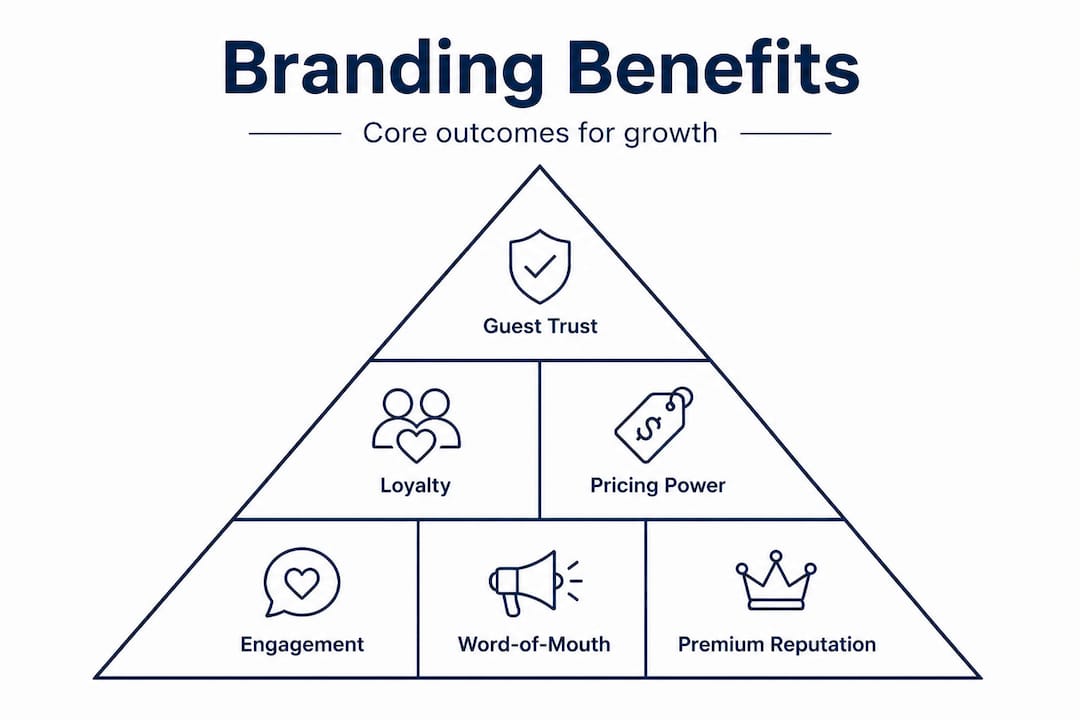
Well-executed branding also drives word-of-mouth in a way that paid advertising simply cannot replicate. When guests feel like they understand what your restaurant stands for and that experience delivers on its promise, they tell people. Consistent brand presentation across platforms can increase revenue by up to 23%, according to industry research. That’s not a marginal gain. That’s a meaningful shift in your P&L.
Pro Tip: Train your front-of-house team to speak your brand story naturally. When a server can explain the inspiration behind a dish or the sourcing philosophy behind your menu, that conversation becomes part of the brand experience and guests remember it.
Branding also gives you pricing power. Restaurants with a clearly defined identity and consistent guest experience can charge more and hold that price. Guests aren’t just buying a meal. They’re buying into an experience, a feeling, and a story. When those elements are strong, upsell strategies tied to branding become natural extensions of the guest journey rather than awkward sales tactics. A well-branded cocktail program, for example, feels like a curated offering. The same drinks at a restaurant with no clear identity just feel like a list.
Real-world impact: Success stories and common pitfalls
Knowing how branding works in theory, it’s critical to see these effects play out in real businesses. The gap between operators who invest in brand clarity and those who don’t shows up directly in guest counts, review scores, and revenue.
Consider a mid-sized neighborhood restaurant that had been operating for six years with steady but stagnant traffic. The food was genuinely excellent. The team was experienced. But the brand was a patchwork of decisions made over time with no unifying vision. The logo was one style, the menu was another, the social media felt like a third restaurant entirely. After a focused rebrand that aligned visuals, messaging, and the guest experience around a clear identity, repeat visit rates climbed significantly within the first quarter. Guests who had visited once and not returned started coming back. New guests arrived already knowing what to expect because the brand communicated it clearly before they walked in. You can explore branding success case studies to see how this process works across different restaurant concepts.
The opposite scenario is just as instructive. A fast-casual concept expanded to three locations without standardizing its brand across each one. Each location had slightly different signage, different packaging, different staff uniforms, and different social media voices. Guests who visited one location and then another felt disoriented. Online reviews started reflecting confusion: “Not as good as the other location” became a recurring theme, even when the food quality was identical. That perception gap is a branding problem, not an operations problem. Task force branding turnarounds are often needed when a concept has grown faster than its brand infrastructure can support.
Here’s a direct comparison of what strong versus weak branding produces over time:
| Factor | Strong branding | Weak branding |
|---|---|---|
| Guest recognition | High across all channels | Inconsistent, location-dependent |
| Review sentiment | Aligned with brand promise | Mixed, often confused |
| Staff confidence | Team knows and lives the brand | Uncertain how to represent the concept |
| Pricing power | Guests accept premium pricing | Price sensitivity is a constant challenge |
| Loyalty | Repeat visits driven by identity | Repeat visits driven only by proximity |
To avoid the most common branding mistakes, work through these steps in order:
-
Define your brand identity in writing. Name your values, your guest, your story, and your visual direction before you design anything.
-
Audit every guest touchpoint. Walk through your restaurant as a first-time guest and note every moment where the brand is communicated, or where it’s missing.
-
Align your team. Your staff are your brand in action. They need to understand and believe in what you stand for.
-
Standardize your visuals. Create a simple brand guide that covers logo use, colors, fonts, and photography style.
-
Review and refine regularly. Branding is not a one-time project. It evolves as your business grows.
Pro Tip: Before any rebrand or brand refresh, survey your most loyal guests. They often articulate your brand better than you do, and their language should inform your messaging.
Innovative restaurant branding strategies for 2026
With cautionary tales and inspiration in mind, the next step is adopting strategies designed for modern hospitality. The way guests discover, evaluate, and connect with restaurants has shifted significantly, and your branding approach needs to reflect that.
Social media and visual storytelling are now primary brand channels. Platforms like Instagram and TikTok function as your storefront for a large portion of potential guests. The visual quality, consistency, and personality of your content signals brand strength before someone ever visits. This doesn’t require a professional photographer on staff every day. It requires intentionality: a consistent filter style, a recognizable plating aesthetic, and a content voice that matches your in-restaurant experience.
Here are the most effective branding strategies for restaurant operators right now:
-
Guest-generated content: Encourage guests to photograph and share their experience. Create moments worth photographing, whether that’s a signature dish, a beautifully designed space, or a theatrical tableside presentation. This content is authentic, trusted, and free.
-
Personalized guest experiences: Use reservation and CRM data to recognize returning guests and tailor their experience. A simple acknowledgment of a guest’s last visit or a remembered preference turns a transaction into a relationship.
-
Menu as brand expression: Every item name, description, and design choice on your menu communicates your identity. A menu that’s been engineered to reflect your brand story reinforces the experience and drives higher-margin choices.
-
Staff as brand ambassadors: Your team’s language, appearance, and attitude are live expressions of your brand. Invest in training that connects them to the brand story, not just the service steps.
-
Community and partnership alignment: The brands you associate with, local farms, beverage partners, neighborhood events, shape how guests perceive you. Choose partnerships that reinforce your identity.
Branding optimization strategies that worked five years ago may need updating. Guests in 2026 expect brands to be consistent across digital and physical spaces. A restaurant that looks polished online but feels generic in person creates a trust gap that’s hard to recover from.
Pro Tip: Review your Google Business profile, your website, and your most recent social posts as a set. If they don’t feel like they belong to the same brand, that’s your starting point. Alignment across those three channels alone can meaningfully shift guest perception. Operators who have focused on increasing guest count through branding report that digital consistency is one of the highest-return investments they’ve made.
Our take: Why branding wins where marketing alone fails
Here’s the uncomfortable truth most consultants won’t say directly: the majority of struggling restaurants are not failing because they lack advertising. They’re failing because they lack a brand. Marketing can drive traffic to a restaurant that has no clear identity, but it cannot hold that traffic. Guests arrive, feel uncertain about what the place is trying to be, and don’t return. The marketing spend is wasted because there’s no brand foundation to land on.
We’ve worked with operators who doubled their marketing budget when business slowed, and saw modest short-term gains followed by the same plateau. We’ve also worked with operators who paused their ad spend, invested that money in a focused brand clarity process, and saw sustained growth over the following year. The difference is not the size of the budget. It’s whether the investment builds something permanent.
Branding is a long-term business asset. A well-defined brand identity compounds over time. Every positive review, every returning guest, every piece of shared content adds to the brand’s equity. Marketing is a tactical tool. It works best when it amplifies a brand that already has clarity and strength. Running marketing without a brand is like pouring water into a bucket with no bottom.
The operators who consistently outperform their markets are not necessarily the ones with the biggest advertising presence. They’re the ones whose guests feel something when they walk in, something specific, something that matches what they expected and exceeds what they hoped for. That feeling is the product of foundational brand design done well and maintained consistently. It is not accidental, and it is not the result of a single campaign.
How Wits’ End helps you unlock your restaurant’s brand potential
With a clearer understanding of branding, the next move is to put expert strategies into action. Building a brand that genuinely drives guest loyalty and revenue growth takes more than a new logo. It takes a clear process, experienced guidance, and the ability to connect brand identity to every layer of your operation.
At Wits’ End, we work with restaurant owners and operators across the United States to build brands that perform. Our comprehensive brand development process covers everything from concept and identity creation to menu alignment, staff training, and guest experience design. We also offer business optimization for restaurants that connects your brand strategy to your operational and financial outcomes. Whether you need a full brand build, a focused refresh, or an outside perspective on where your current brand is falling short, we bring the experience and the framework to get you there. Reach out to start a conversation about what your brand could be doing for your business.
Frequently asked questions
How can small restaurants afford professional branding?
Start with the highest-impact basics: a consistent logo, a defined color palette, and a clear brand story. Many foundational brand elements can be developed affordably and then built upon as the business grows.
How long does it take to see results from rebranding?
Most restaurants see measurable shifts in guest perception and sales within three to six months following a focused and well-executed rebrand effort.
Does branding really impact restaurant reviews and online reputation?
Yes. Clear, consistent branding sets accurate guest expectations, and when the experience delivers on those expectations, positive reviews and word-of-mouth follow naturally.
What makes restaurant branding different from general marketing?
Branding defines who you are and builds lasting guest loyalty, while marketing promotes specific offers or events. One builds equity over time; the other drives short-term traffic.