

Hospitality marketing in 2026 is not what it was five years ago, or even two years ago. Guest expectations have shifted dramatically, digital channels have multiplied, and the data available to operators has grown faster than most teams can absorb. The marketers who will win this year are the ones who stop chasing every new platform and start building smarter, more connected systems around guest behavior, real-time data, and personalization at scale. This article gives you a curated, evidence-based playbook to do exactly that.
Table of Contents
- Set the right foundation: Key criteria for 2026 hospitality marketing
- Leverage AI-driven personalization for direct bookings
- Convert interest to bookings with connected CRM and automation
- Retain more guests: Building loyalty without discount traps
- Strategy scorecard: Comparing 2026's top hospitality marketing tactics
- Why overhyped trends distract, and what actually works in 2026
- Boost your 2026 results with expert hospitality support
- Frequently asked questions
Key Takeaways
| Point | Details |
|---|---|
| Prioritize mobile-first strategy | Over 60% of hotel web traffic is mobile in 2026, making mobile experience essential for conversions. |
| Personalize with AI and automation | AI-powered personalization and connected CRM automation rapidly increase direct bookings and guest retention. |
| Retention outpaces discounts | Loyalty and follow-up systems drive repeat visits and higher margins—discounting is less effective. |
| Benchmark and iterate | Track conversion rates, bounce, and abandonment; optimize with real guest data and monthly reviews. |
| Choose strategies by fit | Use a scorecard to select marketing tactics based on ROI, complexity, and guest impact for your business type. |
Set the right foundation: Key criteria for 2026 hospitality marketing
Before you evaluate any specific tactic, you need clear criteria for what makes a marketing strategy worth your time and budget in 2026. Without that filter, it's easy to invest in tools that look impressive but don't move your numbers.
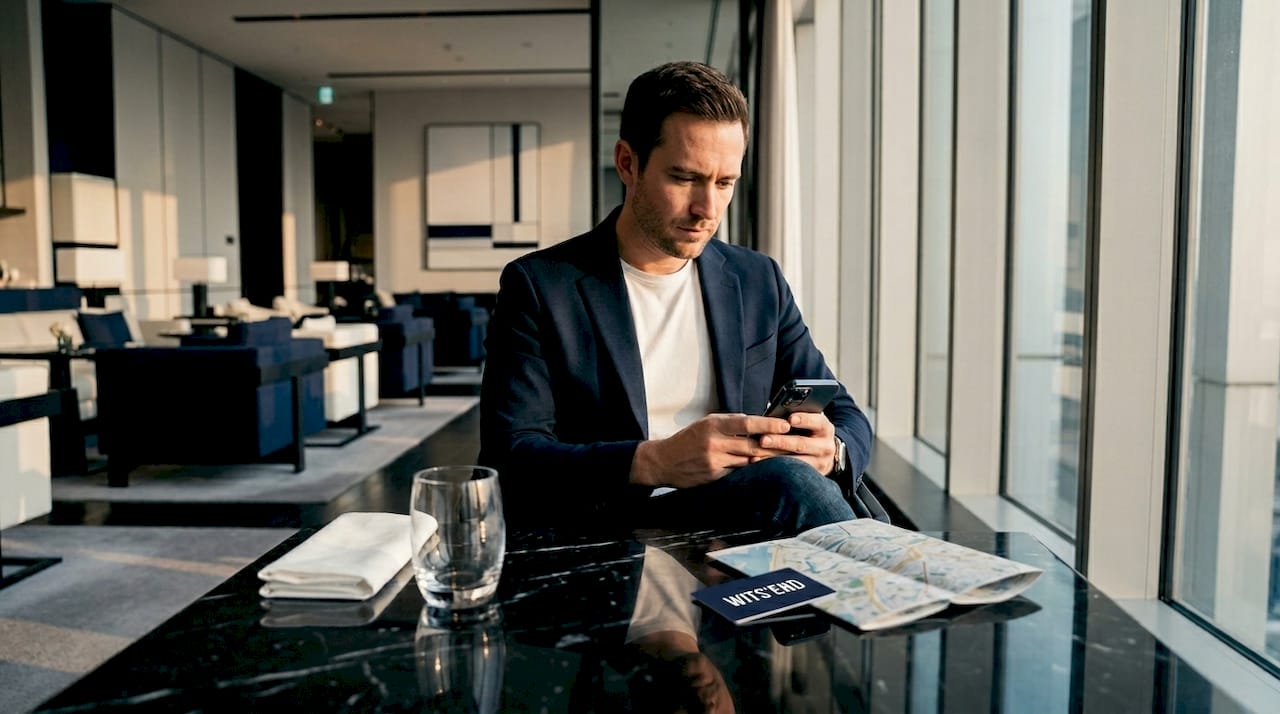
The first criterion is mobile-first design. Mobile traffic benchmarks for hotels consistently show that mobile devices account for more than 60% of all website visits, yet many booking flows remain clunky on small screens. If your site doesn't load fast, display cleanly, and convert on mobile, you're losing guests before they even get to your rate page.
The second criterion is local search visibility. Guests searching "hotel near downtown Austin" or "best Italian restaurant in Nashville" are high-intent. Showing up there, with accurate listings, strong reviews, and up-to-date hours, is foundational. Review response rates and star ratings directly affect click-through rates from search results.
The third criterion is conversion metrics. You need to know your booking engine conversion rate, your cart abandonment rate, and your bounce rate by traffic source. These numbers tell you where your funnel leaks. Most properties don't track them closely enough, which means they optimize spend without knowing where guests are dropping off.
The fourth criterion is unified guest data. You can't personalize what you can't see. A single view of each guest, their stay history, dining preferences, and communication touchpoints, is the infrastructure that makes every other tactic more effective. Investing in deep analytics in hospitality early saves significant rework later.
- Audit your mobile booking flow quarterly for friction points
- Claim and update all local search listings, including Google Business Profile
- Set up monthly reporting on booking engine CVR and abandonment rates
- Evaluate your current tech stack for data siloes between your PMS, CRM, and marketing tools
Pro Tip: Build a simple monthly reporting dashboard that tracks these four benchmarks together. When one number moves, you'll see which others shift with it, and that's where the real insight lives.
With the strategic foundation in place, let's explore the tactics most likely to drive results in 2026.
Leverage AI-driven personalization for direct bookings
Direct bookings are the most profitable bookings you can generate. No OTA commission, no margin erosion, and full visibility into who your guest is before they arrive. The challenge is that most properties still market to everyone with the same message, which means they convert fewer of the right people.
AI-driven personalization is changing that. Behavior-based targeting uses signals like previous searches, abandoned quote pages, and visit history to serve relevant messaging to high-intent audiences. A guest who visited your rates page twice in three days and looked at your spa packages is not the same as a first-time visitor from a paid ad. They deserve a different message, and the technology to deliver that message now exists at a price point accessible to independent operators.
The practical approach is to layer automation on top of your existing traffic. Retargeting campaigns built around abandoned booking flows are the highest-ROI starting point. Beyond retargeting, dynamic landing pages that adjust headline copy and imagery based on traffic source can meaningfully lift conversion. A traveler clicking from a leisure-focused Instagram ad should land on a page that speaks to weekend experiences, not corporate rates.
The most advanced version of this is what brands like Radisson have deployed at scale. Their use of Vertex AI and BigQuery to automate multilingual, localized ad creative increased ad-driven revenue by 22% and improved return on ad spend by 35%. That's not a marginal gain. That's a structural shift in how their marketing budget performs.
- Identify your top three high-intent audience segments based on booking data
- Build retargeting sequences for abandoned booking flows with a minimum three-touch sequence
- Create dynamic landing pages for at least two major traffic sources
- Use your PMS and CRM data to personalize email campaigns by stay history
Pro Tip: Don't try to personalize everything at once. Start with automated email triggers for abandoned bookings and one dynamic landing page. Measure the lift, then expand. Personalization that scales is built one validated step at a time. You can explore how hospitality business optimization supports this kind of structured rollout.
Personalization is critical for direct bookings, but nurturing guest intent is just as vital. Let's look at how connected workflows power your pipeline.
Convert interest to bookings with connected CRM and automation
Most hospitality businesses generate more qualified interest than they convert. A guest submits a group inquiry and hears back three days later. A couple abandons a booking after selecting a room. An event planner fills out a contact form and gets a generic auto-reply. These are not dead leads. They're warm prospects who needed a faster, more relevant response.
Connected CRM and customer data platform (CDP) workflows are the infrastructure that closes that gap. The approach is to unify guest data across your PMS, email platform, and CRM into a single record, then define automated triggers that respond to specific behaviors in real time. Triggered nurturing workflows have demonstrated the ability to triple conversion rates while reducing the cost per acquired booking.
Here's a practical five-step setup process:
- Assess your current tools. Map what data lives where: PMS, CRM, email platform, booking engine, and reservation system.
- Unify your data. Choose a CDP or integration layer that pulls guest records into one view. Eliminate duplicate profiles and standardize field naming.
- Define your triggers. Identify the three to five guest behaviors that most often precede a booking: abandoned cart, event inquiry, loyalty expiration, post-stay survey completion.
- Automate follow-up. Build sequences for each trigger with time-delayed messages, personalized subject lines, and clear calls to action.
- Measure results. Track conversion rate per trigger, time to booking, and revenue attributed to automated sequences monthly.
"The teams seeing the biggest gains in 2026 aren't the ones with the biggest budgets. They're the ones with the most connected workflows, where a single guest action sets off a precise, personalized response across every channel."
Pro Tip: Run a quarterly audit of your automation paths. Look for orphaned triggers, stalled sequences, and leads that entered a journey but never received a follow-up. These gaps cost bookings every single week. For teams building this capability from scratch, CRM automation training for hospitality can accelerate the learning curve significantly.
CRM automation converts prospects, but restaurants require their own retention engines. Next, we zero in on how restaurants drive repeat guests in 2026.
Retain more guests: Building loyalty without discount traps
Guest retention is where the economics of hospitality marketing get interesting. Acquiring a new guest costs significantly more than keeping an existing one, yet most marketing budgets are weighted heavily toward acquisition. Retention systems that work in 2026 don't rely on perpetual discounting. They rely on relevance, timing, and recognition.
Discount-first retention tactics erode perceived value and train guests to wait for a deal before returning. The better path is a retention system built around post-visit engagement: birthday and milestone communications, tiered loyalty rewards, exclusive access to new menu previews or seasonal events, and simple thank-you touchpoints after a visit. These cost less per redemption and drive stronger guest advocacy than a 20% off coupon.
Here's how the two approaches compare:
| Retention approach | ROI potential | Margin impact | Guest advocacy effect | Best suited for |
|---|---|---|---|---|
| Points-based loyalty | Medium-High | Low-Medium | Moderate | Hotels, multi-visit restaurants |
| Membership programs | High | Low | High | Fine dining, boutique hotels |
| Exclusive experiences | High | Low | Very High | Premium segments, F&B groups |
| Discount campaigns | Low-Medium | High (negative) | Low | Commodity segments only |
| Milestone communications | Medium | Very Low | High | All segments |
The table makes the trade-off clear. Discounting is the easiest tactic to launch and the hardest to recover from once guests expect it. Loyalty systems and exclusive experiences take longer to build but generate compounding returns through repeat visits and word-of-mouth.
Practical best practices for guest lifecycle communication include:
- Send a personalized post-visit message within 48 hours of checkout or dining
- Offer loyalty tier upgrades based on visit frequency, not just spend
- Use anniversary and birthday triggers to re-engage guests who haven't visited in 90-plus days
- Create early-access invitations for loyal guests around new menu launches or seasonal programming
Explore how customer experience loyalty strategies translate into measurable revenue for restaurants, and consider how apps like inKind can amplify loyalty mechanics without building everything in-house.
Now that we've covered loyalty tactics, let's examine how each major marketing strategy compares for fit and return in 2026.
Strategy scorecard: Comparing 2026's top hospitality marketing tactics
Choosing where to invest first depends on your operational readiness, your team's bandwidth, and your current guest data quality. This scorecard gives you a direct comparison across the five strategies covered in this article. Mobile-first and local search benchmarks anchor the conversion-focused rows, while the data-driven rows reflect outcomes from real operator deployments.
| Strategy | ROI type | Implementation complexity | Speed to impact | Best for |
|---|---|---|---|---|
| AI-driven personalization | Direct (revenue) | High | Medium (60-90 days) | Hotels, large F&B groups |
| CRM + automation | Direct (bookings) | Medium | Fast (30-45 days) | Hotels and restaurants |
| Loyalty and retention systems | Indirect (LTV) | Medium | Slow (90-plus days) | Restaurants, boutique hotels |
| Mobile experience optimization | Direct (conversion) | Low-Medium | Fast (14-30 days) | All segments |
| Local search optimization | Indirect (visibility) | Low | Fast (14-30 days) | All segments, especially restaurants |
The pattern here is instructive. Mobile optimization and local search deliver the fastest visible impact with the lowest complexity, making them the right starting point for most operators. CRM automation follows closely with strong direct returns and manageable setup time. AI personalization yields the highest ceiling but requires a more mature data foundation before it performs at its best.
With side-by-side scores in mind, it's essential to filter out the hype and focus on what actually works. Here's our editorial perspective.
Why overhyped trends distract, and what actually works in 2026
Every year brings a new wave of marketing tools that promise to transform your guest acquisition overnight. In 2026, the noise around AI-generated content, short-form video algorithms, and influencer-driven campaigns is louder than ever. And some of it is worth attention. But the operators who are quietly outperforming their markets aren't the ones chasing every trend. They're the ones who built connected systems and stuck with them.
Here's the uncomfortable truth: most marketing failures in hospitality aren't caused by using the wrong tools. They're caused by using the right tools without connected data behind them. A beautifully designed email campaign sent to a poorly segmented list produces mediocre results. A retargeting campaign without a clear conversion path wastes budget. The tool is rarely the problem. The infrastructure is.
What we've consistently seen work, across hotel and restaurant clients of different sizes and market positions, is a closed-loop approach: test a tactic, measure its impact on a specific funnel metric, learn from the data, and iterate. That process sounds simple. In practice, it requires discipline, clear reporting structures, and someone accountable for reading the numbers each month. That's where most operators fall short, not in their creativity, but in their follow-through on analytics best practices.
The best marketing in 2026 isn't louder. It's smarter and more systematically measured. A restaurant that sends one well-timed, personalized post-visit message to the right guest at the right moment will outperform a competitor that blasts a weekly promotional email to everyone on their list. Hotels that optimize their mobile booking flow and automate three key CRM triggers will see more direct revenue than properties investing in expensive brand campaigns without fixing the leaky funnel underneath.
Focus on the fundamentals. Build unified guest data. Track the right conversion metrics monthly. Personalize based on behavior, not assumptions. And resist the urge to add another shiny tool before you've measured the performance of the ones you already have.
Boost your 2026 results with expert hospitality support
Knowing the right strategies and having the bandwidth to implement them are two very different things. Most operators are managing daily service, staffing, and financial pressures alongside marketing decisions, and something always slips.
At Wits' End, we work alongside hotel and restaurant teams to put these strategies into practice, from building guest data workflows and CRM automation to developing brand design and development that supports long-term loyalty. Our task force services can step in at any stage, whether you need a full operating partner or targeted support on a specific initiative. If you want to know where your marketing infrastructure stands today and what to prioritize first, our team offers assessments and strategy sessions built around your actual operation. Explore our deep analytics and advising to see how we turn data into decisions.
Frequently asked questions
What is the most effective marketing channel for hotels in 2026?
Mobile-first and direct-booking strategies powered by AI-driven personalization yield the highest ROI for hotels in 2026, with mobile traffic share at 62.5% and booking engine conversion rates averaging 18% for optimized properties.
How can restaurants increase guest retention without using discounts?
Restaurants boost repeat visits by implementing loyalty programs, personalized follow-ups, and exclusive experiences. Discount-first retention tactics erode perceived value and train guests to wait for promotions before returning.
What role does CRM automation play in 2026 hospitality marketing?
CRM automation triggers personalized communication with high-intent leads at the moment they're most likely to convert. Connected nurturing workflows have demonstrated the ability to triple conversion rates while reducing cost per booking.
How much can AI-driven ad localization improve performance?
Significantly. Radisson's deployment of Vertex AI and BigQuery for automated ad localization increased ad-driven revenue by 22% and improved return on ad spend by 35%, demonstrating what a mature AI personalization infrastructure can deliver at scale.