
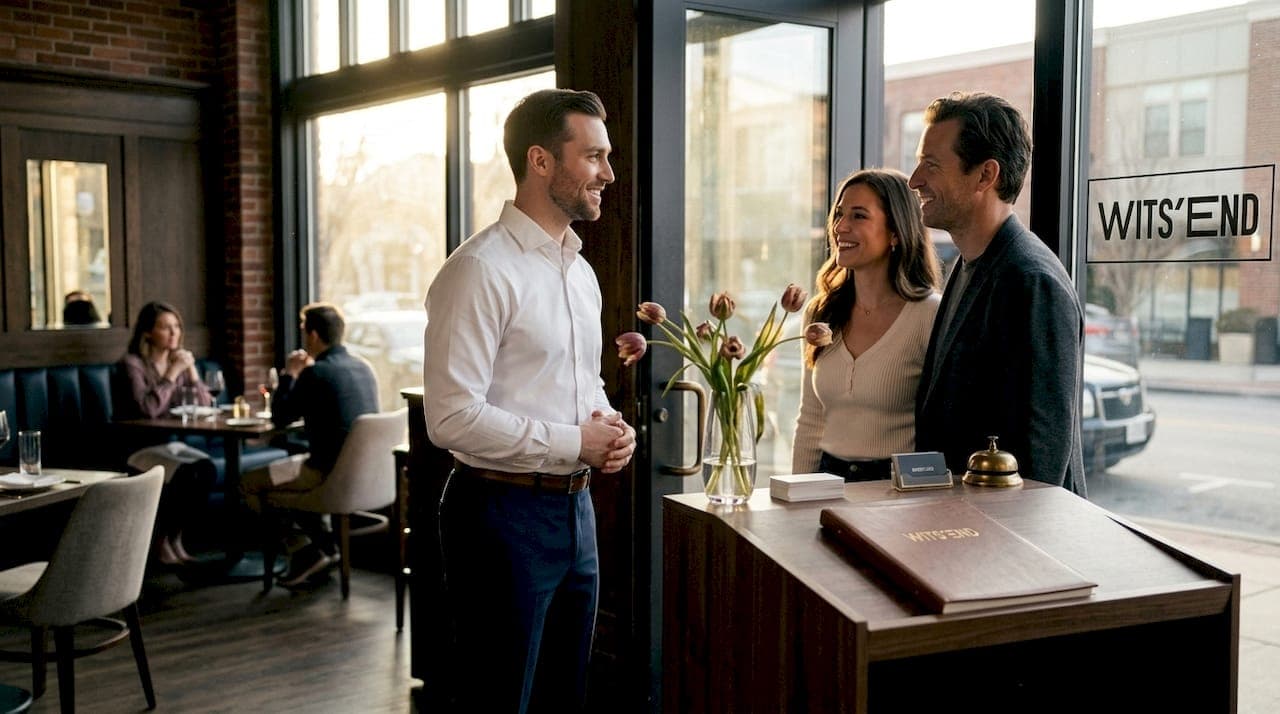
Good food is no longer enough to fill seats on a Tuesday night. Guests come in with expectations shaped by social media, recent economic stress, and a heightened sensitivity to value. They want to feel welcomed, respected, and cared for at every step of the visit, from the reservation to the final moment at the door. This guide walks through the core practices that consistently produce loyal guests: clear experience standards, genuine hospitality, smarter payment flows, thoughtful upselling, and ongoing staff development.
Table of Contents
- Establish clear experience criteria
- Prioritize human hospitality over automation
- Streamline tipping and payment experiences
- Upsell and engage authentically, not aggressively
- Invest in ongoing training and feedback loops
- A hard-won truth: Technology is only half the answer
- Take your guest experience further with expert support
- Frequently asked questions
Key Takeaways
| Point | Details |
|---|---|
| Define your unique value | Identify what sets your restaurant’s experience apart and build around it. |
| Prioritize genuine hospitality | Focus on personal interactions, as they foster far more customer loyalty than technology alone. |
| Make payment easy | Streamlined, thoughtful tipping and payment systems minimize frustration and end the meal on a high note. |
| Upsell with empathy | Train staff to suggest add-ons that feel personalized and valuable to the guest. |
| Invest in continuous improvement | Ongoing training and feedback help your team adapt and excel at guest experience. |
Establish clear experience criteria
To ground any improvement effort, you need to define what a great dining experience actually looks like in your specific restaurant. That definition will be different for a fast-casual taco counter than a full-service Italian spot, and that distinction matters. Without clarity, your team is guessing, and guests feel the inconsistency.
Start by identifying the three or four qualities that make your concept worth visiting. Is it the warmth of your greeting? The depth of your beverage program? The speed of service during a lunch rush? Once you know what your restaurant does better than the place down the block, you can build training, hiring, and operations around protecting and reinforcing those strengths.
Here is a practical way to establish your experience criteria:
- Write a guest journey map. Walk through every touchpoint from reservation to farewell. Note where energy tends to drop.
- Identify your differentiators. Ask your best regulars what they would miss most if you closed. Their answers are your real value proposition.
- Translate criteria into staff behaviors. A standard like "warm and attentive" means nothing unless you define it as "greet every table within 60 seconds" or "check back before the first bite is finished."
- Revisit criteria quarterly. Guest expectations shift, especially under economic pressure. Value and experience balance have become increasingly critical as inflation reshapes what guests think is fair to spend.
Strong branding engagement also reinforces experience criteria by giving guests a clear identity to connect with before they even walk through the door.
Pro Tip: Post your top three experience standards somewhere your team sees them daily, whether that is a prep room whiteboard or a notes app they check before a shift. Visibility turns standards into habits.
Prioritize human hospitality over automation
Setting clear experience standards is crucial, but how those standards are delivered matters even more. Technology has given restaurants powerful tools: digital reservations, QR menus, automated feedback prompts, and AI-assisted scheduling. None of them, on their own, create loyalty.
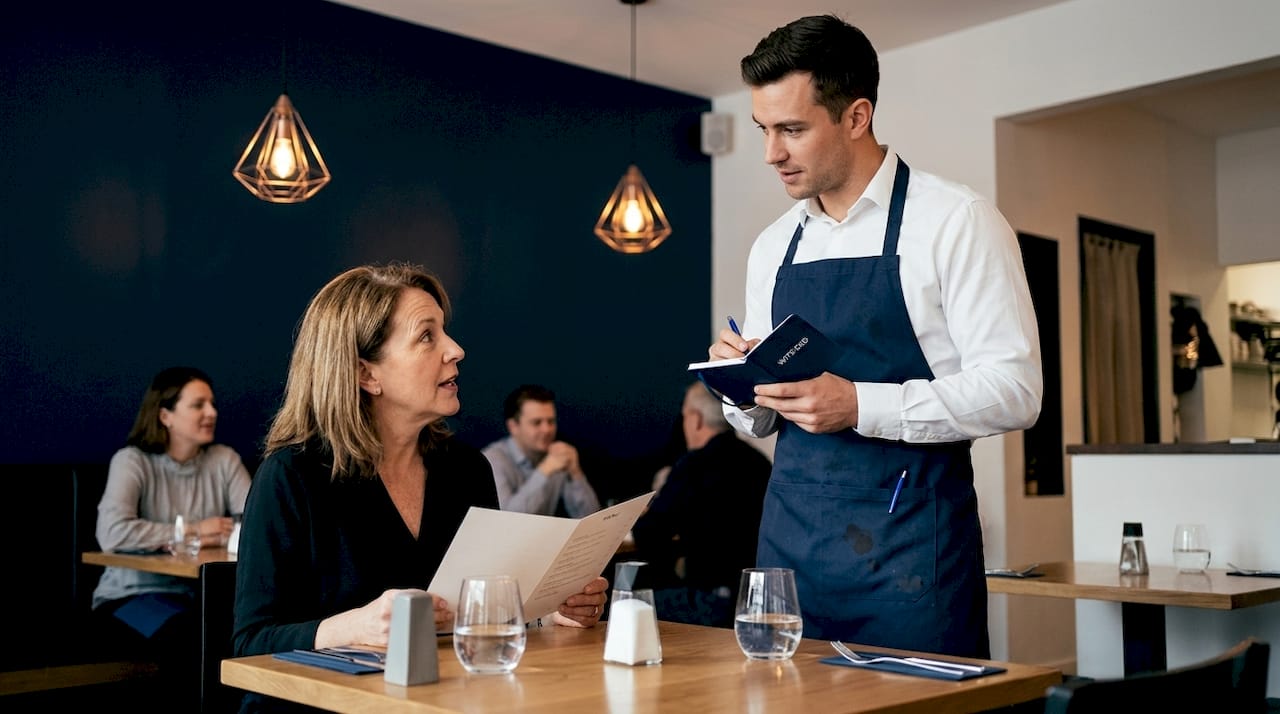
Human hospitality outperforms full automation when it comes to building a returning guest base. The reason is simple: people remember how you made them feel, not how fast the tablet processed their order. A server who notices a first-time guest looking uncertain and takes an extra 30 seconds to explain the menu creates a memory. An automated kiosk cannot replicate that.
This does not mean avoiding technology. It means using it with intention. Consider what automation does well in your operation:
- Routine tasks: Reservations, order sending, payment processing
- Data capture: Guest preferences, visit frequency, spend patterns
- Communication: Confirmation texts, loyalty program updates
Where automation falls short is in the moments that guests actually talk about. When a manager stops by a table to check in personally, when a server remembers a regular's usual drink order, when the host walks a guest to their table rather than pointing. These are the automation versus personal touch moments that separate good restaurants from ones people truly love.
"The technology should work in the background so your people can work in the foreground."
Empower your staff to make decisions that improve a guest's experience without requiring manager approval every time. A comp on a dessert, a free coffee after a long wait, or an honest recommendation on a menu item all signal that your team is trusted and that the guest is genuinely valued. That empowerment is a training outcome, not a personality trait you hope to hire for.
Pro Tip: Audit your current technology stack once a year and ask one question: does this tool free up my staff to be more present, or does it pull them away from guests? Keep what passes. Reconsider what fails.
Streamline tipping and payment experiences
With hospitality at the forefront, it is also important to avoid common service pain points, especially at payment. The final moments of a meal carry significant weight. A guest who had a wonderful dinner can leave with a negative impression if the payment process feels clunky, pressured, or confusing.
Tipping prompts have become a particular friction point. Roughly 50% of customers report frustration with the frequency and framing of digital tipping requests, particularly when they appear at counters for minimal service interactions. This frustration is real and growing, and it directly impacts how guests feel about your brand at the moment they walk out the door.
Here is how different tipping and payment approaches compare in terms of guest experience impact:
| Approach | Guest experience impact | Staff income stability |
|---|---|---|
| Default high tip prompts (25%+ as first option) | Often causes friction and resentment | Can inflate short-term tips |
| Preset modest options (18%, 20%, 22%) | Reduces decision fatigue, feels fair | Reliable and consistent |
| No-prompt, cash envelope model | Works for some concepts, not all | Less predictable |
| Service-included pricing | Eliminates tip anxiety entirely | Predictable for staff |
The data strongly suggests that transparent and reasonable defaults produce better guest goodwill than aggressive prompting. A few practices to consider:
- Calibrate tip defaults to your service level. Counter service should not open at 25%. A full-service dinner might reasonably start at 18% or 20%.
- Reduce prompt screens. Every extra screen between payment and departure adds friction. Keep the process clean.
- Train staff on payment timing. Dropping the check before a guest is ready, or hovering while they pay, creates pressure. Both hurt the final impression.
- Communicate transparently. If you use a service charge, explain it clearly on the menu. Surprises at payment erode trust fast.
Simple, clear digital payment options can absolutely help, but they should support the experience rather than dominate the final chapter of the meal.
Upsell and engage authentically, not aggressively
Easing the end-of-meal experience sets the stage for staff to make authentic, high-value engagement possible throughout the visit. Upselling is one of the most misunderstood tools in restaurant operations. Done poorly, it feels like a script. Done well, it feels like a recommendation from someone who genuinely wants you to enjoy your night.
The distinction comes down to how your team frames additions. "Would you like to add a salad?" is a transaction. "The burrata we got in today is incredible, and it pairs really well with what you ordered" is hospitality. Both move product. Only one builds a relationship.
Here is how aggressive versus authentic upselling compares in practice:
| Approach | Guest perception | Effect on loyalty |
|---|---|---|
| Script-driven prompts at every course | Feels mechanical, can create pressure | Neutral to negative |
| Personalized, knowledge-based suggestions | Feels genuine and helpful | Strongly positive |
| Timing-aware, read-the-table approach | Feels attentive and respectful | Strongly positive |
| Over-recommending high-margin items only | Feels self-serving | Negative |
Training your team to read the table is the real skill here. Some guests want to be guided through the menu. Others have already decided and want space to enjoy their choices. Your staff should be able to tell the difference within the first two minutes of a table interaction.
Practical upsell strategies that work well include leading with what's fresh or seasonal, suggesting pairings based on what the guest has already ordered, and offering add-ons only when the guest seems genuinely interested in exploring the menu. For operators looking to increase guest count alongside check size, authentic engagement is a stronger long-term lever than pressure selling.
Guests notice when upselling is done with their enjoyment in mind. That value and experience balance matters even more as discretionary spending stays under scrutiny. When guests feel like your team helped them have a better meal, they come back. When they feel like they were worked, they don't.
Key behaviors to reinforce with your team:
- Know the menu deeply enough to make genuine recommendations
- Offer suggestions at the right moment, not on a rigid timeline
- Accept a "no thank you" gracefully and move on without pushing
- Follow up on recommendations to close the loop ("How was the burrata?")
Invest in ongoing training and feedback loops
Maintaining best practices requires continual learning and adaptation, especially as guest needs and employee expectations evolve. A strong opening week does not guarantee a strong year. Service quality drifts without deliberate reinforcement, and the teams that hold their standard longest are the ones where training is built into the rhythm of the operation rather than treated as a one-time event.
Consistent experience delivery is directly linked to how often and how well your team is trained. That training does not need to be formal every time. Pre-shift huddles, menu tastings, role-play scenarios, and post-service debriefs all count. What matters is that learning is continuous, not episodic.
Build your feedback and training cycle around these four steps:
- Collect guest feedback consistently. Use follow-up surveys, online review monitoring, and in-person comment opportunities. Track patterns, not just one-off complaints.
- Share feedback with the team. Both the wins and the gaps. Staff who only hear about problems lose motivation. Staff who hear what guests loved are energized to repeat it.
- Update training based on real data. If feedback shows that guests consistently feel rushed at a certain point in the meal, adjust the pace standards and retrain on the specific moment.
- Encourage staff to surface their own observations. Servers notice things managers miss. Build a culture where frontline input is genuinely used to shape how service runs.
Structured training programs give your team the foundation they need, and regular feedback loops keep that foundation current. The combination produces a team that can adapt when something unexpected happens, not just execute when everything goes according to plan.
Staff retention also improves when training is ongoing and meaningful. Employees who feel invested in and developed are more likely to stay, and consistency of staff is one of the most underrated drivers of a great guest experience.
A hard-won truth: Technology is only half the answer
With these practices in hand, it is worth stepping back for an honest look at what actually sets great restaurants apart. We work with operators at every level of tech adoption, from restaurants running entirely on paper tickets to those with fully integrated POS, reservation, and analytics platforms. The ones with the most loyal guests are almost never the most automated. They are the ones with the most present and empowered people.
This is not a nostalgic argument against technology. It is a practical one. Every dollar you spend on a new system should earn its place by giving your team more time and capacity to be excellent, not by replacing the moments where excellence actually happens. Human connection outperforms full automation when loyalty is the goal, and that finding holds across service levels and concepts.
What we see most often in struggling operations is a pattern: an owner invests heavily in a new ordering platform or a loyalty app, and then cuts back on training because the budget is stretched. The result is a technically sophisticated experience that still feels hollow. Guests can sense when a team is going through the motions, and no amount of app functionality closes that gap.
The real differentiator is making guests feel genuinely cared for, consistently, even as your tools change. Systems should enable your hospitality, not substitute for it. When you approach business optimization with that principle, the returns on every investment, in technology, in training, in team culture, compound over time. That is what builds a restaurant people return to for years.
Take your guest experience further with expert support
These best practices give you a clear framework, but putting them into action across a real operation takes more than a checklist.
At Wits' End, we work alongside restaurant owners and managers to turn these principles into daily practice. Whether your team needs structured customized training programs to sharpen service skills, or you need task force support to stabilize operations during a transition, we can step in at whatever level makes sense for your business. If you are earlier in the process and need help shaping your concept identity, our brand development solutions give you the strategic foundation that makes everything else easier to execute. The model is flexible because every operation is different. Reach out and let us figure out the right fit together.
Frequently asked questions
How can I balance technology and the personal touch in my restaurant?
Use technology to handle routine tasks like reservations and payment processing, but protect the moments of human interaction that build genuine loyalty. Automation alone cannot create the guest connection that drives repeat visits.
What's the best way to reduce tipping frustration?
Limit the number of screens in your payment flow and set reasonable default tip options that match your service level. Nearly half of guests feel frustrated by aggressive or excessive tipping prompts, and that frustration lingers after they leave.
Why is ongoing staff training important for customer experience?
Service quality drifts without regular reinforcement, and guest expectations shift over time with economic and cultural pressures. Ongoing training keeps your team aligned with current standards and helps them adapt when experience delivery needs to evolve.
How do authentic upselling strategies impact customer loyalty?
When upselling feels like a genuine recommendation rather than a sales tactic, guests leave feeling cared for rather than sold to, which directly increases their likelihood of returning and recommending your restaurant to others.