
Start by measuring your waste with a daily kitchen waste log and a one-week audit before you change anything else. Every high-performing waste-reduction program begins with visibility, and you cannot fix what you have not measured. Restaurants that consistently track waste see food costs drop by 2% to 6%, a swing large enough to change whether a location is profitable in a given month.
Measurement works because it turns invisible losses into a punch list. Once you know that Tuesday's fish special generates 12 pounds of trim or that the walk-in cooler holds three days of lettuce nobody is using, you stop guessing and start fixing. The restaurant and foodservice sector generated an estimated 12.5 million tons of surplus food in 2024 and most of that volume traces back to a handful of preventable habits: overproduction, poor portioning, and storage that invites spoilage.
Three levers typically deliver the fastest returns once you start logging:
- Portion control — standardize scoop and ladle sizes so plate waste and over-portioning stop bleeding margin on every ticket.
- FIFO storage discipline — rotate stock so older product gets used first, cutting spoilage losses in walk-ins and dry storage.
- Forecast-driven prep — build production sheets off actual covers and recent sales history instead of habit or gut feel.
Quick stat: the National Restaurant Association found that operators who track waste consistently cut overall food costs by 2 to 6 percent. That is real money on a food cost line that typically represents a significant portion of sales at most full-service restaurants.
Key Takeaways
Restaurant waste reduction works when operators measure daily, fix the top leak first, standardize the win, and only then invest in diversion and technology.
| Point | Details |
|---|---|
| Measure before you fix | Run a one-week kitchen waste log audit to find your top three sources of waste. |
| Prioritize prevention | Follow the EPA hierarchy: reduce at the source before donating or composting. |
| Standardize portions and FIFO | Lock in portion charts and use-first shelving to stop the most common leaks. |
| Track ROI on a fixed cadence | Review waste cost weekly and food cost percentage monthly against your baseline. |
| Pilot before you scale | Wits' End Solutions runs a 2-to-6-week audit and pilot before building a full rollout plan. |
Table of Contents
- Low-Cost Changes You Can Make This Week
- How Do You Run a Restaurant Waste Audit?
- Setting Par Levels and Order Guides That Prevent Overbuying
- Menu Engineering That Reduces Plate Waste
- How Can Restaurants Safely Donate Surplus Food?
- Composting and Diversion Options for What's Left Over
- SOPs and Training That Make Waste Reduction Stick
- How Do You Calculate ROI on Waste Reduction?
- Keeping Kitchen Equipment Calibrated to Prevent Spoilage
- Cutting Non-Food Waste: Packaging and Disposables
- Certifications and Compliance for Waste Reduction Programs
- Why Pilots Beat Big Programs
- How Wits' End Solutions Supports Restaurant Waste Reduction
- Resource Links and Toolkits Worth Bookmarking
- Sources
Low-Cost Changes You Can Make This Week
You do not need new equipment or a consultant on-site to start cutting restaurant waste this week. Most of the fastest wins live in habits your team can adopt in a single shift.
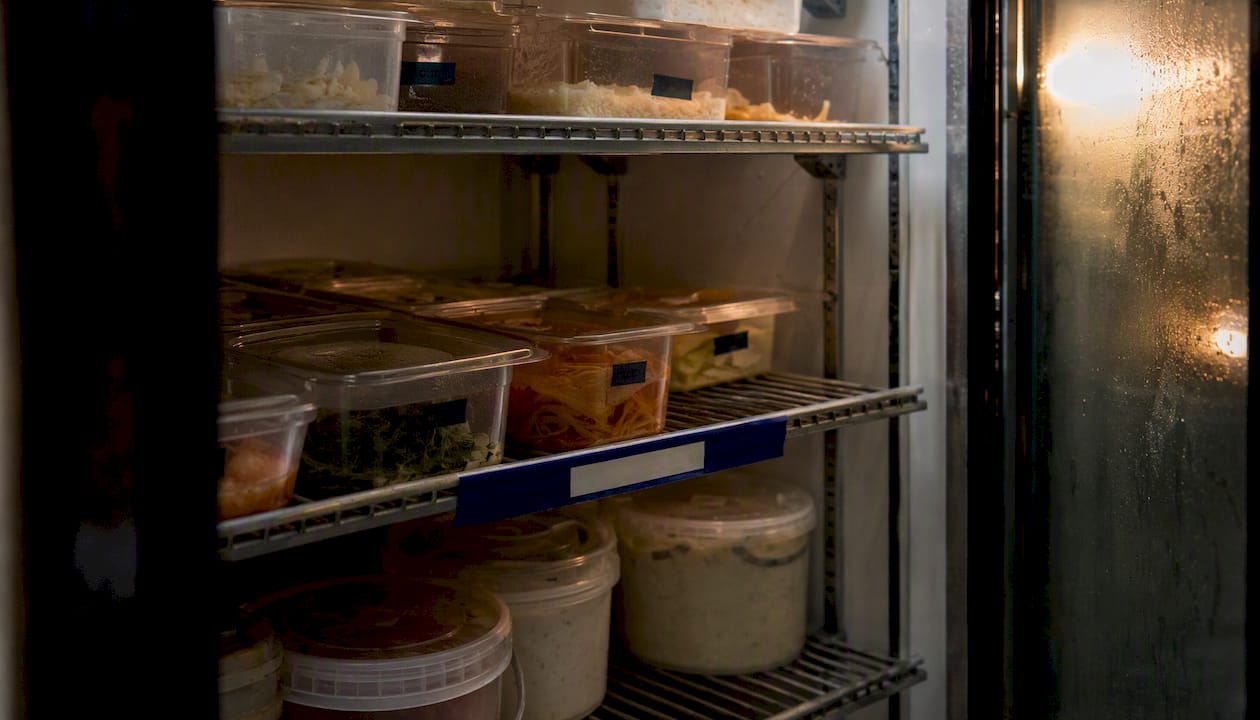
On the line, ask your cooks to scale proteins against a printed portion chart rather than eyeballing it, and match prep quantities to actual reservation counts and recent day-of-week averages instead of a static par. Set up a "use-first" shelf at eye level in the walk-in, stocked only with items nearing their pull date, so staff grab that product before anything newer.
Front-of-house has its own set of levers. Train servers to suggest a smaller side or a half portion when a guest hesitates over a large dish, and normalize offering take-home boxes at the table rather than waiting to be asked. Framing matters here: this is not charity, it's better service. Guests who leave with a to-go box remember the meal and come back.
Pro Tip: Introduce portion or plating changes as a "kitchen efficiency test" rather than a cost-cutting initiative. Staff resist anything that sounds like a pay cut on quality, but they will embrace a tighter, more consistent process. Framing waste changes as operational discipline rather than an environmental mandate produces faster staff buy-in.
Track early wins visibly. Post the previous week's waste weight next to this week's on a kitchen whiteboard so the team sees the number moving before you ask for the next round of changes.
How Do You Run a Restaurant Waste Audit?
A one-week audit is the fastest way to establish a real baseline, and it does not require software or outside help to start.
- Assign one owner per shift to record waste at three fixed points: prep, mid-shift, and close.
- Weigh everything that gets thrown out, even scraps that feel too small to matter. Use a simple kitchen scale positioned next to the trash and compost bins.
- Categorize each entry as prep trim, spoilage, plate return, overproduction, or end-of-day discard.
- Log the reason and estimated cost for every entry, not just the weight. A pound of trimmed fat costs far less than a pound of unsold salmon.
- Review the week's totals against sales data to calculate waste as a percentage of food cost.
A simple waste log capturing date, item, weight, reason, and estimated cost is usually enough to expose the biggest leaks in the first seven days. Most operators are surprised by which category dominates. It's rarely spoilage. It's overproduction and plate returns.
Three KPIs make this data actionable: waste weight per cover, waste cost as a percentage of total food sales, and the ratio of avoidable to unavoidable waste. Avoidable waste (overproduction, spoilage from poor rotation, plate returns from oversized portions) is where your fixes matter most. Unavoidable waste (bones, peels, unusable trim) is where diversion strategies take over.
Once the baseline exists, keep the cadence simple: daily log entries, a weekly review with your kitchen manager, and a monthly trend meeting where you compare month-over-month waste cost as a percentage of sales. Train every line cook, prep cook, and shift lead on how to log an entry correctly before the audit week starts. A poorly trained team produces a baseline you cannot trust.
Setting Par Levels and Order Guides That Prevent Overbuying
Overbuying is the single biggest driver of restaurant waste that never shows up on a plate. It shows up in the walk-in, expired and unused. Setting accurate par levels by SKU, based on trailing sales data and daypart trends rather than a static template, is one of the highest-leverage fixes available.
Build order guides around actual movement: pull the last four weeks of sales for each menu item, break it down by day of week, and set your par to cover expected demand plus a small safety margin, not a round number that feels safe. Shorter, more frequent ordering cycles reduce the risk of a slow-moving ingredient sitting too long, and they let you react faster when a menu item unexpectedly spikes or dips.
- Build par levels from trailing four-week sales data broken out by day of week, not gut feel.
- Order in smaller, more frequent cycles rather than large batches that sit in storage.
- Adjust pars ahead of known events, holidays, or seasonal menu shifts instead of reacting after the fact.
- Watch for vendor minimum order quantities that push you into buying more than you need.
- Design storage layout so the oldest product is always physically easiest to reach first.
Manual spreadsheets work fine for a single location with a stable menu. Once you're managing multiple SKUs across dayparts or multiple properties, digital inventory systems and AI-driven forecasting let you shift from reactive ordering to proactive stock management, catching demand shifts before they turn into spoilage.
Watch for three common traps: product sitting in transit longer than expected during peak season, vendor minimum order quantities that force you into buying more than you need, and a storage layout that technically allows FIFO but makes it inconvenient enough that staff skip it. Storage designed for rear-loading with a visible "use-first" shelf removes that friction entirely, turning correct rotation into the easiest option rather than the disciplined one.
Menu Engineering That Reduces Plate Waste
Your menu is a waste-reduction tool whether you treat it like one or not. Every portion size, every low-turn dish, and every recipe yield either protects your margin or quietly erodes it.
Start with a portion audit: weigh what's actually going out on the plate against your recipe spec, using a kitchen scale and standardized scoops for anything served by volume. Discrepancies here are common and expensive. A kitchen that "eyeballs" a 6-ounce protein portion often serves 7 or 8 ounces without realizing it, and that difference compounds across hundreds of covers a week.
From there, look at menu engineering with a waste lens. Items that turn slowly tie up inventory and increase the odds that ingredients spoil before use. Cutting a chronically underperforming dish frees up storage space and simplifies your prep list. Offering flexible portion sizes, a half order or a smaller plate option, lets guests order what they'll actually finish instead of defaulting to a full portion they push aside.
Specials are your best tool for using surplus before it becomes waste. Day-old bread becomes panzanella or croutons. Vegetable trim and bones become stock. Overripe produce becomes a chutney or a sauce base. This is not a new idea in professional kitchens, but few restaurants build a formal system around it. Set a standing rule: any ingredient approaching its use-by date gets flagged to the chef by 10 a.m. and built into that day's special.
Pro Tip: Test portion or recipe changes on a small sample of guests before rolling them out restaurant-wide. Run the new spec for two or three shifts, watch plate returns and comment cards, then adjust before committing the whole menu to a change that might annoy regulars.
How Can Restaurants Safely Donate Surplus Food?
Edible surplus should never go in the trash if there's a legal, safe way to move it to someone who needs it, and there almost always is.
A functional donation workflow starts with a partner, usually a local food bank, shelter, or a matching service that connects surplus food to nonprofits. Establish a standing agreement that covers pickup windows, temperature requirements, and what categories of food you'll donate (prepared but unserved food, unopened packaged goods, or fresh produce nearing its date). Keep time-stamped logs of every donation and temperature records for anything perishable. That documentation protects you and builds trust with your partner organization over time.
The Bill Emerson Good Samaritan Food Donation Act provides liability protection for restaurants that donate food in good faith, which removes one of the most common hesitations operators cite. It is not a substitute for your own food safety judgment, but it does mean the legal risk of donating is far lower than most owners assume.
Selling surplus is another option worth building into your routine. A day-of "chef's special" using surplus ingredients, sold at a modest discount through a manager's special or a surplus-food app, moves product without the stigma of a clearance bin. Presentation matters here: frame it as a limited-availability dish, not a markdown.
Programs built around the EPA Food Recovery Hierarchy consistently point restaurants toward the same sequence: prevent waste first, then feed people, then divert what's left. ReFED's Restaurant Food Waste Action Guide exists specifically to help operators build that sequence into daily practice, with measurement tools and matching resources for donation partners.
Composting and Diversion Options for What's Left Over
Once you've prevented and donated everything you reasonably can, what remains, bones, peels, coffee grounds, unavoidable trim, needs a diversion path other than the landfill.
Three common options exist at different cost and complexity levels. Off-site compost haulers pick up organics on a schedule, usually weekly, and charge a flat or volume-based fee similar to your existing trash service. Municipal organics programs, where available, are often the lowest-cost option but come with stricter sorting rules. Rendering services collect fats, oils, and grease for reuse in other industries, sometimes at no cost since the material has resale value. Anaerobic digestion, less common but growing, converts food waste into energy and is typically only available through a municipal or regional partner.
Setting up organics separation takes real planning, not just a new bin by the back door.
- Place labeled compost bins at the point of waste generation, prep stations and dish pit, not just near the exit.
- Train staff explicitly on what belongs in each bin; contamination is the most common reason haulers reject a load.
- Address odor and pest risk with a tight lid schedule and a hauler pickup frequency matched to your volume.
- Confirm hauler scheduling before committing, since inconsistent pickup is a bigger operational headache than the program itself.
Composting requires real operational controls around pests, odor, and staff training to work at restaurant scale, and skipping that step is the most common reason diversion programs fail within the first few months. Where volume and equipment allow, reuse and upcycling surplus ingredients into new dishes often reduces climate impact more than composting alone, particularly when the alternative is energy-intensive processing.
Pro Tip: Pilot a composting or diversion program at one location, or even one daypart, before rolling it out across your whole operation. You'll catch contamination problems and staff training gaps at a small scale instead of a costly one.
SOPs and Training That Make Waste Reduction Stick
Waste reduction fails when it lives in one manager's head instead of your standard operating procedures. Build it into the rhythm of daily, weekly, and monthly tasks the same way you handle line checks and inventory counts.
Daily tasks should include waste log entries at each of the three checkpoints, a stock rotation check during opening prep, and an end-of-day decision on what gets held, repurposed into a special, or discarded. Weekly tasks add a review of the waste log against sales, looking for patterns by day or dish. Monthly reviews should compare waste cost as a percentage of sales against the prior month and against your original baseline.
New hires need waste procedures built into onboarding from day one, not bolted on months later. Embedding waste-reduction responsibility into hiring and orientation conversations creates faster, more durable behavior change than a single training session ever will, because it signals the expectation is permanent rather than a passing initiative.
Storage layout does more behavioral work than most managers give it credit for. A walk-in organized so the oldest product sits at eye level and the newest gets pushed to the back makes FIFO the path of least resistance instead of a rule people forget under pressure.
For a structured rollout, use a simple 30/30/30 framework:
- Days 1 to 30: Pilot the new logging and portioning procedures in one station or daypart. Work out the kinks.
- Days 31 to 60: Measure results against your baseline audit and adjust the process based on what the data shows.
- Days 61 to 90: Scale the proven procedures across the full kitchen and, if applicable, additional locations.
How Do You Calculate ROI on Waste Reduction?
Waste cost is simple arithmetic: weight of waste multiplied by the unit cost of that ingredient, summed across every logged entry. Once you have a week or a month of data, converting that into a food cost percentage improvement just means comparing waste cost against total food purchases for the same period.
Industry benchmarks give you a target to aim for. Restaurants that track and act on waste data consistently see food costs drop by 2 to 6 percent, and that improvement typically shows up within the first two to three months of consistent logging, not the first week. The broader financial case is even stronger: for every $1 restaurants invest in food-waste reduction efforts, they tend to realize about $8 in savings, a return multiple that justifies the labor hours spent on logging and review.
| Metric | Typical Range | Timeline to See Results |
|---|---|---|
| Food cost reduction from tracking | 2% to 6% | 2 to 3 months |
| ROI on waste-reduction investment | ~$8 saved per $1 invested | 3 to 6 months |
| Plate waste share of total surplus | ~70% of restaurant waste | Ongoing, addressed via portioning |
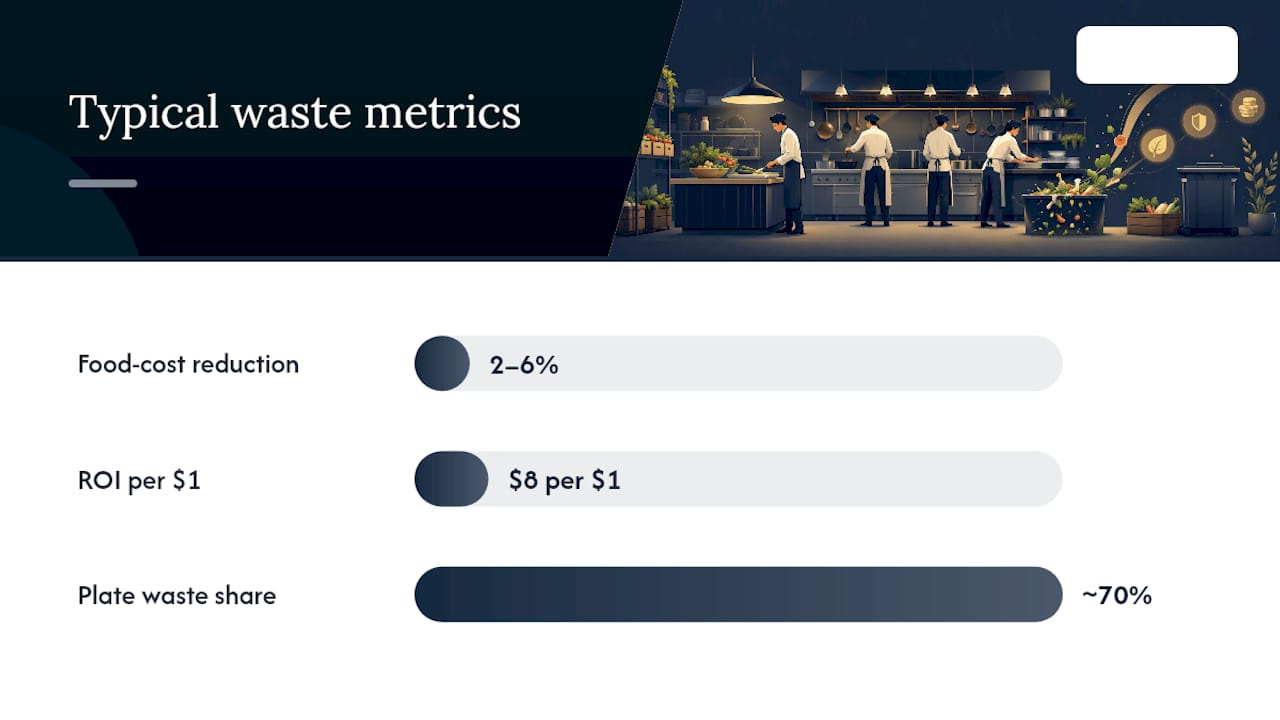
Quick stat: for every $1 a restaurant puts into structured waste-reduction work, industry data points to roughly $8 in realized savings. Few operational investments carry a comparable return.
Set a reporting cadence that matches this timeline: daily log entries feed a weekly review with your kitchen manager, which rolls up into a monthly KPI meeting where ownership looks at food cost percentage, waste-to-sales ratio, and progress against the original audit baseline. Reporting on a fixed cadence is what turns a one-time audit into a permanent operational habit.
Keeping Kitchen Equipment Calibrated to Prevent Spoilage
A refrigeration unit running five degrees warmer than it should be will spoil product long before anyone notices a problem, and equipment drift is one of the most overlooked sources of restaurant waste.
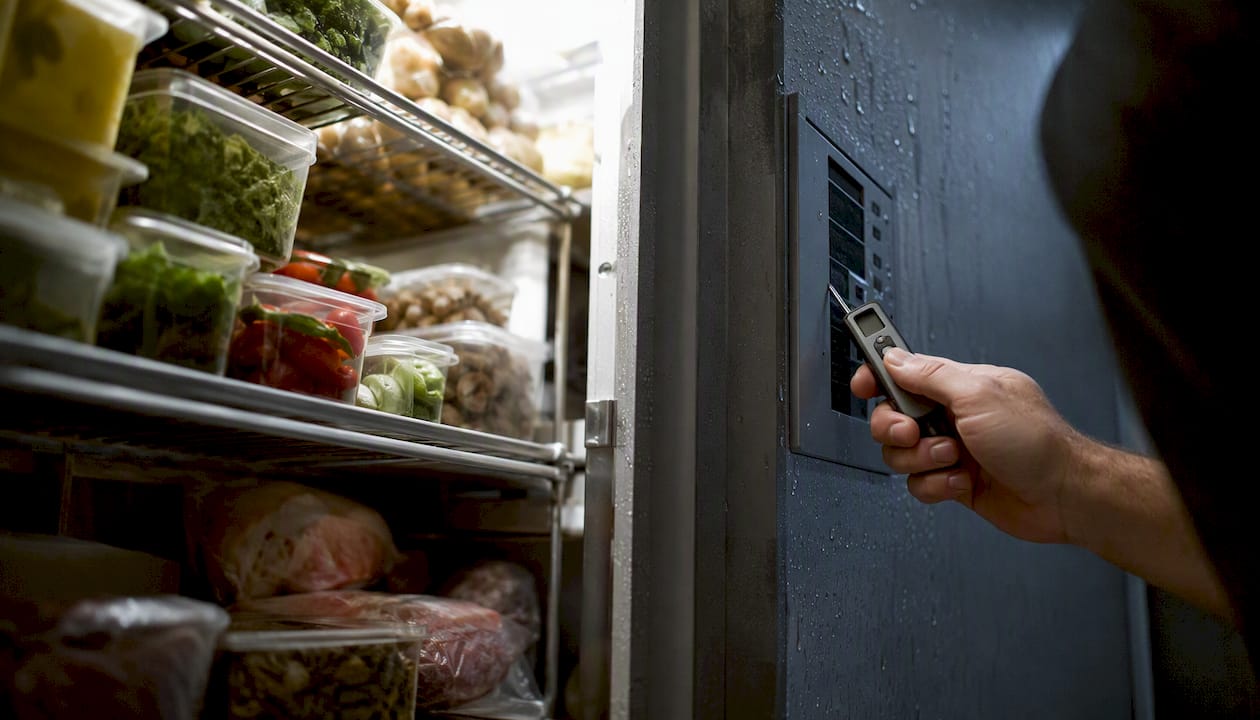
Build equipment checks into your existing SOP structure rather than treating them as a separate maintenance task. Walk-in and reach-in coolers need daily temperature logs, checked at open and close, with a clear escalation procedure if a unit reads outside the safe range. Ice machines, prep coolers, and freezers should get a monthly deep check, not just a reactive call to a technician when something breaks. Thermometers and probes need regular calibration against a known reference, since a drifting thermometer gives you false confidence right up until a batch of product spoils.
Commercial dishwashers deserve the same attention, since a unit that isn't sanitizing correctly can force you to discard product or remake dishes, adding waste that never shows up in your food log as spoilage. A properly maintained dishwasher also protects the equipment lifespan itself, avoiding an unplanned replacement that disrupts service.
Schedule preventive maintenance on a calendar, not a memory. Refrigeration coils need regular cleaning to run efficiently, door seals need periodic inspection since a failing gasket silently raises internal temperature, and any unit showing early warning signs (unusual noise, frost buildup, inconsistent temperature) should get flagged for service before it fails during a Friday dinner rush.
Cutting Non-Food Waste: Packaging and Disposables
Food waste dominates the conversation, but packaging and single-use disposables are a growing share of what your restaurant sends to the landfill, especially with off-premise orders now a permanent part of most operations.
Audit your to-go packaging the same way you audit your food waste. Look at what's actually necessary versus what's included by default: does every order need a full set of plastic utensils, or should that be an opt-in checkbox? Switching to opt-in utensils and condiments alone can meaningfully cut disposable volume without any cost to the guest experience.
Bulk purchasing helps here as much as it does with food. Buying napkins, to-go containers, and paper goods in bulk from a single supplier typically reduces packaging waste from individual shipments and often lowers per-unit cost. Where possible, choose recyclable or compostable packaging that matches whatever diversion program you've already built for food waste, so the same bins and hauler relationships can handle both streams.
Front-of-house glass, cardboard, and cans usually have straightforward recycling infrastructure already in place through your municipal service or hauler. The bigger opportunity is often in back-of-house: bulk ingredient deliveries generate significant cardboard and plastic film, and negotiating with vendors for reusable totes or reduced packaging can cut that volume before it ever enters your building.
Certifications and Compliance for Waste Reduction Programs
Formal certification is not required to run an effective waste-reduction program, but it can matter for restaurants competing on sustainability credentials or working with corporate clients who require documented practices.
Zero waste certification programs typically require diverting a high percentage of total waste from landfill, verified through waste audits and hauler records, similar to the audit process already described in this article. Most certifying bodies also require documented staff training and a demonstrated reduction trend over time, not just a single strong month.
Regulatory compliance around food donation, food safety during surplus handling, and organics diversion varies by state and municipality, so check your local health department and waste authority requirements before finalizing a program. The Bill Emerson Good Samaritan Food Donation Act provides federal liability protection for good-faith donations, but local health codes still govern how you handle, label, and transport donated food. This is general guidance, not legal advice. Confirm current requirements with your local health department or a qualified attorney before finalizing your donation or certification program.
Why Pilots Beat Big Programs
The biggest mistake I see in restaurant waste-reduction efforts is trying to change everything at once. A full kitchen culture shift announced on a Monday staff meeting rarely survives past week two, because it asks too much change without proof that any of it works.
Pick one station or one daypart and build a repeatable routine there first. If your lunch service generates the most inconsistent covers, start your waste log and portioning discipline there. Prove the food cost improvement with real numbers before asking the rest of the kitchen to adopt the same habits. Staff trust data they've watched move, not a mandate handed down from ownership.
The second most common failure mode is fixing the kitchen while ignoring purchasing. You can train every cook to portion perfectly, but if your order guide still runs on outdated pars, you'll keep overbuying regardless of what happens on the line. Waste reduction has to touch both ends: what comes in the back door and what goes out on the plate.
Know when to bring in outside help. A single-location operation can run this playbook with a spreadsheet and a committed manager. Once you're managing waste data across multiple properties, integrating it with your P&L reporting, or trying to standardize training across a growing footprint, that's when external operational support earns its cost. The complexity of coordinating data, training, and reporting across sites is exactly where most in-house teams lose momentum.
How Wits' End Solutions Supports Restaurant Waste Reduction
Wits' End Solutions runs the exact playbook in this article as a structured engagement, not a one-off audit. We built our approach around what restaurants actually need to make waste reduction stick: a real baseline, SOPs your team can follow without a manager standing over them, and reporting that shows ownership the return on every change.
A typical pilot runs two to six weeks: we conduct the waste audit, build your kitchen waste log and order guides, train your team on FIFO storage and portioning standards, and set up a reporting cadence through our analytics and advising platform so you can see food cost percentage move in real time. From there, we build a scale plan for the rest of your kitchen or your broader group.
In the first 30 days, you get:
- A completed one-week waste audit with baseline KPIs specific to your kitchen.
- Draft SOPs for daily logging, stock rotation, and end-of-day holding decisions.
- A training session with your kitchen and front-of-house leads.
- A reporting dashboard tracking waste cost against your food cost percentage.
If you're ready to move from reading about waste reduction to measuring it, start with Wits' End Solutions and get a pilot scoped for your kitchen.
Resource Links and Toolkits Worth Bookmarking
A handful of free resources cover most of what a restaurant needs to build or refine a waste-reduction program without hiring outside help immediately.
- ReFED's Restaurant Food Waste Action Guide offers measurement tools and management playbooks built specifically for foodservice operators.
- The EPA's Food Recovery Hierarchy explains the prioritization logic behind prevention, donation, and diversion.
- The National Restaurant Association's food waste resource library covers benchmarks, training framing, and composting operational guidance.
- Feeding America and local food bank portals can connect your restaurant with a donation partner and provide documentation templates for recordkeeping.
- Leanpath and similar tracking technologies offer automated waste capture once your manual process is proven and you're ready to scale measurement across multiple stations or locations.
If you haven't started yet, download or build a simple one-week audit template using the categories and columns outlined earlier in this guide, and run it before your next inventory order goes out.