
TL;DR:
- A structured hospitality recruitment process involves seven core phases to reduce turnover and hiring costs. Preparing detailed job descriptions, aligning stakeholders, and documenting procedures build consistency and attract better candidates. Automating applications and conducting quick, structured interviews enhance speed and decision quality, leading to higher retention and operational efficiency.
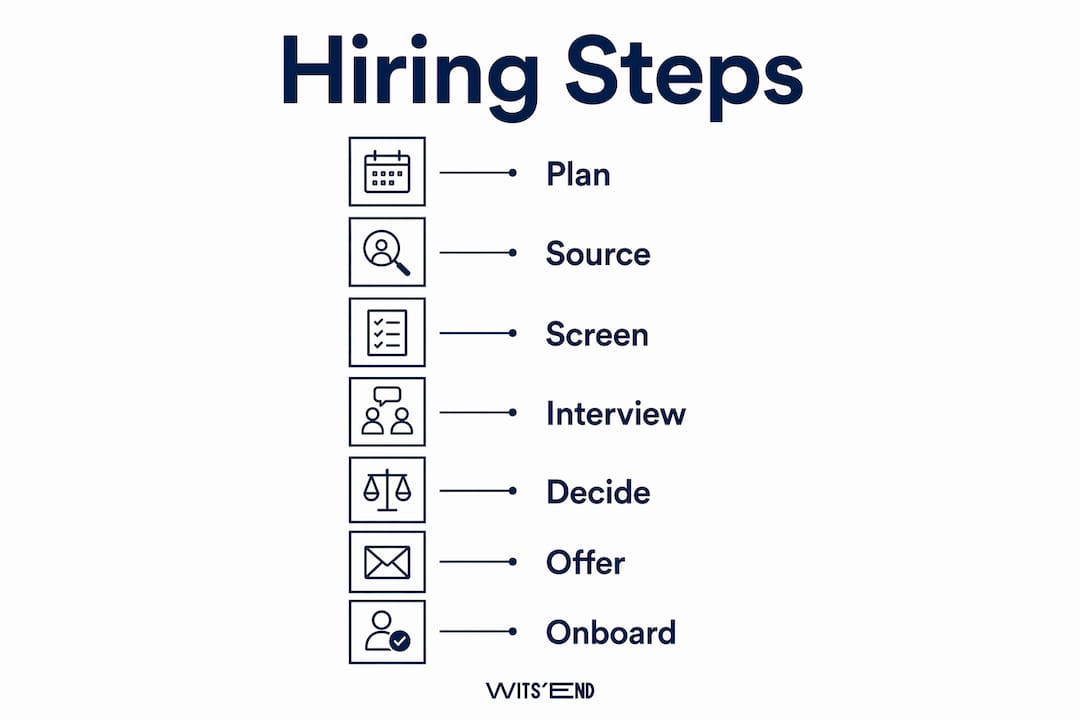
A structured hospitality recruitment process follows seven core phases: planning, sourcing, screening, interviewing, decision-making, offer, and onboarding. Most operators skip steps or treat hiring as a one-time fix, and the numbers show the cost. Restaurants see over 75% annual turnover, and 65% of hotels report active staffing shortages. Replacing a single hourly worker costs between $5,000 and $10,000 when you factor in recruiting, training, and lost productivity. A step by step hiring process in hospitality is not a nice-to-have. It is the operational foundation that keeps your team intact and your service consistent.
How to plan and prepare before you post a single job
Most hiring failures start before the job post goes live. Operators write a vague description, post it everywhere, and wonder why they get unqualified applicants. The fix is preparation, not more postings.

Start by defining the role with specificity. Detailed job descriptions that list shift hours, pay range, required certifications, and reporting lines filter candidates more effectively than open-ended postings. A front desk agent role at a boutique hotel should specify whether the candidate needs TIPS certification, which shifts they will cover, and who they report to. That level of detail reduces screening time and attracts better-fit applicants.
Align your stakeholders before the search begins. A general manager and a floor manager often have different ideas about what the role requires. Resolve those differences before candidates enter the process, not during interviews. Assign clear ownership for each stage: who reviews applications, who conducts phone screens, who makes the final call.
Standard operating procedures for hiring reduce owner intervention and create consistency across locations or departments. When the process lives in a document, any manager can run it without calling the owner for guidance.
- Define shift hours, pay, certifications, and reporting lines in every job post
- Align GM and floor manager expectations before sourcing begins
- Assign ownership for each recruitment stage with named decision-makers
- Document the full process in an SOP so it runs without founder involvement
Pro Tip: Build a simple one-page role brief before writing the job post. Include the must-have skills, the deal-breaker schedule requirements, and the starting pay. Share it with every manager involved in hiring before the search opens.
Where and how to source hospitality candidates effectively
Sourcing in hospitality requires both the right channels and the right timing. Post jobs on hospitality-oriented platforms, your own careers page, and social media channels where your target candidates spend time. Instagram and Facebook remain effective for front-of-house roles. LinkedIn works better for management and back-office positions.
Speed is a competitive advantage. The average time-to-hire in hospitality is about 27 days, but the operators who win top candidates move faster than that. Waiting three days to follow up after an application can cause a 50–70% drop in candidate engagement. That is not a small margin. It is the difference between filling a role and starting the search over.
Automation closes the timing gap. About 64% of hospitality applicants submit applications outside typical business hours. An applicant tracking system (ATS) captures those applications at 2 a.m. and sends an immediate acknowledgment. Without automation, those candidates often accept another offer before your team opens on monday morning.
Phone screens should cover four things: availability, relevant certifications, prior experience, and wage expectations. Keep them to 15 minutes. The goal is to confirm the basics and assess communication before investing in a full interview.
- Post on hospitality job boards, your careers page, Instagram, and Facebook
- Use an ATS to accept applications and send acknowledgments around the clock
- Respond to every application within 24 hours to protect candidate interest
- Conduct 15-minute phone screens focused on availability, certifications, and pay expectations
Pro Tip: Set up an automated text message that fires within 30 minutes of every application submission. A simple "We received your application and will be in touch within one business day" keeps candidates engaged and signals that your operation is organized.
How to conduct structured interviews that reveal the right fit
Structured interviews are the standard for consistent, defensible hiring decisions. They use a written guide with predetermined questions and a scoring rubric so every candidate is evaluated on the same criteria. Without structure, interviewers default to gut feeling, and gut feeling in hospitality often means hiring for likability over competence.
The skills that matter most in hospitality are interpersonal: composure under pressure, empathy, communication clarity, and cultural fit with your team. Behavioral questions surface those skills better than hypothetical ones. "Tell me about a time a guest complained and you had to resolve it without a manager present" reveals more than "How would you handle a difficult guest?"
Role-play exercises add another layer of signal. Ask a server candidate to walk you through how they would handle a table that received the wrong order during a dinner rush. The response tells you about their instincts, their tone with guests, and their ability to think clearly under stress.
Involve more than one interviewer. A manager sees one dimension of a candidate. A potential team member sees another. A brief panel or back-to-back format with two interviewers reduces bias and gives you a fuller picture.
| Interview element | What it reveals |
|---|---|
| Behavioral questions | Past behavior under real conditions |
| Role-play scenarios | Instincts, tone, and problem-solving speed |
| Scoring rubric | Consistent comparison across all candidates |
| Multi-interviewer format | Reduces individual bias, adds team perspective |
- Build a written interview guide with five to seven questions for each role
- Create a scoring rubric with defined criteria: communication, composure, experience, and cultural fit
- Include at least one role-play or scenario-based exercise
- Have a second interviewer, ideally a peer or team lead, participate in or debrief after the interview
- Score candidates immediately after the interview while the details are fresh
Making the offer and onboarding for retention
The decision-making phase is where many operators lose candidates they worked hard to find. Centralized hiring authority, where every offer requires owner approval, creates delays that cost you the hire. Empowering shift managers to make hiring decisions within defined parameters reduces bottlenecks and speeds up the process without sacrificing quality.
Set a decision deadline of 24–48 hours after the final interview. Communicate it to the candidate at the end of the interview so they know what to expect. When you extend the offer, be direct: state the role, the start date, the pay, and the schedule. Ambiguity at the offer stage creates doubt.
Onboarding that starts before the first day dramatically improves retention. Early departures in hospitality most often stem from cultural misfit, unmet expectations, and poor initial support. A pre-start email that covers the dress code, parking, the first day schedule, and who to ask for removes the anxiety that causes new hires to ghost before day one.
Structured restaurant staff onboarding with checklists, a designated mentor, and a 30-day check-in builds early engagement. Pair every new hire with a team member who knows the operation well. That relationship is often the reason someone stays through the first 90 days.
- Empower shift managers to extend offers within a defined pay band without owner approval
- Communicate a 24–48 hour decision timeline to candidates at the close of the interview
- Send a pre-start welcome message covering logistics, dress code, and first-day expectations
- Assign a mentor for the first 30 days and schedule a formal check-in at the 30-day mark
Pro Tip: Create a "Day One Ready" checklist that your manager completes before the new hire arrives. It should include uniform, locker assignment, system access, and a printed first-week schedule. Nothing signals disorganization faster than a new hire standing at the host stand with nothing to do.
Key takeaways
A structured, seven-phase hospitality recruitment process reduces turnover, cuts replacement costs, and builds a team that stays past the 90-day mark.
| Point | Details |
|---|---|
| Prepare before you post | Define shift hours, pay, and certifications in every job description to attract better-fit candidates. |
| Automate candidate intake | Use an ATS to capture applications around the clock, since 64% of applicants apply outside business hours. |
| Respond within 24 hours | Delays beyond one day cause a 50–70% drop in candidate engagement and cost you qualified hires. |
| Use structured interviews | Written guides and scoring rubrics create consistency and reduce bias across all candidate evaluations. |
| Start onboarding before day one | Pre-start communication and a 30-day mentor pairing reduce early turnover caused by unmet expectations. |
What I've learned from building hospitality hiring systems that actually hold
The most common mistake I see operators make is treating hiring as a crisis response. A server quits on friday, and by monday the owner is personally reviewing resumes and conducting interviews between lunch and dinner service. That cycle is exhausting, and it produces bad hires because urgency replaces judgment.
Hiring is an operational function, not a reaction. The operators who staff well maintain a live pipeline of interested candidates even when they have no open roles. They stay in contact with strong applicants who were not hired because the timing was wrong. When a position opens, they have three people to call before the job post goes live.
The other shift that changes everything is documentation. Clear SOPs allow a shift manager to run a full hiring cycle without calling the owner once. That is not just an efficiency gain. It is a fairness gain. Every candidate gets the same process, the same questions, and the same evaluation criteria. That consistency protects the business and produces better outcomes.
Empowering your managers to hire is not about removing oversight. It is about building a system with guardrails, a defined pay band, a standard interview guide, and a clear approval threshold, so decisions happen at the right level and at the right speed.
— Chris
How Wits' End Solutions supports your hiring and retention goals
Building a repeatable hiring process takes more than a checklist. It requires a clear brand that attracts the right candidates, training programs that retain them, and operational systems that give your managers the tools to execute. Wits' End Solutions works with hotels, restaurants, and food and beverage groups across the United States to build exactly that. Our brand design and development services help you present your operation in a way that draws qualified applicants before the first post goes live. Our hospitality training programs and task force services prepare your team to perform from day one and stay for the long term.
FAQ
What are the seven phases of hospitality hiring?
The seven phases are planning, sourcing, screening, structured interviews, decision-making, offer, and onboarding. Each phase has defined steps and ownership to keep the process moving without bottlenecks.
How long does the average hospitality hiring process take?
The average time-to-hire in hospitality is about 27 days. Operators who automate screening and respond to candidates within 24 hours consistently close that timeline.
Why do new hospitality hires leave so quickly?
Early departures most often result from cultural misfit, unmet expectations, and poor initial support. Pre-start onboarding and a 30-day mentor pairing address all three causes directly.
What is an ATS and does a small hotel or restaurant need one?
An applicant tracking system (ATS) is software that collects and organizes job applications automatically. Any operation receiving more than a handful of applications per month benefits from one, since 64% of hospitality applicants apply outside business hours.
How do I reduce owner dependence in the hiring process?
Document the full process in a standard operating procedure and empower shift managers to extend offers within a defined pay band. That structure removes the owner from routine decisions without removing accountability.