
TL;DR:
- Servers can increase check averages by using specific, well-timed upselling techniques during key service moments. Building rapport and offering genuine, tasting-informed recommendations leads to higher guest acceptance and better tips. Proper menu design and micro-training support consistent application of these strategies.
The six moves that reliably lift a table's check by approximately 10–15% are simpler than most training manuals make them sound. Use these on your next shift, in this order:
- Drink anchor at greeting: Before menus open, name a specific cocktail or premium non-alcoholic option. "Can I start you with our house margarita or a sparkling water while you look things over?"
- One-item appetizer prompt: Name one dish, not a category. "The burrata is really popular tonight — it's a great one to share while you decide on entrées."
- Protein upgrade: When taking the entrée order, offer the tier above. "We also have the dry-aged ribeye tonight — it's about six dollars more and the flavor is noticeably different."
- Side add-on: After the entrée is confirmed, suggest one complement. "The truffle fries pair really well with that — want me to add them?"
- Pairing suggestion: Tie a wine or craft beer to the food order. "We have a Malbec by the glass that's great with red meat — want me to bring a taste?"
- Dessert seed: Plant it mid-meal, not after the plates clear. "Save a little room — the chocolate lava cake takes a few minutes, so I'll mention it now."
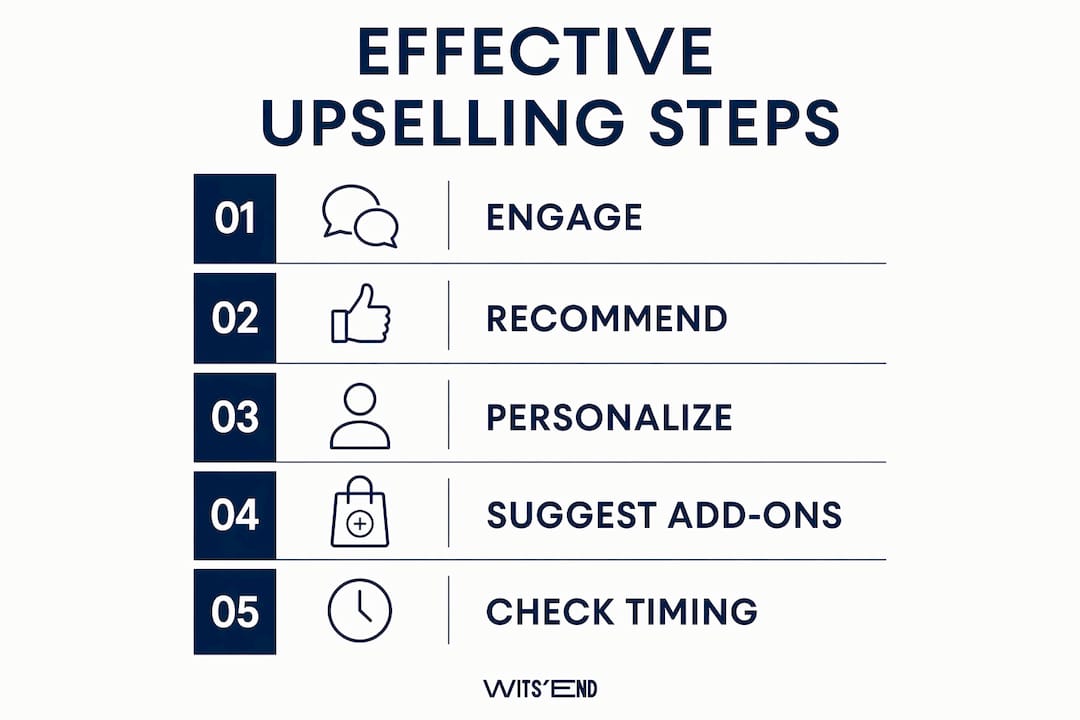
Pro Tip: Rapport comes before the pitch. Spend thirty seconds genuinely engaging with the table before your first suggestion. Guests who feel seen, not sold to, accept recommendations at a much higher rate.
Authentic recommendations — the kind that come from servers who have actually tasted the food and know the story behind it — convert far better than scripted lines delivered cold. The techniques below build on that foundation.
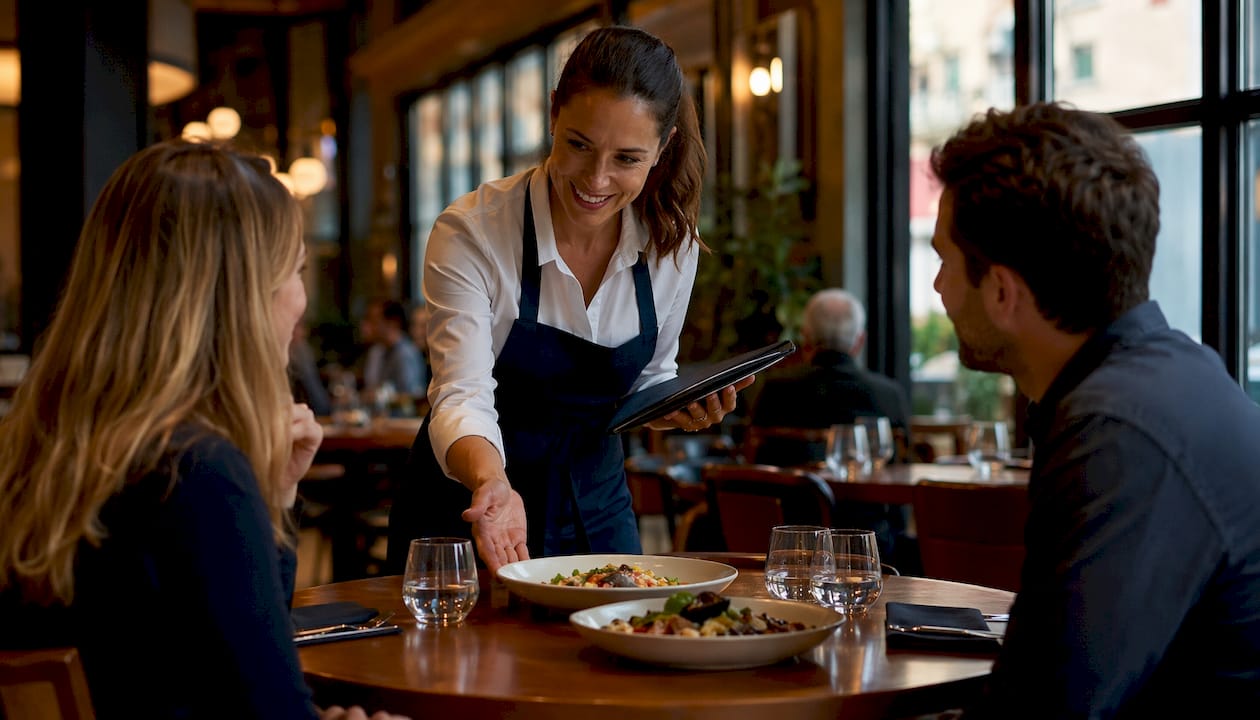
Table of Contents
- What are the most effective upselling techniques for servers?
- When should you suggest — and when should you back off?
- How do menu design and ops make upselling easier?
- Which items should you upsell, and how do you frame the price?
- How to run a 20-minute Wits' End training session before service
- Dos and don'ts that protect your tips and your reputation
- Your pre-shift and on-shift quick checklist
- Key Takeaways
- What actually changes attach rates on the floor
- How Wits' End Solutions supports teams that want to scale this
- Sources and further reading
What are the most effective upselling techniques for servers?
Ten moves, each with a script and the exact moment to use it.
-
The beverage anchor — Opens the check and sets a spending tone before the guest has committed to anything. "Can I bring you a cocktail or something sparkling to start?" Use it the moment you arrive at the table. Works best as a check-average driver.
-
The named appetizer prompt — Specific beats generic every time. Instead of "Can I interest you in a starter?" say "The calamari is really good tonight — crispy, comes with two sauces." Use it right after beverages are ordered. Drives both check average and tip.
-
The protein upgrade — Frame it as information, not a sales pitch. "We have the filet as well — it's about eight dollars more, but it's the chef's cut tonight." Use it when the guest is deciding between two entrées or ordering a mid-tier protein.
-
The side add-on — Offer one specific side after the entrée is locked in. "The roasted Brussels sprouts are really good with the salmon — want me to add those?" This is a reliable tip-booster because it feels like genuine service.
-
The pairing suggestion — Specificity drives conversions: name the wine, give one sensory detail, connect it to what they ordered. "We have a Sancerre by the glass that's really bright and citrusy — it's great with the halibut." Use it at entrée ordering.
-
The power of three — When a guest is undecided, present three options at different price points. Three structured choices reduce decision paralysis and naturally guide guests toward the middle option. "We have the house pour, the reserve by the glass, or a bottle — the reserve is what most people go with."
-
The limited-time special — Scarcity and exclusivity move people. "We're running a short rib special tonight — it's not on the menu, and we usually sell out by eight." Use it at the top of the meal. Strong check-average driver.
-
The dessert seed — Named dessert prompts lift attachment rates to 20–35% compared to a generic "Did you save room?" Use it mid-meal. "I'll come back for dessert, but the crème brûlée takes a few minutes — just want to mention it now so you can plan."
-
The digestif or after-dinner drink prompt — After dessert menus land, offer one specific option. "We have a really nice port that's great with the chocolate — want me to bring a taste?" Tip-booster, especially for celebratory tables.
-
The return incentive — Close the meal with a reason to come back. "We're starting a new menu next week — worth coming back for." Not a check driver tonight, but it builds loyalty and repeat covers.
Which moves drive check average vs. tips? The beverage anchor, protein upgrade, and limited-time special move the check number most. The side add-on, pairing suggestion, and dessert seed tend to generate the warmest guest responses and, by extension, better tips.
When should you suggest — and when should you back off?
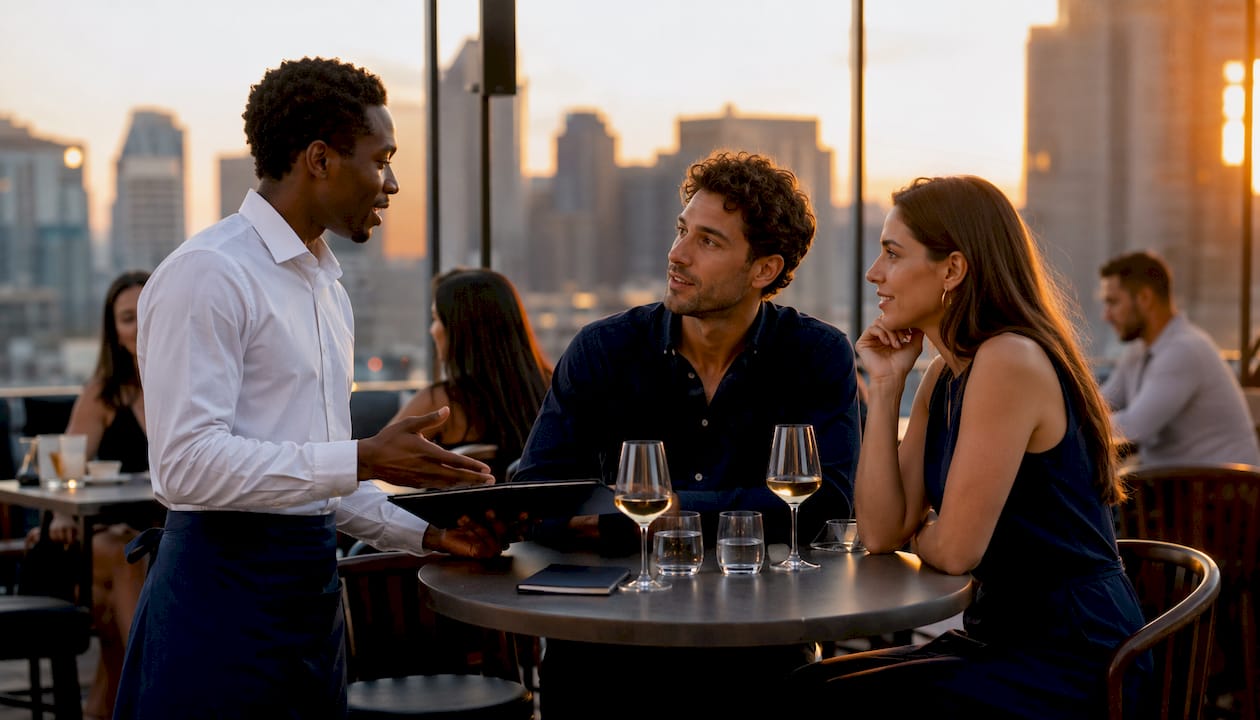
Upselling lands as helpful guidance when it fits the natural rhythm of the meal. Embedding suggestions into defined service touchpoints preserves flow and raises acceptance rates. The four windows are:
- Greeting/beverage: The guest is relaxed and open. This is your widest window for a drink anchor or a quick mention of the evening's special.
- Appetizer ordering: Rapport is building. One named recommendation here feels like a tip from a knowledgeable friend.
- Entrée ordering: The guest is in decision mode. Protein upgrades, pairings, and sides all fit here without feeling forced.
- Post-entrée/dessert: The meal is winding down. Plant the dessert seed before this moment arrives — mid-meal is the right time.
Reading behavioral cues is what separates a skilled server from someone just running a script. Watch for these signals:
- Try this: Guests making eye contact, asking questions, lingering over the menu, or mentioning a special occasion.
- Back off: Guests checking their phones repeatedly, giving one-word answers, glancing at the door, or ordering quickly without looking up.
- Hard stops: A guest who has declined twice, a table that is visibly rushed, or any situation involving potential alcohol overconsumption. Reading pace and intent is a baseline skill — guests who feel pressured tip less and do not return.
Pro Tip: Plant the dessert suggestion at the mid-meal check-in, not after the entrée plates clear. By the time most guests are full, the answer is almost always no. Mention it while they're still enjoying the meal and the yes rate climbs noticeably.
How do menu design and ops make upselling easier?
The best upselling techniques for servers work even better when the menu and operations are set up to support them. A few structural changes reduce friction on both sides of the table.
Menu language and placement do a lot of the selling before a server says a word. Items described with sensory detail ("slow-braised," "wood-fired," "hand-cut") are easier to recommend because the language is already there. Boxes, bold type, and "chef's selection" labels draw the eye to high-margin items. Limited-time labels create urgency without any server effort.
POS prompts are underused in most restaurants. A simple modifier screen that surfaces one suggested add-on per entrée category reminds servers at the exact moment they're entering the order. It does not replace training, but it catches the moments when a server forgets. Pairing cards at the table or on the back of the menu serve the same function for guests who are browsing independently. For a deeper look at how guest engagement tools can support this, the Wits' End blog covers several practical options.
Pro Tip: Run a three-minute feature brief at the top of every pre-shift. One server describes the evening's special — ingredients, preparation, flavor profile — while the rest of the team listens. Short, frequent refreshers produce better floor recall than a monthly training session. The server who described it will sell it confidently all night.
Operationally, pre-bussed tasting samples for a new cocktail or a featured dessert remove the guest's hesitation entirely. Pre-built bundles (an appetizer-and-cocktail pairing at a slight discount, for example) give servers a single, easy offer instead of two separate asks. These are small changes that compound across hundreds of covers.
Which items should you upsell, and how do you frame the price?
Not every upsell is worth the ask. The categories that carry the highest margin in most full-service restaurants are beverages (cocktails, wine by the glass, premium non-alcoholic), desserts, premium proteins, and à la carte sides. These are the items worth building your suggestions around.
On pricing, keep the upsell increment within roughly 25–30% of the original item's price to avoid creating sticker shock. A $4 side add-on on a $22 entrée is an easy yes. A $15 upgrade on a $20 entrée requires more justification. When the price gap is larger, frame the value explicitly.
Three ways to reframe price as value:
- Portion and quality: "The dry-aged ribeye is about eight dollars more, but it's a noticeably different eating experience — the aging process concentrates the flavor."
- Provenance: "The salmon is wild-caught from the Pacific Northwest — it's a few dollars more than the farmed, but the texture is completely different."
- Experience: "The tasting menu is the best way to try the kitchen's current direction — it's designed to be shared and it takes about two hours."
Side-by-side comparisons reduce decision friction. When a guest can hear the difference between two options clearly stated, the upgrade feels like an informed choice rather than an upsell. Avoid leading with the price. Lead with what makes the item worth it, then name the number.
How to run a 20-minute Wits' End training session before service
This is a reproducible micro-training any manager can run before a shift. It takes twenty minutes and produces measurable results within two weeks when done consistently.
The timeline:
-
Minutes 0–3: Feature brief. One server (rotate who leads) describes tonight's featured item in full: ingredients, preparation, one sensory detail, and the suggested pairing. The rest of the team listens and asks one clarifying question each.
-
Minutes 3–8: Demo. The manager or lead server models two upsell moments — the beverage anchor and the dessert seed — using exact scripts. The team watches, then identifies what worked and what felt forced.
-
Minutes 8–16: Roleplay. Pairs of servers run through three scenarios: a table that is open and engaged, a table that is rushed, and a table that declines the first suggestion. The manager circulates and gives one piece of specific feedback per pair.
-
Minutes 16–20: Recap and goal setting. Each server states one technique they will use tonight and one item they will focus on. The manager notes it.
Roleplay scenarios to practice:
- A couple celebrating an anniversary (open, celebratory — full upsell sequence)
- A solo business traveler eating quickly (abbreviated sequence, beverage and one side only)
- A four-top that declines the appetizer prompt (graceful pivot, no repeat ask)
Scoring rubric (manager notes):
- Did the server name a specific item? (Yes/No)
- Did they give one sensory detail? (Yes/No)
- Did they read the table's pace before suggesting? (Yes/No)
- Did they back off after a decline? (Yes/No)
Tracking sheet fields (copy into a spreadsheet):
Run a two-week baseline before setting targets. After two weeks, set a weekly micro-goal per server (e.g., dessert attach rate above 25%). A simple recognition — calling out the highest attach rate in the pre-shift — is often enough to sustain the habit. For structured hotel and restaurant training programs, Wits' End Solutions offers formats that build on exactly this kind of micro-session model.
Dos and don'ts that protect your tips and your reputation
Upselling done well is invisible. The guest feels guided, not sold to. These guardrails keep it that way.
Do:
- Read the table before you say anything. A table's energy in the first sixty seconds tells you how much runway you have.
- Personalize the offer. If a guest mentioned they love spicy food, lead with the dish that fits. Building rapport before the pitch is what separates a trusted recommendation from a sales script.
- Keep offers small and specific. One item, one detail, one ask.
- Use sensory language. "Crispy," "rich," "bright," and "smoky" do more work than "really good."
- Understand guest experience fundamentals — they inform every interaction, not just the upsell moments.
Don't:
- Repeat an offer after a guest has declined. Once is a suggestion. Twice is pressure.
- Oversell alcohol. Know your state's responsible service laws and apply them. A guest who is visibly impaired is a hard stop, full stop.
- Run a scripted monologue. If you're reciting a paragraph, the guest has already tuned out.
- Use vague language like "everything is great here." It signals you have nothing specific to say.
Wording to avoid and why:
- "Can I interest you in..." — sounds transactional, not conversational.
- "Would you like to add anything?" — open-ended and easy to dismiss.
- "Our specials tonight are..." followed by a list of six items — too much, too fast.
Pro Tip: When a guest declines, the best recovery is a simple acknowledgment and a pivot. "No problem at all — let me know if anything changes." Then move on. Guests remember how you handled the no more than they remember the ask.
Your pre-shift and on-shift quick checklist
Pin this up. Run through it before every shift and reference it during service.
Pre-shift (10 minutes before doors open):
- Taste the evening's special — know the ingredients, preparation, and one sensory detail you can describe
- Memorize one script line for three high-margin items (one cocktail, one appetizer, one dessert)
- Check POS prompts or pairing cards for any updates
- Know tonight's 86 list so you don't recommend something unavailable
- Set one personal goal: which technique will you focus on tonight?
On-shift (per table):
- Greeting: deliver the beverage anchor before menus open
- Appetizer ordering: name one specific item with one sensory detail
- Entrée ordering: offer one upgrade or one pairing suggestion
- Mid-meal check-in: plant the dessert seed by name
- Log any successful upsells in your tracking sheet at the end of the shift
If you get two "no" responses at a table:
Stop suggesting. Shift entirely into attentive, frictionless service. The table will tip better for the experience than they would have for a third ask they resented. Consistent, guest-first service practices build the kind of loyalty that shows up in both tips and return visits.
For servers new to the floor, the restaurant staff onboarding guide from Wits' End Solutions covers how to build these habits from day one.
Key Takeaways
The single most effective shift you can make is replacing open-ended questions with named, specific suggestions — that one change, applied consistently, drives the majority of the check-average gains described throughout this article.
| Point | Details |
|---|---|
| Timing beats pressure | Embed suggestions at four defined service moments; never push outside those windows. |
| Named items convert | Dessert attachment rates reach 20–35% with a specific named prompt versus a generic question. |
| Margin focus matters | Prioritize beverages, desserts, and premium proteins — the categories that carry the highest margin. |
| Keep upsells proportional | Cap the price increment at roughly 25% of the original item to preserve value perception. |
| Wits' End Solutions | Offers training programs and analytics reporting to help teams track attach rates and build consistent upsell habits. |
What actually changes attach rates on the floor
Most upselling advice focuses on what to say. The bigger variable is when and whether the server actually believes in what they're recommending.
Scripts matter, but they have a ceiling. A server who has tasted the dish, knows why the chef made it that way, and can describe it in one honest sentence will outsell a server running a memorized line every time. The guest picks up on the difference immediately. This is why the three-minute feature brief in the pre-shift training is not optional — it is the mechanism that turns a script into a genuine recommendation.
There is also a common mistake worth naming directly: treating upselling as a quota rather than a service skill. When servers feel pressure to hit a number, they push at the wrong moments, repeat asks after declines, and damage the guest relationship. The better frame is this — a well-timed, specific suggestion is a form of hospitality. It tells the guest you know the menu, you're paying attention to them, and you want their experience to be good. That posture, held consistently, is what compounds into higher tips and better reviews over weeks, not just a single shift.
Try the 20-minute micro-training once this week. Run it before a Friday or Saturday service when the team is already assembled. Track attach rates for two weeks. The data will tell you more than any training manual.
How Wits' End Solutions supports teams that want to scale this
For managers who want to move beyond a single pre-shift session, Wits' End Solutions brings the full operational picture. Our training programs are built around exactly the kind of micro-session model described in this article — short, repeatable, and tied to measurable outcomes. Our analytics and reporting platform tracks attach rates, check averages, and server-level performance so you can see what is working and where the gaps are. For teams that need hands-on support, our task force services put experienced operators on the floor alongside your team to build these habits in real service conditions.
If you manage a restaurant or food and beverage program and want to see what a structured upsell program looks like in practice, reach out through witsendsolutions.com to start a conversation.
Sources and further reading
The research and frameworks in this article draw from the following sources. For deeper reading on any of the techniques covered, these are the strongest starting points.
- Upselling Techniques for Dining Room Servers — Dining Room Management
- Upselling Techniques and Suggestive Selling for Waiters — Professional Waiter Authority
- Master How to Upsell in a Restaurant: Tips for Servers and Waitstaff — Restroworks
- Restaurant Upselling: Strategies, Tactics, Dos and Don'ts — Xenia
- Upselling: Tips and Tricks from the Pros — HubSpot Sales Blog
- How to Upsell — Revolution Ordering
- Upselling: Proven Strategies to Boost AOV — Shopify
- Role of Customer Service in Hospitality — Wild Foodz