

Your restaurant's food might be exceptional, but if your brand doesn't communicate that before guests even walk through the door, you're leaving revenue on the table. In a market where diners have more choices than ever, the restaurants that win long-term aren't just the ones with the best menus. They're the ones with the clearest identity. A well-executed brand shapes how guests feel, what they remember, and whether they come back. This article walks you through the strategic foundations, practical visual tools, and creative tactics that turn a good restaurant into a recognizable, revenue-generating brand.
Table of Contents
- Start with strategy: Foundations of effective restaurant branding
- Visual identity: Make your restaurant instantly recognizable
- Brand consistency: Across digital, physical, and experiential touchpoints
- Innovative branding ideas: Out-of-the-box tactics for modern restaurants
- Branding pitfalls: Lessons from failed and successful restaurant rebrands
- Our perspective: Why strategic clarity matters more than trendy design
- Next steps: Unlock expert restaurant branding support
- Frequently asked questions
Key Takeaways
| Point | Details |
|---|---|
| Start with strategy | Defining your mission, vision, and audience lays the strongest brand foundation. |
| Prioritize consistency | Uniform branding across all touchpoints increases revenue and loyalty. |
| Visual identity matters | Consistent colors and fonts can boost brand recognition by up to 80 percent. |
| Avoid common mistakes | Ignoring heritage or jumping on trends can lead to costly branding failures. |
| Measure and adapt | Track ROI, test changes, and iterate to ensure branding delivers results. |
Start with strategy: Foundations of effective restaurant branding
Before you redesign your logo or refresh your social media, you need a strategy. This sounds obvious, but it's the step most owners skip. They jump to colors and fonts without first defining what their restaurant stands for, who it serves, and what makes it different. The result is branding that looks polished but feels hollow.
The core methodology for restaurant branding starts with defining your mission, vision, values, target audience, brand personality, and positioning before you ever touch a visual element. These aren't abstract corporate exercises. They're the decisions that will determine whether your branding feels cohesive or confused.
Your mission answers why you exist beyond serving food. Your vision describes where you're headed. Your values tell your team and your guests what you stand for. Your target audience defines who you're trying to reach, and your positioning explains why you're the right choice for them. Together, these create the brief that every design decision, menu choice, and guest experience should answer to.
Strong foundational strategy also protects you from costly mistakes down the road. Owners who skip this step tend to rebrand repeatedly because each iteration feels off without a clear north star. Done right, the strategy phase can boost engagement and growth in ways that surface-level design changes never will.
Here are the essential branding criteria to establish before anything else:
- Mission statement: A clear, one-sentence answer to why your restaurant exists
- Target audience profile: Age, income, lifestyle, and dining motivations of your core guest
- Brand personality: Choose three to five adjectives that define your voice and energy (e.g., warm, bold, playful, refined)
- Competitive positioning: What you offer that no nearby competitor does
- Tone of voice: How your team speaks, writes, and presents the brand across every channel
Strategic clarity isn't a luxury reserved for large restaurant groups. It's the most cost-effective investment any independent operator can make. Every design dollar spent without a strategy behind it is a dollar at risk.
Visual identity: Make your restaurant instantly recognizable
With your strategic foundation in place, it's time to build a visual identity that your guests can't forget. Visual identity is the face of your brand, and it needs to work consistently across your storefront, menus, website, social media, and every piece of packaging that leaves your kitchen.
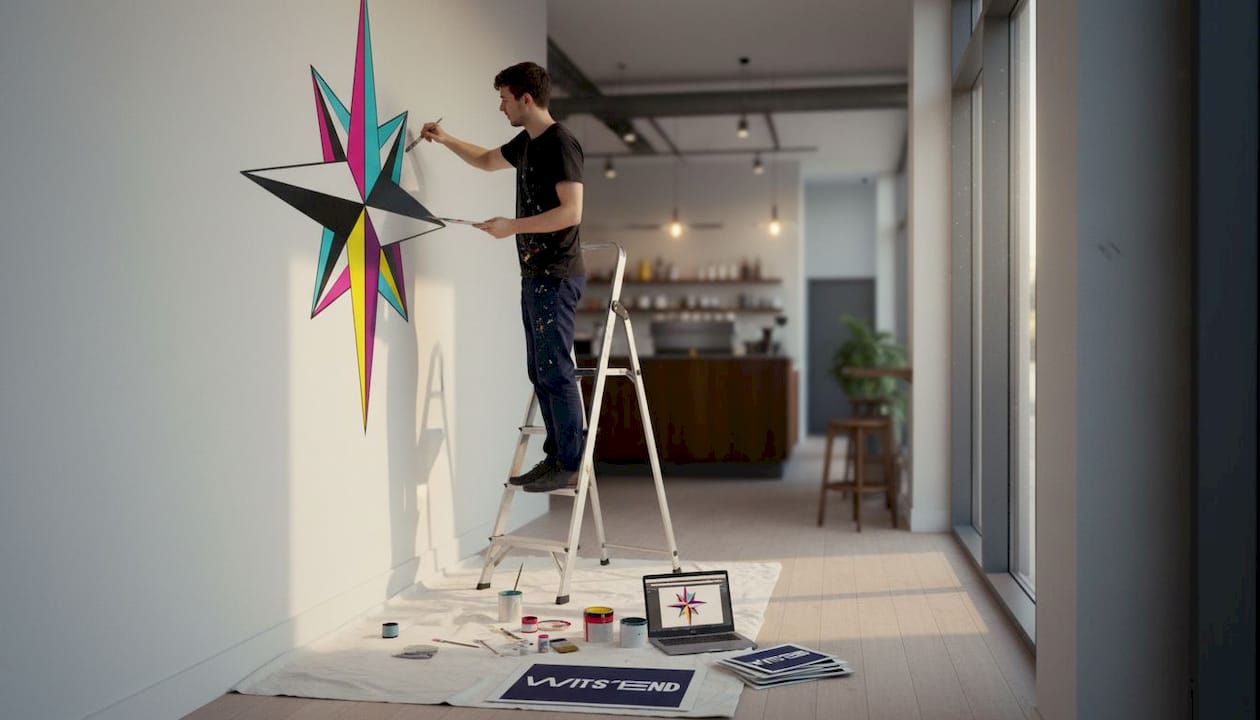
Color palettes boost recognition by up to 80%, and limiting your font choices to two or three typefaces enhances clarity and professionalism. Your logo should have variations for different contexts, a full version for signage, a simplified mark for digital profiles, and a horizontal format for packaging. Each version should communicate the same personality while adapting to its environment.
Here are practical visual identity elements worth investing in:
- Primary and secondary color palette: Choose colors that reflect your concept and evoke the right emotional response (warm tones for comfort, cool tones for sophistication)
- Typography system: A headline font paired with a body font that maintains legibility across print and digital
- Logo suite: Primary logo, secondary mark, and icon version for flexible use
- Photography style: A consistent approach to food and atmosphere photography that matches your brand personality
- Graphic elements: Patterns, textures, or icons that can reinforce identity across menus, packaging, and walls
Pro Tip: Build a simple brand guidelines document before you roll out new visuals. Even a two-page PDF outlining your colors (with hex codes), approved fonts, and logo usage rules will ensure every vendor, designer, and team member stays on the same page. Inconsistent application of your visuals undermines the investment quickly.
Understanding why branding matters from a revenue perspective makes it easier to justify these investments. Visual identity isn't decoration. It's the first signal guests use to judge whether your restaurant matches their expectations.
Brand consistency: Across digital, physical, and experiential touchpoints
Once you have a strong visual identity, maintaining brand consistency is where the real work happens. Consistency signals professionalism and builds the kind of trust that turns first-time visitors into regulars.
Brand consistency across digital, physical, and experiential touchpoints is essential for loyalty and revenue. Digital touchpoints include your website, social media profiles, Google Business listing, and any online advertising. Physical touchpoints cover your interiors, signage, menus, packaging, uniforms, and takeout containers. Experiential touchpoints are the moments guests actually feel your brand: how staff greet them, how dishes are presented, and the mood your space creates.
Brands maintaining consistency see up to 23% higher revenue, and Chick-fil-A demonstrates this at scale, achieving four times the sales per restaurant compared to competitors despite being closed on Sundays. Their consistency in service, messaging, and values is not accidental. It is the direct result of deliberate brand discipline applied across every single touchpoint.
| Touchpoint category | Examples | Impact on guest experience |
|---|---|---|
| Digital | Website, social media, email, online ads | Shapes first impressions and drives discovery |
| Physical | Signage, menus, uniforms, packaging, interiors | Reinforces identity in the moment of service |
| Experiential | Staff tone, table settings, music, plate presentation | Creates emotional memory and drives loyalty |
Practical consistency tips every operator should implement:
- Audit your digital presence quarterly: check that profile photos, bio text, and menu info match across all platforms
- Standardize uniform guidelines so every front-of-house team member presents the brand the same way
- Use branded takeout packaging even for third-party delivery orders, since that box represents you in someone's home
- Write a brief service language guide that aligns how your team speaks with your brand personality
- Train managers to review the guest experience through the lens of brand consistency, not just operational execution
Connecting your brand to restaurant customer loyalty best practices creates a feedback loop where strong branding reinforces great service, and great service reinforces strong branding.
Innovative branding ideas: Out-of-the-box tactics for modern restaurants
Ready to go beyond conventional branding? Let's explore creative ideas that help restaurants truly stand out. The most memorable restaurants today combine thoughtful strategy with tactics their competitors haven't tried yet.
One important nuance: avoid design monotony in QSR environments by balancing standardization with local adaptation. A brand that looks and feels exactly the same in every market eventually blends into the background. The best operators know when to flex their identity to connect with a specific neighborhood, season, or community.
Here are proven innovative tactics worth exploring for your restaurant:
- Themed event nights: Build recurring experiences tied to your brand story, such as a coastal seafood concept hosting a monthly "fisherman's table" dinner with a fixed tasting menu and a featured fisherman as guest speaker.
- Localized partnerships: Collaborate with nearby farms, breweries, or artisans and feature them prominently in your branding. This deepens community ties and differentiates you from chains.
- Branded merchandise: Sell items your regulars actually want to own, from quality tote bags to branded hot sauces. Merchandise extends your brand beyond your four walls.
- Staff storytelling: Give team members a platform through social media takeovers or "meet the team" content. Humanizing your staff makes your brand more relatable.
- Digital ad campaigns with trackable ROI: Targeted advertising on platforms like Yelp can yield remarkable returns. Yelp ads for one restaurant drove 6,193 visits on a $3,842 spend, yielding a 51x return on investment.
- Seasonal menu branding: Give seasonal offerings their own visual identity and name within your broader brand, building anticipation and giving regulars a reason to return.
- Community-driven naming: Involve your neighborhood in naming dishes or new menu sections through social media polls. Guests feel ownership in the brand when they contribute.
| Approach | Traditional branding | Innovative branding |
|---|---|---|
| Visual identity | Static logo and color scheme | Flexible visual system with seasonal and local adaptations |
| Marketing channel | Print ads, static signage | Targeted digital campaigns with measurable ROI |
| Community connection | Generic "family-friendly" messaging | Named partnerships with local farms and artisans |
| Guest engagement | Loyalty punch cards | Social media takeovers, collaborative menu naming |
| Staff presence | Uniform-only standards | Staff storytelling and featured team content |
Pro Tip: Before rolling out a major branding change, test it at small scale first. Run a seasonal campaign, launch a single merchandise item, or host one themed event night. Measure guest response before committing to a full execution. This approach protects your budget and gives you real data to inform bigger decisions.
If you're evaluating restaurant rebranding case studies, you'll find that the most successful transformations share one trait: they were driven by strategy and tested incrementally, never overhauled all at once.
Branding pitfalls: Lessons from failed and successful restaurant rebrands
As you start trying bold ideas, learn from brands that misstepped and those that thrived. Real-world examples offer the clearest lessons.
The most damaging mistake a restaurant brand can make is ignoring what made it beloved in the first place. Cracker Barrel's rebrand ignored the nostalgic heritage that loyal guests had built deep emotional connections with, leading to a $262 million market value loss, an 8% traffic drop, and a significant stock decline. The company reversed course quickly, but the damage was done. Guests don't forgive quickly when a brand abandons its identity without warning.
On the other side, Chick-fil-A's consistent commitment to its core values and service standards has produced a brand that generates four times the per-restaurant sales of many competitors. No amount of flashy redesign produced that result. It came from discipline and clarity over decades. Those lessons from restaurant rebrands are directly applicable regardless of your restaurant's size or concept.
Common branding mistakes every operator should avoid:
- Chasing design trends without a strategic reason: A minimalist rebrand makes sense if it reflects your concept. It doesn't make sense just because it looks current.
- Neglecting guest feedback before and after changes: Loyal guests are your best brand consultants. Survey them, talk to them, and listen carefully.
- Inconsistent rollout: Updating your social media before your physical signage creates confusion and signals disorganization.
- Abandoning heritage without transition: If your brand has history, honor it. Evolution is healthy; erasure is risky.
- Skipping internal alignment: Your team needs to understand and believe in the brand before guests can feel it.
A rebrand done without guest insight is a financial gamble with poor odds. The most costly rebrands in restaurant history shared one failure: they prioritized the owner's vision over the guest's existing relationship with the brand.
Our perspective: Why strategic clarity matters more than trendy design
After working through real-world successes and expensive missteps, here is where we stand. The restaurant industry has a consistent tendency to treat branding as a visual problem when it is actually a clarity problem. Owners invest in new logos and updated color palettes hoping that fresh aesthetics will fix stagnant sales. Sometimes they get a short-term bump. Usually, six months later, the same underlying issues remain.
What actually moves revenue is the discipline to define who you are before you decide what you look like. When your team understands the brand deeply enough to live it during every shift, and when every guest touchpoint reflects the same identity, the cumulative effect is powerful. It turns a shift into a well-run service. It turns a first visit into a habit.
We also want to be direct about something: authenticity is more durable than minimalism or any other design trend. In uncertain economic conditions, guests gravitate toward the familiar and the genuine. A restaurant that feels real, that has a clear point of view and stands behind it consistently, earns loyalty that a trend-chasing brand rarely sustains.
Our practical advice? Invest in more on branding strategy before you invest in design execution. Get clarity on your mission, your audience, and your positioning. Then build visuals and experiences that express that clarity. Iterate in small, testable increments. Track results. Adjust based on what your guests tell you, both through their words and through their behavior.
The restaurants we admire most aren't the ones with the most Instagram-worthy interiors. They're the ones where everything, from the first social media impression to the last bite of dessert, feels intentional and true to what the brand promises.
Next steps: Unlock expert restaurant branding support
Building a restaurant brand that drives real results takes more than a style refresh. It takes a clear strategy, consistent execution, and the willingness to test, measure, and improve over time.
At Wits' End, we work with restaurant owners at every stage of this process. From initial brand development services that help you define your concept and visual identity, to restaurant training programs that align your team with your brand standards, to hospitality analytics and advising that measure whether your branding investments are actually moving the needle. We've done this work ourselves, which means we advise from experience, not theory. If you're ready to build a brand your guests remember and return to, we'd love to be part of that journey.
Frequently asked questions
What are the most important first steps in restaurant branding?
You should define your mission, vision, values, target audience, personality, and positioning before anything else. The restaurant branding methodology is clear: strategic foundations must come before visual elements.
How can I keep my restaurant's branding consistent?
Create visual and experiential guidelines covering every touchpoint, from digital to packaging to guest experience. A consistent color palette alone can boost brand recognition by up to 80%, and structured guidelines make that consistency achievable for your whole team.
Does branding really affect restaurant revenue?
Absolutely. Brands maintaining consistency see up to 23% higher revenue and significantly stronger customer loyalty compared to brands with fragmented or inconsistent identities.
What happens if I ignore my restaurant's heritage during a rebrand?
You risk alienating loyal guests and real financial damage. The Cracker Barrel rebrand that ignored its nostalgic heritage resulted in a $262 million market value loss, an 8% traffic drop, and a rapid stock decline before the brand reversed course.
How can I measure branding ROI for my restaurant?
Track revenue changes, customer visit volume from digital campaigns, and guest retention rates. Targeted digital advertising can be especially measurable. Yelp ads for one restaurant generated 6,193 visits on a $3,842 spend, a clear example of what trackable branding investment looks like in practice.