

Most business leaders know something is slowing them down. Margins tighten, labor costs climb, and guest complaints repeat. Yet the advantages of business optimization often get buried under vague promises and theoretical frameworks. This article cuts through that noise. You'll find six concrete benefits, backed by real data, that explain why improving business efficiency is not a support function or a cost center exercise. It is the most direct path to higher profits, stronger teams, and a business that can actually grow.
Table of Contents
- Key takeaways
- 1. Increased operational efficiency through streamlined processes
- 2. Significant cost reductions in direct and indirect expenses
- 3. Enhanced decision-making through data and process transparency
- 4. Improved quality and higher guest satisfaction
- 5. Increased employee engagement and reduced burnout
- 6. Scalability and agility when it matters most
- My perspective on what optimization actually requires
- How Witsendsolutions can help you put this into practice
- FAQ
Key takeaways
| Point | Details |
|---|---|
| Efficiency gains are measurable | Optimized processes can cut cycle time by up to 50% and raise productivity by 20% to 30%. |
| Cost reductions go beyond cutting labor | Savings of 15% to 35% come from labor, materials, overhead, and supplier strategy combined. |
| Data beats intuition | Process transparency reveals bottlenecks that traditional reporting never surfaces. |
| Quality and retention are linked | Fewer defects and faster resolution directly raise guest loyalty and repeat revenue. |
| Scalability requires a system | Businesses that grow without optimized processes typically hit the same walls at greater scale. |
1. Increased operational efficiency through streamlined processes
This is where most operators feel the pain first. A ticket gets lost. A handoff between departments takes three times longer than it should. A task that one person does in ten minutes takes another forty-five, and no one knows why. These are not personality problems. They are process problems.
Comprehensive process optimization can increase productivity by 20% to 30% and cut cycle time by 50%, with automated processes delivering 50% to 70% productivity improvements specifically. Those numbers are not hypothetical. They reflect what happens when you stop expecting people to compensate for a broken system and actually fix the system itself.
In hospitality, this shows up clearly. Think about how long it takes your team to turn a room after late checkout, or how many steps a server takes between the kitchen and a table because of a poor floor plan. Each of those inefficiencies has a cost in time, labor, and guest experience. When you run efficient daily operations, you build a floor that performs without heroics from your best people.
Automation plays a key role here too. Repetitive administrative tasks like scheduling updates, inventory counts, and reporting can be handled by technology, freeing your team to focus on the work that actually requires human judgment.
Pro Tip: Before automating anything, map the process manually. Automating a broken workflow makes the problem faster, not better. Understand what should happen before you decide what technology should do.
The connection between faster internal operations and customer responsiveness is direct. Guests notice when a team is clear on its roles. They feel the difference between a shift that runs well and one that is reacting all night.
2. Significant cost reductions in direct and indirect expenses
Cost savings through optimization are some of the most immediately visible business optimization benefits, and they tend to appear faster than most leaders expect. AI-enhanced process optimization delivers 15% to 35% cost savings across retail, electronics, and service industries. For hospitality, the sources of those savings are specific and predictable.
Here is where the money typically surfaces:
- Labor cost alignment. Scheduling tied to actual demand patterns rather than guesswork reduces overstaffing during slow periods without creating gaps during peak times.
- Materials and food cost. Specification optimization and portion control directly reduce waste without affecting the guest experience. This is a core piece of F&B optimization.
- Supplier negotiations. When you know your actual usage data, you negotiate from a position of knowledge rather than habit. That changes the conversation.
- Overhead reduction. Energy use, linen costs, and supply ordering are all areas where small systematic changes compound into meaningful annual savings.
The less obvious gains come from indirect cost management. Rework, complaint resolution, and staff turnover all carry significant financial weight that rarely shows up on a single line of the P&L. When your processes improve, those costs shrink. A 200% to 300% median ROI over three years is not unreasonable when you account for the full picture.
Total cost thinking matters here. Decisions about where to source, what to automate, and where to invest should be guided by total landed cost models that account for risk and volatility, not just unit price comparisons. The cheapest vendor on paper is rarely the least expensive partner in practice.
3. Enhanced decision-making through data and process transparency
One of the most underrated advantages of business optimization is what it does to your ability to make good decisions quickly. When processes are mapped and measured, you stop managing by instinct and start managing by evidence.
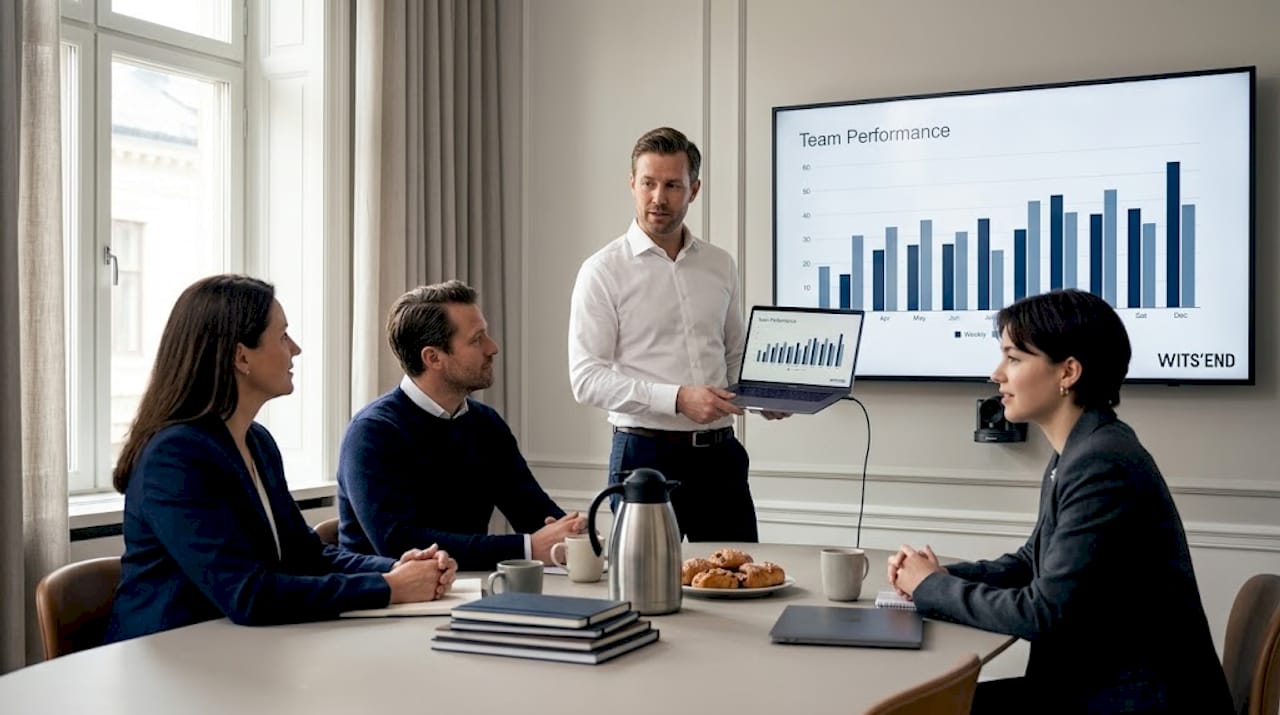
Process intelligence reveals inefficiencies hidden from traditional reporting, but unlocking that financial value requires addressing organizational silos and incentive conflicts first. That is the part most leaders skip. They invest in dashboards and analytics tools, then wonder why behavior does not change. The data is only useful if the structure around it supports honest interpretation.
Here is how data-driven decision-making plays out practically in an optimized operation:
- You identify where the bottleneck actually is, rather than where it appears to be on the surface.
- You test a targeted change in one area and measure the result before scaling it.
- You track trends over time so that seasonal shifts, cost spikes, or performance dips get caught early.
- You build a shared language across your team around what good performance looks like, which makes accountability specific rather than vague.
Deep analytics and advising can accelerate this significantly, particularly when your data is already being captured but not yet connected in a way that drives decisions.
Pro Tip: Start with one metric that genuinely affects your P&L and build the habit of reviewing it weekly with your team. Breadth of data is far less useful than consistent depth on what actually matters.
The business process improvement cycle only works when measurement is built into the culture, not added on at the end of a quarter.
4. Improved quality and higher guest satisfaction
When your processes are clear and consistently followed, quality becomes predictable. That predictability is what builds trust with guests, and trust is what drives return visits. Organizations with continuous improvement cultures experience 40% fewer quality defects and 35% faster problem resolution. In a hotel or restaurant, those numbers translate directly into fewer comped meals, fewer negative reviews, and more guests who come back.
The connection between workflow clarity and complaint resolution speed is worth highlighting. When a guest has a problem, the speed and confidence of your team's response matters as much as the resolution itself. A team that knows its process handles complaints without escalating tension. A team that is guessing creates more problems than it solves.
- Right-first-time performance reduces the cost of rework and the burden on your best people to fix what should not have broken.
- Consistent execution across shifts builds a reputation that marketing alone cannot create.
- Faster resolution of guest issues turns a potential negative review into a recovered relationship.
Restaurant customer experience practices that prioritize process consistency see higher loyalty scores precisely because guests can rely on what they will receive.
The impact on brand reputation compounds over time. A business known for delivering consistently is one that guests recommend, return to, and forgive more readily when something occasionally goes wrong.
5. Increased employee engagement and reduced burnout
The human cost of operational dysfunction is real, and it shows up in your turnover numbers before it shows up anywhere else. When roles are unclear, workflows are broken, and expectations shift daily, your best people leave first because they have options. Those who stay often disengage.
Continuous improvement cultures produce 25% higher employee engagement and 40% less burnout. These are not soft metrics. Lower turnover means lower recruiting and training costs. Higher engagement means better guest interactions. The connection between how your team feels about their work and how your guests feel about their experience is not incidental. It is the mechanism.
When optimization clarifies who does what and why, frustration drops. Employees stop spending energy navigating around broken systems and start applying it to the actual job. Training programs that reinforce optimized processes help teams build fluency and confidence rather than just compliance.
Lean transformations yield 20% to 50% productivity gains alongside measurable employee satisfaction improvements. The discipline required to standardize processes also creates the psychological safety that comes from knowing what is expected. That matters enormously in high-pressure hospitality environments where staff are often managing multiple demands at once.
6. Scalability and agility when it matters most
Growth does not fix broken operations. It amplifies them. The business that struggles to maintain quality across two locations will not find it easier with five. The advantages of efficiency strategies become most visible precisely when you are trying to grow, because optimized, modular processes replicate in a way that improvised ones simply cannot.
Over 60% of companies identify internal process inefficiencies as leading causes of competitive losses. When market conditions shift fast, whether from an economic disruption, a labor shortage, or a change in guest expectations, the businesses that adapt quickly are the ones that already know how their operations work and can adjust specific components without destabilizing everything else.
The table below illustrates the difference between optimized and unoptimized businesses when facing a common growth or disruption scenario:
| Scenario | Unoptimized business | Optimized business |
|---|---|---|
| Opening a second location | Rebuilding processes from scratch | Replicating documented systems |
| Responding to a staffing gap | Reactive scramble, quality drops | Cross-trained team, workflow adjusts |
| Sudden cost pressure | Cutting broadly, risking quality | Targeting specific inefficiencies |
| New technology adoption | Disruption without a baseline | Integration into existing structure |
Technology and automation enable scalability, but they require a stable process foundation to work against. The business optimization approach that Witsendsolutions applies to hospitality clients is built around this exact principle: document, measure, improve, and then replicate.
Productivity as a strategic lever encompasses revenue, cost, and capital efficiency together. Businesses that treat it as a one-time project miss the compounding return that comes from sustained, ongoing improvement.
My perspective on what optimization actually requires
I have worked alongside enough operators to know that the biggest obstacle to sustainable optimization is not technology and it is not budget. It is the belief that fixing one thing once is enough.
Treating optimization as a continuous journey rather than a one-off project is what separates businesses that maintain their gains from those that slide back within six months. The leaders I respect most are the ones who build measurement into their routine and stay genuinely curious about what is not working, even when things look fine on the surface.
The other thing I have learned is that software rarely saves anyone. Technology alone rarely delivers ROI without the culture and governance to support it. I have seen restaurants buy expensive analytics platforms and then never change a single decision. The tool does not matter if the team does not have a habit of using the data.
Real optimization starts with honest process mapping, honest conversation about what is actually happening versus what you think is happening, and the discipline to act on what you find. That is harder than buying software. It is also far more valuable.
— Chris
How Witsendsolutions can help you put this into practice
If you recognize your operation in any of these six areas, you are not alone. Most hospitality businesses are leaving measurable money on the table through process gaps that are entirely fixable.
Witsendsolutions works with hotel and restaurant operators across the United States to diagnose inefficiencies, build better workflows, and put real measurement behind performance. From task force services that step directly into your operation to advanced analytics that surface what your current reporting misses, the work is grounded in what actually drives results on property. Every recommendation we make is one we have executed ourselves. If you are ready to move from knowing there is a problem to doing something about it, Wits' End is a good place to start.
FAQ
What are the main advantages of business optimization?
The primary advantages include increased operational efficiency, direct and indirect cost reductions, better decision-making through data, improved quality, higher employee engagement, and the ability to scale without rebuilding your operation from scratch.
How much can optimization reduce business costs?
Research shows that well-executed process optimization delivers 15% to 35% cost savings, with a median ROI of 200% to 300% over three years when productivity, labor, and overhead improvements are combined.
Why does business optimization matter for hospitality businesses?
In hotels and restaurants, thin margins and high labor costs make every inefficiency expensive. Optimization directly reduces waste, improves guest satisfaction, and lowers turnover, which are the three biggest variables in hospitality profitability.
How long does it take to see results from business optimization?
Data-driven improvements typically deliver 15% to 25% cost reductions and 20% to 30% cycle time improvements within the first 12 months, though cultural and engagement benefits often become visible much sooner.
Is technology required to optimize business operations?
Technology supports optimization but does not replace the work of understanding your processes first. Research consistently shows that tools alone rarely generate ROI without the culture, governance, and decision-making discipline to use them well.