
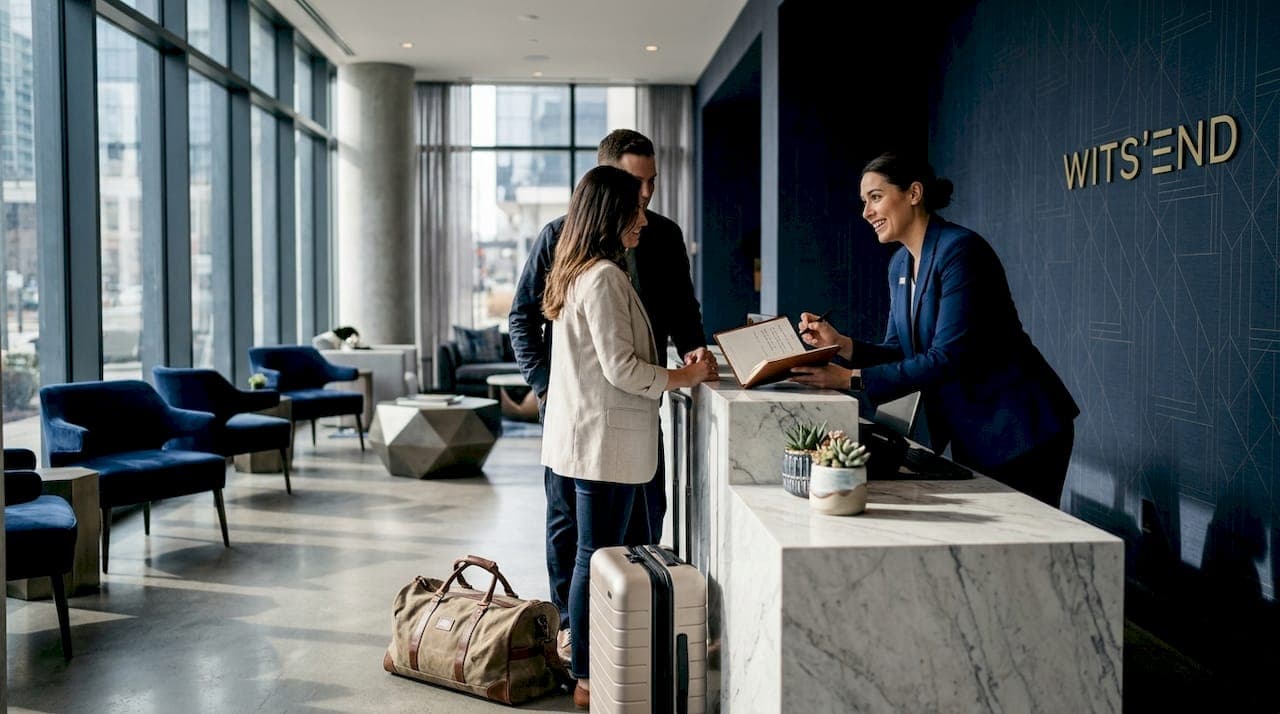
Most guests won't tell you why they didn't come back. They simply won't return. The gap between what guests expect and what most properties deliver is wider than most operators realize. 61% of consumers will pay more for a customized experience, yet only 23% of hotel stays deliver a highly personalized one. That gap is exactly where precision hospitality lives. The term describes what the industry calls hyper-personalization at scale: the deliberate use of data, technology, and operational discipline to give each guest exactly what they need, when they need it, without them having to ask twice.
Table of Contents
- Key takeaways
- What precision hospitality actually means
- How technology makes it possible
- Operational precision: staffing, scheduling, and resource allocation
- Building personalized guest experiences that actually land
- Common challenges and how to clear them
- My take: precision is the new luxury standard
- How Witsendsolutions can help you get there
- FAQ
Key takeaways
| Point | Details |
|---|---|
| Personalization gap is real | Only 23% of hotel stays are highly personalized despite strong consumer demand for it. |
| Unified data drives service | Connecting PMS, POS, and CRM into one profile lets staff act on guest preferences in real time. |
| Labor must flex with demand | Treating staffing as a dynamic resource, not a fixed cost, directly protects margins and service quality. |
| Technology needs a human filter | AI and automation work best when they free staff to focus on emotional connection, not replace it. |
| Execution determines outcomes | Even the best concept fails without operational precision at every stage of the guest journey. |
What precision hospitality actually means
The phrase "precision hospitality" gets used loosely, but the underlying concept has a clear definition in practice. It refers to a service model that integrates hyper-personalization, real-time operational data, and purpose-built technology to deliver experiences that feel tailored rather than transactional. The industry term most closely aligned with this approach is data-driven guest experience management, and the two ideas are deeply connected.
Where traditional service models rely on category assumptions (business traveler, leisure guest, regular diner), precision hospitality starts from the individual. Unified guest intelligence creates a single, real-time profile by pulling together data from across departments and previous stays, allowing any team member to deliver relevant service without a long briefing.
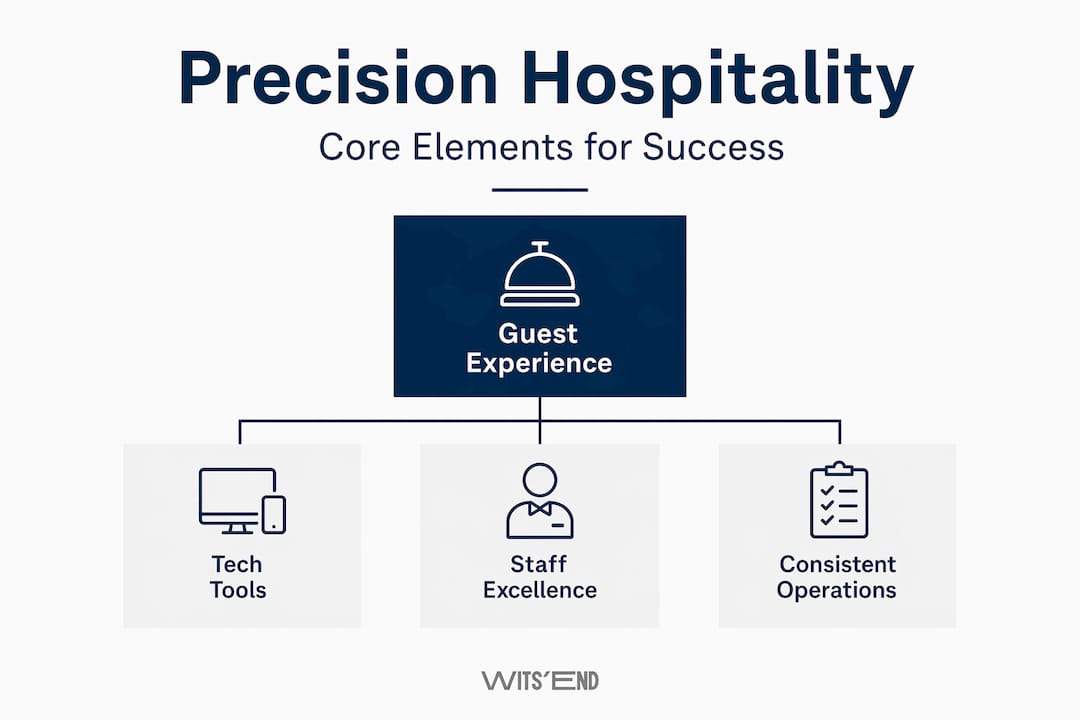
What separates this from general "good service" comes down to three things:
- Unified data. Guest preferences, visit history, F&B spend, and service requests all feed one profile, not four disconnected systems.
- Operational agility. Staffing, inventory, and service delivery adjust based on real demand signals, not last week's forecast.
- Purposeful technology. Tools like AI chatbots and predictive analytics handle the routine work so your team can focus on the moments that matter.
The balance between technology and human warmth is not optional. True luxury is defined by precision and emotional resonance, not by amenities or excess. That distinction matters whether you are running a 400-room hotel or a 60-seat restaurant.
How technology makes it possible
The tools powering precision hospitality have matured significantly in the past three years. You no longer need a custom build or an enterprise-level budget to access the technology that makes personalization scalable.
Start with the infrastructure. Connecting POS, PMS, and CRM data into an integrated platform is the foundational step. When those systems talk to each other, your team stops relying on memory and manual handoffs. A front desk agent checking in a returning guest can see F&B preferences from the last visit. A server can know a table's dietary restrictions before the menus hit the table. Disconnected systems force manual workarounds that slow service and introduce errors.
On top of that infrastructure, three technology categories have direct impact on guest experience quality:
- AI-driven messaging. 77% of hospitality consumers are open to automated messaging or chatbots for routine service if those tools retain context and respond accurately. Pre-arrival messaging, room preference confirmation, and post-stay follow-up all fit here.
- Predictive analytics. When your data is unified, patterns emerge. You can anticipate which guests are likely to request late checkout, which tables will order a second bottle, or which nights will see above-average demand at the spa. Acting on those predictions before the moment arrives is the definition of anticipatory service.
- CRM with behavioral triggers. A guest who booked a spa treatment on their last two visits should receive a soft offer before the third. That kind of logic, built into your CRM, does not require a staff member to remember anything. It just works.
Pro Tip: Before investing in new technology, audit what your current systems already capture. Most properties are sitting on useful data they never act on. Integration often delivers more value than addition.
The caution here is real. Over-reliance on AI risks diminishing the warmth and spontaneity that guests actually remember. Technology should handle the transactional so your people can own the emotional. That division of labor is where hospitality technology trends are heading in 2026, and the most successful operators are already living there.
Operational precision: staffing, scheduling, and resource allocation
Here is where many properties lose the thread. You can have the best CRM in the business, but if your team is understaffed during peak service or overloaded with admin work during slow periods, the guest experience suffers regardless of your data.
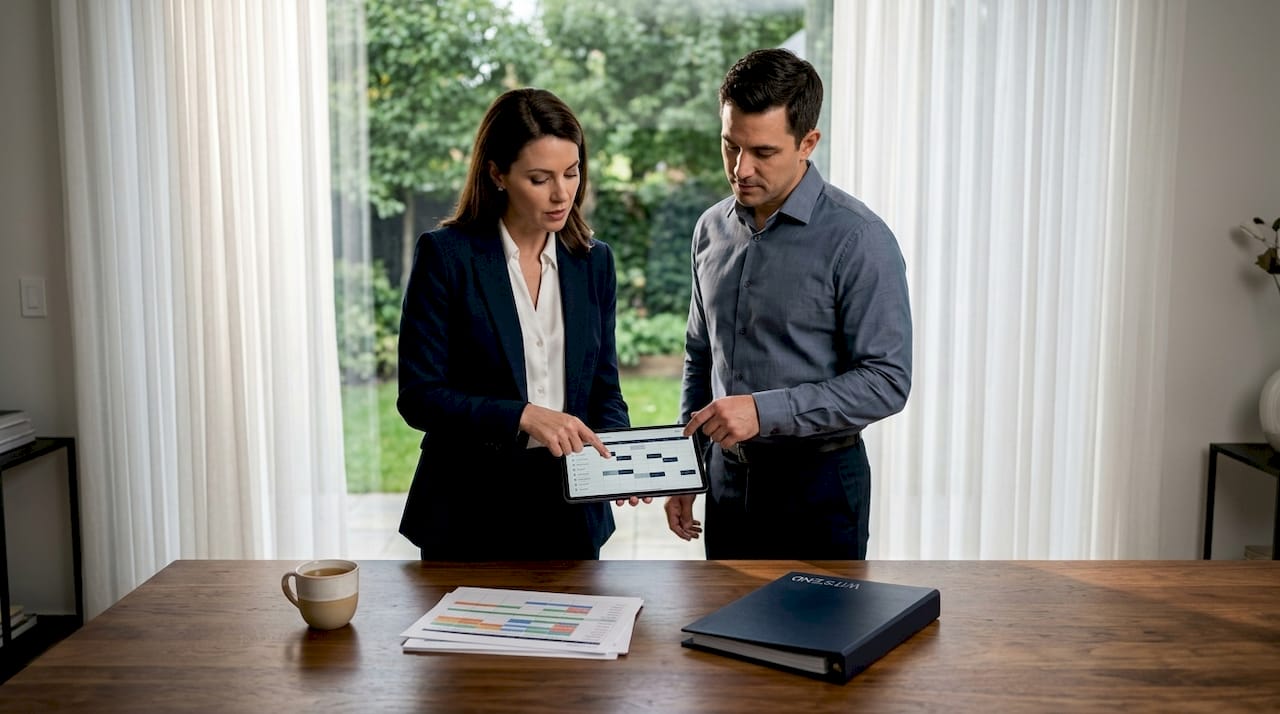
Precision in labor management means treating staffing as a fluid, demand-responsive resource rather than a fixed weekly cost. Sophisticated operators adjust staffing every 24 hours based on occupancy forecasts, F&B covers, and event schedules. This is not a small tweak. Accurate labor forecasting reduces hours per occupied room by 7 to 15%, protecting margin without cutting service quality.
A practical framework for getting there looks like this:
- Move beyond vanity metrics. Total labor cost as a percentage of revenue tells you something, but minutes per occupied room (MPOR) and covers per labor hour tell you what is actually happening at the unit level. Track both.
- Build a 24-hour scheduling rhythm. Review demand signals daily, not weekly. A rainy Sunday at a beach resort looks nothing like a sunny one. Your staffing should reflect that difference.
- Establish cross-departmental communication. Housekeeping, F&B, and front desk need to share occupancy data in real time. When a group checks out two hours early, the whole operation should know and respond, not just one department.
- Define role-level productivity benchmarks. When you know what good looks like for each role, you can identify gaps quickly and coach to a specific standard rather than a vague one.
Pro Tip: If your managers are building next week's schedule from memory and a gut feel about busy nights, you are leaving margin on the table. Even a basic demand-based scheduling template, built from PMS data, changes the conversation.
The operational side of precision hospitality does not get enough attention. It is the engine under the experience. When it runs cleanly, everything your guests see and feel benefits.
Building personalized guest experiences that actually land
Precision without feeling is just efficiency. The goal is not to impress guests with what you know about them. The goal is to make them feel genuinely seen and cared for without the experience feeling clinical or surveilled.
Unified guest intelligence empowers every employee across a property to deliver relevant, context-aware service. But data only creates the opportunity. What happens in the moment depends on your team's ability to use that information with warmth and judgment.
A few principles that separate personalized guest experiences that resonate from ones that feel hollow:
- Subtle beats obvious. Remembering a guest's preferred pillow type or greeting a returning diner by name costs nothing and lands harder than a welcome amenity with a typed card. Small specifics signal attention.
- Train for fluency, not just compliance. Your team needs to understand why the data matters, not just how to find it in a system. When a server understands that the couple at table seven is celebrating an anniversary, they make better judgment calls throughout the service.
- Protect the human moments. Technology handles the prep work. Your people own the interaction. A well-timed joke, a genuine recommendation, or a moment of real conversation cannot be scripted or automated. Emotional resonance drives loyalty in ways that a free upgrade never will.
- Honor local identity. Guests, especially in independent and boutique properties, are drawn to authenticity. Personalization should reinforce what makes your place distinct, not sand it down into a generic luxury template.
You can learn more about the connection between restaurant loyalty practices and personalized service to understand how restaurants specifically can build lasting guest relationships through these methods.
Common challenges and how to clear them
Even experienced operators run into predictable obstacles when implementing this level of service precision. The good news is that most of them have direct solutions.
| Challenge | Best Practice |
|---|---|
| Disconnected technology systems | Consolidate PMS, POS, and CRM data into one integrated platform to eliminate manual workarounds |
| Staff resistance to data tools | Invest in training that frames data as a service aid, not a surveillance mechanism or extra admin |
| Automation undermining warmth | Use AI for routine tasks only; preserve personal interaction for service-critical moments |
| Leadership skepticism on ROI | Tie precision KPIs to measurable outcomes like guest satisfaction scores, repeat visit rate, and RevPAR |
| Cultural inertia in operations | Build data-driven habits gradually; start with one department and let success create internal advocates |
Operational discipline in execution is what separates concepts that look great on paper from ones that actually work on the floor. The implementation phase is where most precision initiatives stall. Leadership commitment and continuous cross-department communication are not soft factors. They are what data-driven agility requires to take hold in an organization.
The most honest framing: precision hospitality is not a project. It is a practice. It requires measuring customer satisfaction in hospitality through granular KPIs, revisiting your tools regularly, and keeping your team's skills current. The properties that treat it as an ongoing discipline rather than a one-time rollout are the ones that actually hold the competitive advantage over time.
My take: precision is the new luxury standard
I've worked with a lot of operators who initially frame this conversation as a technology question. Which platform should we buy? Do we need a new PMS? The answer is almost always the same: the technology is rarely the problem. The discipline to use it consistently is.
What I've seen work, again and again, is operators who make a cultural decision first. They decide that their team will use data to serve guests better, and they build systems and training around that decision. The technology follows naturally once the mindset is there.
The operators I respect most have figured out something that the broader industry is still catching up to. Precision is not a premium add-on for five-star properties. It is the baseline expectation for any guest who has had even one truly personalized experience elsewhere. That bar is moving. And in 2026, the properties that have not yet connected their data and trained their teams to use it are already running behind.
The good news is that modern guest experience expectations are well documented, and the path to meeting them is clearer than it has ever been. You do not need to build this alone.
— Chris
How Witsendsolutions can help you get there
Precision hospitality requires the right combination of strategy, technology, people, and process. Witsendsolutions works with hotels and restaurants across the United States at every stage of that build, from initial concept to daily operations.
Whether your team needs help connecting your data systems through advanced analytics and reporting, building staff capabilities to use guest intelligence confidently, or rethinking your operations through business optimization services, Witsendsolutions brings real operating experience to every engagement. Our team has done this work themselves before recommending it to anyone else. If you are ready to close the gap between the experience you intend and the one your guests actually have, Wits' End is ready to work alongside you.
FAQ
What is precision hospitality?
Precision hospitality refers to a service model that uses unified guest data, operational analytics, and targeted technology to deliver experiences tailored to each individual guest. It is the operational practice behind what the industry calls hyper-personalization at scale.
How does technology support personalized guest experiences?
Tools like integrated CRM systems, AI chatbots, and predictive analytics allow hospitality teams to anticipate guest needs and automate routine interactions, freeing staff to focus on meaningful personal service moments.
What role does labor management play in precision hospitality?
Staffing is a core component. Dynamic labor forecasting that adjusts to real demand signals keeps service quality consistent while protecting labor costs, reducing hours per occupied room by 7 to 15% when done well.
How do you balance AI automation with human warmth?
AI complements emotional intelligence best when it handles transactional tasks like confirmations, scheduling, and data entry, leaving your team's energy for the interactions that build loyalty and genuine connection.
Where should a hotel or restaurant start with precision hospitality?
Start with your data infrastructure. Connecting your PMS, POS, and CRM into a unified platform gives you the foundation everything else depends on, before adding new tools or retraining your team.