

Design is not decoration. For hotel and restaurant operators, the role of design in guest experience goes far deeper than a fresh coat of paint or a stylish light fixture. It shapes how guests feel the moment they walk in, how long they stay, and whether they come back. Hospitality design, the industry's term for intentionally crafting physical and sensory environments to influence guest behavior and emotion, touches every decision from spatial layout to acoustic zoning. This guide breaks down how each layer of that system works, and what you can actually do with it.
Table of Contents
- Key Takeaways
- The role of design in guest experience: more than first impressions
- Lighting, acoustics, and comfort: the operational layer
- Designing for presence and meaningful engagement
- Practical strategies for adaptive design implementation
- My take: design is a business decision, not a finishing touch
- How Witsendsolutions can help you design for guest loyalty
- FAQ
Key Takeaways
| Point | Details |
|---|---|
| Design drives emotion, not just aesthetics | Physical environments directly influence guest mood, comfort, and memory formation throughout a visit. |
| Multisensory coordination builds loyalty | Coordinated sound, light, and visual design produces stronger loyalty than any single design element alone. |
| Lighting and layout interact for safety | Poor lighting in complex spaces can increase evacuation time by over 115%, making integrated design a safety issue. |
| Presence-oriented design deepens engagement | Reducing distractions and guiding attention helps guests form stronger memories and brand connections. |
| Refresh cycles protect long-term experience quality | Adaptive decoration planning with structured refresh cycles maintains guest satisfaction and operational excellence. |
The role of design in guest experience: more than first impressions
When most operators think about design, they picture the Instagram moment. The dramatic entryway. The moody bar lighting. Those things matter, but they are the surface of a much deeper system. Modern hospitality design treats a property as a flexible ecosystem, where guests move through contrasting moods and spaces that invite exploration and personal transformation. That framing shifts the goal from "looks great" to "feels right, at the right moment."
Spatial zoning is one of the most underused tools in this system. A restaurant or hotel that carves out distinct zones for quiet conversation, energetic social dining, and solitary work gives guests agency over their own experience. When guests feel that choice, they relax. They stay longer. They come back because the space worked for them personally, not just because the food was good.
Multisensory coordination takes this further. Audiovisual design interactions show the strongest association to guest loyalty when sound and visual elements work together deliberately. A beautifully decorated dining room with a jarring playlist, or a stunning hotel lobby with dead acoustic silence, leaves guests feeling something is off without being able to name it. That unnamed discomfort is a retention problem you may never trace back to its source.
- Contrast between zones creates emotional engagement. Moving from a bright, energetic bar area into a quieter, dimmer dining room signals a shift in experience that guests feel and remember.
- Transition moments matter. Doorways, corridors, and stairwells are not just connective tissue. They are opportunities to pace the guest through a deliberate sensory shift.
- Guest participation drives deeper connection. When design invites guests to make choices rather than passively receive a scripted setting, they become participants rather than observers.
Pro Tip: Before your next design refresh, walk your space as a guest would for the first time. Note the exact moment the mood shifts, and whether that shift feels intentional or accidental. That exercise often reveals the single change with the highest return.
Lighting, acoustics, and comfort: the operational layer
Lighting is where aesthetics and operations collide most directly. Done well, it sets mood, guides movement, and supports staff in delivering service. Done poorly, it creates a safety liability that most operators never see coming. Spatial complexity combined with poor lighting can increase evacuation time by over 115% in immersive venues. That is not a design preference issue. That is a code and liability issue dressed in aesthetic clothing.
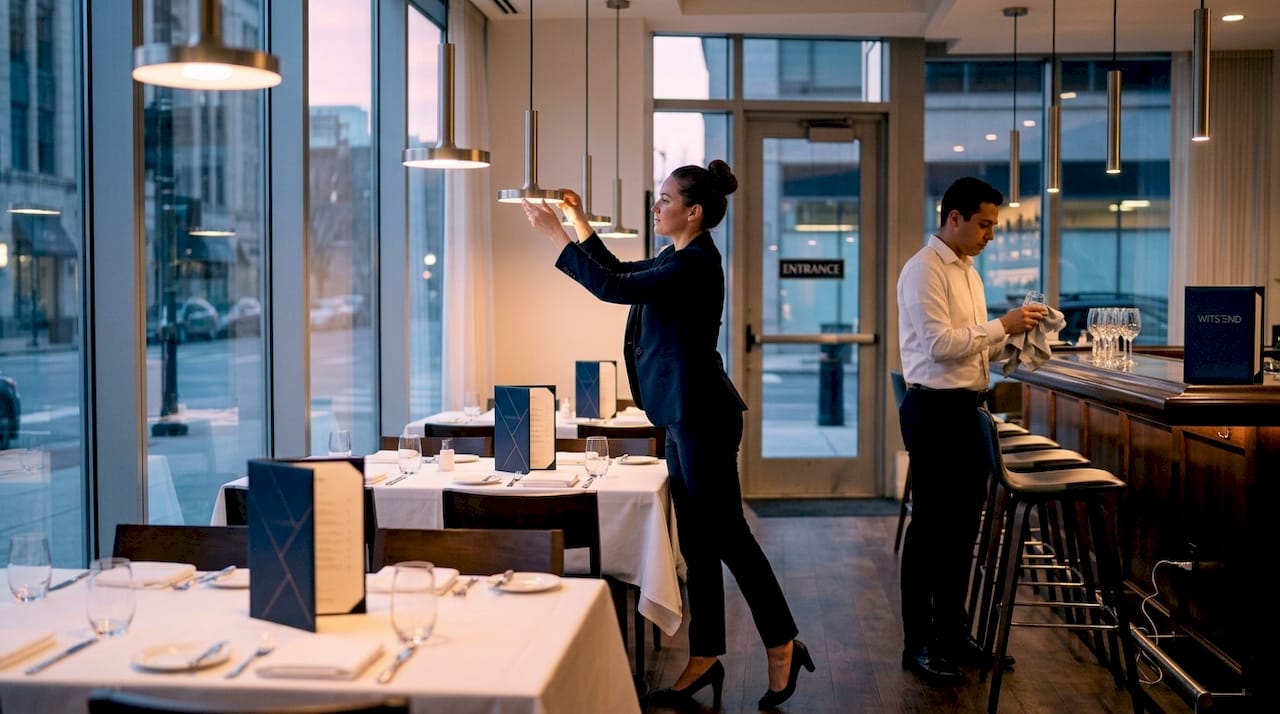
The practical lesson is that lighting and layout must be designed together, not sequentially. An intricate, multi-level dining room with dramatic low lighting reads as sophisticated on the surface. But if your emergency lighting plan is an afterthought, you have a serious problem. Design variables like spatial complexity and lighting interact synergistically, not additively, which means a problem in one amplifies the risk of the other.
Acoustics follow the same logic. Acoustic zoning in dining spaces directly influences conversation clarity, guest pacing, and length of stay. A table where guests have to lean in and shout is a table that turns over faster, not because service was efficient, but because the guests gave up on conversation. Conversely, a well-zoned space where conversation flows naturally encourages guests to linger, order another round, and rate the experience higher.
| Design element | Guest experience impact | Operational consideration |
|---|---|---|
| Lighting intensity | Mood setting, perceived comfort | Emergency egress compliance |
| Acoustic zoning | Conversation clarity, length of stay | Construction cost, HVAC interaction |
| Temperature control | Physical comfort, perceived quality | Energy cost, HVAC maintenance |
| Material selection | Tactile comfort, noise absorption | Durability, cleaning protocols |
Temperature and material choices round out the environmental comfort picture. Guests notice when a room is too cold or too warm long before they notice the art on the walls. Hard surfaces like concrete and glass amplify noise and create a high-energy atmosphere, which works for a loud, social bar concept but fights against an intimate tasting menu experience. Matching materials to concept is one of the clearest examples of how design elements in guest satisfaction work as a connected system.
Pro Tip: Commission an acoustic assessment before signing off on any renovation that involves new flooring, ceiling treatments, or open kitchen concepts. The cost of sound-absorbing panels after the fact is significantly higher than designing for acoustics from the start.
Designing for presence and meaningful engagement
There is a concept gaining serious traction in hospitality circles that most operators have not fully acted on yet. It is called presence-oriented design, and it comes from the field of socio-cognitive mindfulness. The core idea is straightforward. Experience quality depends as much on the guest's cognitive state and level of engagement as it does on the quality of the food, room, or service.
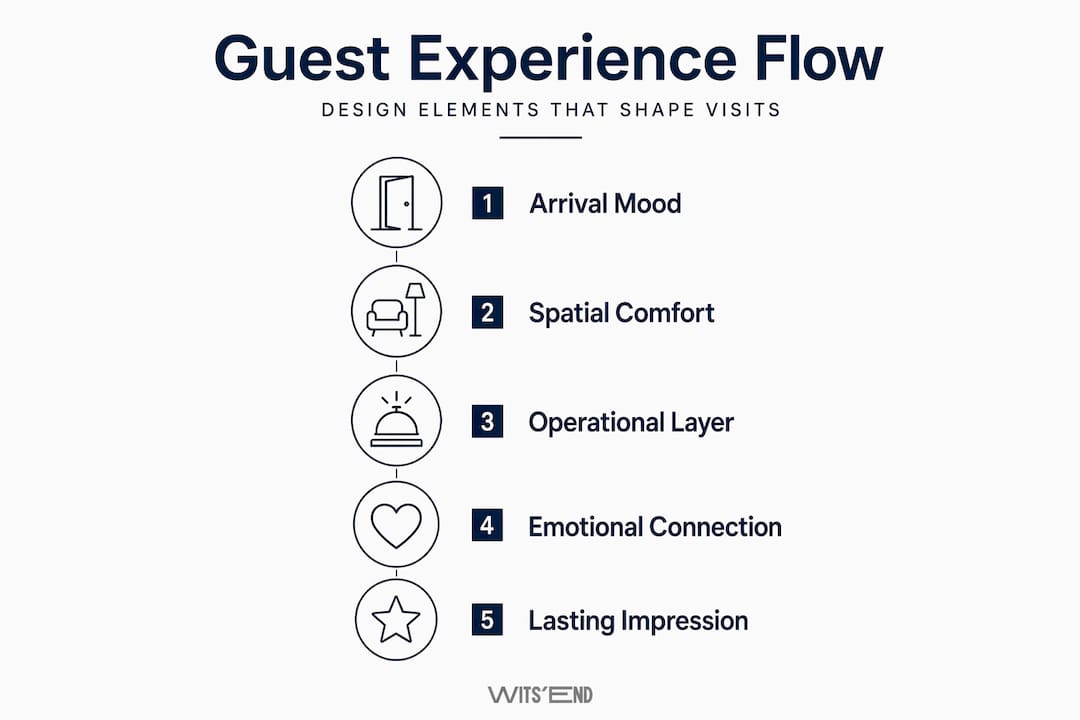
In practical terms, this means that a guest who is mentally distracted, scrolling their phone, or passively moving through your space will retain almost nothing about the experience. The same guest, gently guided to notice their surroundings, will form stronger memories, feel more satisfied, and be more likely to return. Design is one of the most powerful tools for making that guidance happen without it feeling forced.
Techniques for building presence into your design include several approaches that work across both hotel and restaurant settings.
- Purposeful pauses. A landing at the top of a staircase, a small seating area before the host stand, or a moment of visual interest at an entrance gives guests a reason to slow down and arrive mentally before they arrive physically.
- Sensory cues. Simple design prompts like a signature scent in the lobby, a curated soundtrack at a specific volume, or a textured wall panel near the entrance activate multiple senses simultaneously and pull attention into the present moment.
- Staff positioning and interaction. Where your team stands and how they engage guests in the first thirty seconds of a visit shapes whether guests feel they have arrived somewhere worth paying attention to.
- Reducing visual noise. Too many competing focal points, cluttered surfaces, or poorly sequenced signage fragments attention. A presence-oriented approach creates moments of pause and low-friction prompts rather than striving for either total stimulation or clinical minimalism.
The downstream benefits are concrete. Guests who are more present during their visit give higher satisfaction scores, write more detailed and positive reviews, and have stronger recall of specific moments, which are exactly the memories that drive word-of-mouth and repeat visits.
Practical strategies for adaptive design implementation
Good design does not stay good forever on its own. Chain hotels typically refresh interior design elements every two to five years, with a focus on adaptive elements like lighting adaptability and sound insulation. For independent operators, the same discipline applies even without a corporate mandate. The difference between properties that age gracefully and those that start to feel tired usually comes down to whether design governance is built into operations or treated as a one-time capital event.
An experience playbook is the most practical tool for maintaining consistency and managing refreshes over time. This is a documented set of standards for your key design variables, lighting levels by zone and time of day, target acoustic conditions in each area, air quality and temperature ranges, and the materials and finishes that define your brand's physical identity. Standardizing an experience playbook facilitates adaptive refresh planning that supports both brand identity and operational needs.
Here is a practical framework for scheduling design maintenance:
- Annual review. Walk the property with fresh eyes once a year and benchmark against your playbook. Flag any element that has drifted from standard.
- Two-year soft refresh. Update soft furnishings, lighting fixtures, and acoustic treatments that show wear. These have the highest visible impact for the lowest capital cost.
- Five-year structural review. Evaluate spatial layout, major finishes, and FF&E against current guest expectations and competitive positioning. This is where you decide whether the concept still fits the market.
- Continuous feedback loop. Build design-related questions into your guest feedback process. Guests will tell you what is not working before your eye adjusts to it.
Design also shapes service flow and operational efficiency in ways that directly affect your P&L. A kitchen pass that is poorly positioned relative to the dining room increases step counts for servers and slows ticket times. A hotel front desk that creates a bottleneck on arrival kills first impressions regardless of how warm the greeting is. Thoughtful restaurant design reduces confusion, encourages lingering, and supports return visits by making the operational and experiential layers work together rather than against each other.
My take: design is a business decision, not a finishing touch
I've worked with enough hotel and restaurant operators to know the pattern. Design gets the most attention before opening, when the budget is fresh and the vision is exciting. After that, it gets treated as a fixed asset until something breaks or looks embarrassing enough to replace. That approach costs far more than operators realize, not in renovation budgets, but in the guest loyalty they never build.
What I've seen consistently is that the properties doing best on satisfaction scores and repeat visits are not necessarily the ones with the biggest design budgets. They are the ones where someone takes ownership of the physical environment the same way a good GM takes ownership of the P&L. They track it, they refresh it, they connect it to outcomes.
The hardest shift for operators is recognizing that multisensory design and presence-oriented thinking are not premium add-ons for luxury properties. They are the mechanism by which any property creates the kind of emotional loyalty that fills covers and drives occupancy. Ignoring them does not save money. It just makes the revenue problem harder to diagnose.
The operators who treat design as an ongoing operational discipline rather than a one-time capital expense are the ones I want to partner with. They already understand that a well-run space and a well-run team are not separate goals.
— Chris
How Witsendsolutions can help you design for guest loyalty
At Witsendsolutions, design is not a side service. It is woven into how we think about building and running a hospitality business from the first concept sketch through years of operation.
Our brand design and development work helps you translate your concept into a physical environment that connects with guests at every sensory level, not just visually. And when a property needs hands-on support to reset the guest experience quickly, our task force services put experienced operators on property to identify what is working, what is not, and how to fix it. If you want to explore how design strategy can be built into your operations rather than bolted on after the fact, we would like to talk.
FAQ
What is the role of design in guest experience?
Design shapes how guests feel, behave, and remember their visit by influencing mood, comfort, and attention through physical space, lighting, acoustics, and sensory cues. It functions as an operational system, not just an aesthetic choice.
How does lighting affect guest perception in hotels and restaurants?
Lighting influences mood, guides movement, and affects how guests perceive quality and comfort. Poor lighting combined with complex spatial layouts can also increase evacuation time significantly, making it both an experience and a safety issue.
Why does acoustic design matter for guest satisfaction?
Acoustic zoning controls conversation clarity and ambient noise levels, which directly affects how long guests stay and how positively they rate their experience. A dining room where guests struggle to hear each other loses both the conversation and the repeat visit.
How often should hotels and restaurants refresh their interior design?
Research supports refreshing adaptive design elements like lighting and soft furnishings every two to five years, with a full structural review at the five-year mark to align the physical environment with evolving guest expectations.
What is presence-oriented design in hospitality?
Presence-oriented design uses layout, sensory cues, and staff positioning to guide guests into a more attentive, engaged state during their visit. Guests who are more mentally present during a stay form stronger memories and report higher satisfaction.