
TL;DR:
- Toast Loyalty is a guest rewards program bundled with Marketing Essentials, costing about $185 per month. It requires proper setup, permissions, minimal hardware, and thorough testing to ensure successful deployment. The program should be promoted consistently, managed across locations, and adapted based on data to build long-term guest retention.
Toast Loyalty is a built-in guest rewards program that lets restaurant operators reward repeat visits, collect customer data, and drive measurable revenue through a single POS-integrated platform. This toast loyalty program setup guide covers every step from permissions and bundle requirements through reward configuration, multi-location publishing, and promotion. Whether you run a single neighborhood café or a multi-unit group, getting this right from the start saves you time, protects your margins, and gives guests a reason to come back.
What prerequisites are needed before setting up Toast Loyalty?
Toast Loyalty is not a standalone purchase. It comes bundled with Marketing Essentials, which costs approximately $185 per month on top of your existing POS subscription. That pricing structure matters for budget planning. If you have not already subscribed to Marketing Essentials, you cannot access the loyalty configuration screens at all.

On the permissions side, your Toast Web account needs either the "4.8 Marketing Info" or "4.4 Gift/Rewards Card Reports" admin permission level to access loyalty settings. Most operators assign this to a general manager or owner-level account. Confirm this before you sit down to configure anything, or you will hit a wall mid-setup.
Hardware requirements are minimal. Any Toast POS terminal, kiosk, or online ordering integration already in use will support the loyalty program without additional equipment. Your existing setup is sufficient.
| Requirement | Detail |
|---|---|
| Bundle subscription | Marketing Essentials, approx. $185/month |
| Toast Web permission | 4.8 Marketing Info or 4.4 Gift/Rewards Card Reports |
| Hardware | Existing Toast POS, kiosk, or online ordering terminal |
| Setup time | 1–2 hours including testing |
| POS subscription | Required in addition to Marketing Essentials |
Pro Tip: Block 1–2 hours on a slow afternoon before launch. The technical configuration takes under an hour, but thorough testing across every ordering channel is what separates a clean rollout from a guest-facing problem on opening night.
How to choose the right loyalty program structure for your restaurant
Two accrual structures exist within Toast Loyalty: spend-based and visit-based. Spend-based programs award points for every dollar a guest spends. Visit-based programs award points each time a guest checks in, regardless of ticket size.
Full-service restaurants benefit most from spend-based models. A guest spending $90 on a dinner for two should earn more than a guest spending $18 on a solo lunch. Spend-based accrual reflects that difference and protects your average check value. Quick-service and fast-casual concepts, where ticket sizes are consistent and visit frequency is the real driver, perform better with visit-based structures.
Key factors to weigh when choosing your structure:
- Average ticket size: High variance favors spend-based; low variance favors visit-based.
- Visit frequency: High-frequency, low-ticket concepts benefit from rewarding the habit of returning.
- Margin sensitivity: Spend-based programs let you set minimum spend thresholds before points accrue, protecting low-margin items.
- Guest demographics: Regulars who visit daily respond well to visit-based; occasion diners respond to spend-based.
- Concept type: Bar programs, tasting menus, and fine dining align with spend-based; coffee shops and fast-casual align with visit-based.
Aligning your program structure with your actual business model is the single most important decision in this process. A mismatch here creates reward liability you did not plan for or a program guests find too hard to earn from.
Pro Tip: Write down your top three business goals before choosing a structure. If repeat visit frequency is goal one, choose visit-based. If average check growth is goal one, choose spend-based. The program should serve your P&L, not the other way around.
Step-by-step guide to setting up the Toast Loyalty program
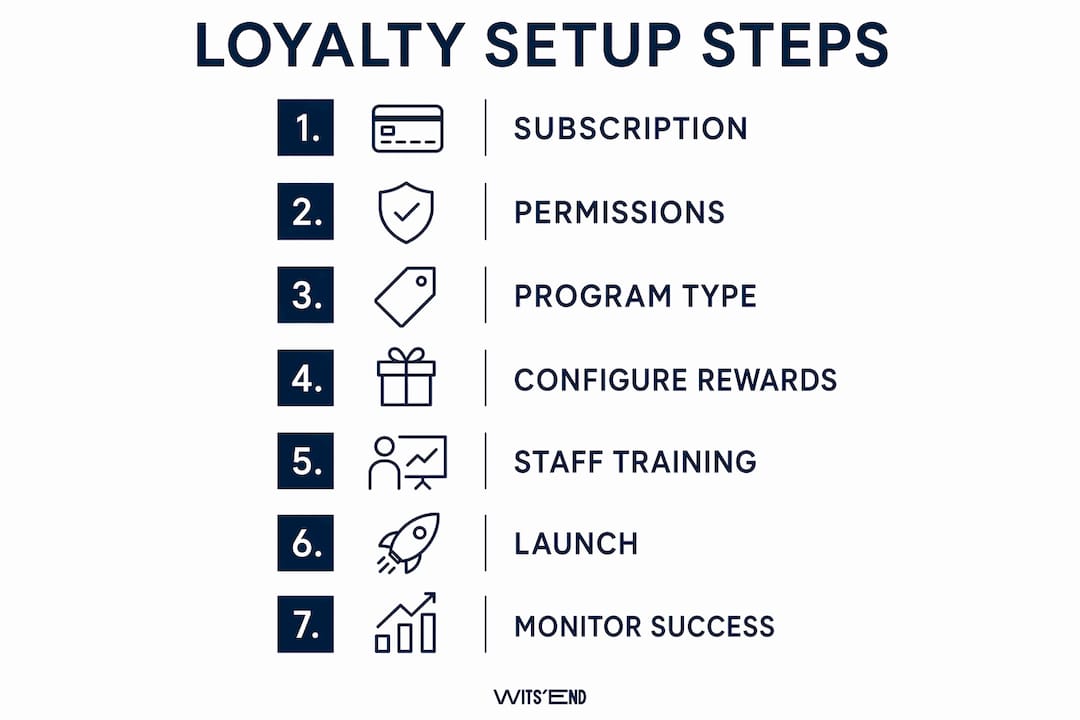
The full configuration lives inside Toast Web under Marketing > Loyalty > Settings. Log in, confirm your permissions are active, and work through each section in order.
- Name your program. Give it a name guests will recognize on receipts and in emails. Keep it short and on-brand. "The [Restaurant Name] Rewards Club" works well.
- Write a program description. This text appears during digital enrollment. Explain the value clearly: how guests earn points and what they can redeem them for.
- Set your accrual rate. For spend-based, define how many points a guest earns per dollar. For visit-based, define the points awarded per qualifying visit.
- Configure rewards. Rewards can be free items, percentage discounts, or fixed dollar discounts. Set the points threshold required for each reward and define which menu items are eligible.
- Set enrollment methods. Toast Loyalty is fully digital. Guests sign up via phone or email; no physical cards are needed. Choose whether staff can enroll guests at the POS or whether guests self-enroll through online ordering or a kiosk.
- Select ordering channels. Choose which channels participate: dine-in POS, kiosk, and online ordering. Activating all three gives guests the most consistent experience.
- Test before publishing. Run a test transaction on each active channel. Confirm points accrue correctly, rewards appear at the right threshold, and enrollment prompts display as expected. Cross-channel testing before launch is the step most operators skip and later regret.
- Publish the program. Once testing passes, publish the settings. The program goes live immediately across all selected channels.
Common mistakes to avoid: setting point thresholds so high that guests never reach a reward, forgetting to assign eligible items to specific rewards, and skipping the test transaction step entirely.
Pro Tip: Run a real transaction with a staff member's phone number during testing. Check that the confirmation text or email arrives, the points show correctly in the guest profile, and the redemption flow works end to end before any guest touches it.
How to manage multi-location loyalty programs and optimize rewards
Multi-location operators face one critical rule: reward configuration must be saved and published at each individual location. Publishing at the group level alone does not push reward settings to every restaurant. This is the most common multi-location failure point, and it results in guests earning points at one location but being unable to redeem them at another.
Item-based rewards add another layer of complexity. When you configure a free item reward, the eligible items must be verified and saved per location. A menu item available at your downtown location may not exist at your suburban location. Mismatched item lists break the redemption flow for guests.
Best practices for multi-location management:
- Assign a manager at each location to own the loyalty configuration review.
- Build a pre-launch checklist that includes confirming reward publishing at every site.
- Limit maximum redemption amounts per visit to protect margins across all locations.
- Use consistent program naming and point values across locations to avoid guest confusion.
- Schedule a quarterly review of redemption rates per location to catch underperforming sites early.
The digital enrollment model works in your favor here. Because no physical cards are required, guests carry their loyalty account in their phone. They can earn and redeem across all your locations without any additional hardware investment.
Pro Tip: Train your floor staff on the loyalty program before launch, not after. Staff who understand how guest enrollment works and can explain the rewards clearly at the table or counter are your most effective enrollment tool.
How to promote your Toast Loyalty program and track success
Promotion is where most operators underinvest. The program configuration is the easy part. Getting guests to actually enroll requires consistent effort across every touchpoint.
In-store promotion methods that work:
- Table tents and menu inserts explaining the program and enrollment steps.
- Staff verbal prompts at checkout: "Would you like to earn points on this visit?"
- Signage at the host stand, bar, and near the POS terminal.
Digital promotion extends your reach beyond the four walls. Add a loyalty program callout to your website homepage, include it in your email newsletter, and post enrollment instructions on your social media channels. Guests who discover the program online before visiting are more likely to enroll on their first visit.
Proactive staff training and visible signage dramatically increase enrollment and engagement rates. This is not a technology problem. It is a communication problem, and your team solves it.
Use the Toast analytics dashboard to monitor signup volume, active members, redemption rates, and average spend among loyalty members versus non-members. If redemption rates are low, your reward threshold is probably too high. If signup rates stall after launch, your in-store promotion needs reinforcement. Adjust points values and reward thresholds based on what the data shows, not on assumptions. For deeper guidance on customer loyalty best practices, the operational principles that drive enrollment apply across every program type.
Pro Tip: Retrain staff on the loyalty program every 90 days. Staff turnover in hospitality is high, and new team members who never received a proper introduction to the program will simply not mention it to guests.
Key takeaways
A well-configured Toast Loyalty program requires the right bundle subscription, a structure matched to your concept type, thorough cross-channel testing, and consistent staff-driven promotion to deliver real guest retention results.
| Point | Details |
|---|---|
| Bundle requirement | Toast Loyalty requires the Marketing Essentials bundle at approx. $185/month. |
| Structure selection | Match spend-based to full-service concepts and visit-based to quick-service operations. |
| Multi-location publishing | Save and publish reward settings at each individual location, not just at the group level. |
| Testing before launch | Test every ordering channel with a real transaction before the program goes live. |
| Staff promotion | Train staff before launch and retrain every 90 days to maintain enrollment momentum. |
What operators get wrong about loyalty programs
Most operators treat loyalty program setup as a technology task. They configure the settings, publish the program, and assume guests will find it. That assumption is expensive.
I have worked with restaurant groups that had technically perfect Toast Loyalty configurations and enrollment numbers that never moved past single digits for months. The program existed. Nobody knew about it. The staff had not been briefed, the signage was not up, and the online ordering confirmation page had no mention of rewards. The technology was fine. The operation was not.
The other mistake I see consistently is choosing a program structure based on what sounds appealing rather than what fits the business model. A fast-casual taco concept with a $12 average ticket does not need a spend-based program with a $500 threshold for a free entrée. Guests will earn points for a year, never reach a reward, and stop caring. The structure has to match the actual guest behavior at your specific concept.
Customer service in hospitality is the delivery mechanism for every loyalty program. The technology creates the infrastructure. Your team creates the enrollment moment. Get both right, and the program compounds over time. Get only one right, and you have either a well-promoted program nobody uses or a well-configured program nobody knows about.
The operators who see the strongest results treat loyalty as an ongoing operational discipline, not a one-time setup task. They review the data monthly, adjust thresholds when redemption rates signal a problem, and keep their teams engaged with the program's purpose. That discipline is what separates a loyalty program that drives revenue from one that just sits in the Toast Web dashboard collecting dust.
— Chris
How Wits' End Solutions supports your loyalty program goals
Building a loyalty program inside Toast is a strong starting point. Turning it into a genuine retention engine requires aligning the program design with your brand, your guest experience, and your operational model. Wits' End Solutions works with restaurant and hospitality operators across the United States to do exactly that. Our team brings deep analytics and advising to loyalty program performance, helping you read the data, adjust your reward structure, and train your team to drive enrollment consistently. We also support the broader brand and operational work that makes a loyalty program worth joining. If you want a second set of experienced eyes on your setup, we are ready to help.
FAQ
What does Toast Loyalty cost?
Toast Loyalty is included in the Marketing Essentials bundle, which costs approximately $185 per month in addition to your POS subscription. It cannot be purchased as a standalone product.
How long does Toast Loyalty setup take?
The technical configuration takes under an hour. Practitioners recommend allocating 1–2 hours to include full testing across all ordering channels before launch.
Do guests need a physical loyalty card?
No. Toast Loyalty enrollment is fully digital. Guests sign up with a phone number or email address and carry their account on their phone.
How do I set up Toast Loyalty for multiple locations?
You must save and publish reward settings at each individual location. Publishing at the group level alone does not push configuration to every site, which causes redemption failures for guests.
Which loyalty structure works best for quick-service restaurants?
Visit-based accrual works best for quick-service concepts where ticket sizes are consistent and visit frequency is the primary driver of guest behavior.