

Most operators assume the real work starts on opening day. That assumption is exactly what separates a struggling first month from a confident, profitable launch. Restaurant pre-opening is the critical period before your doors open to the public when every operational, legal, marketing, and training element gets built and tested. Pre-opening is when management and staff finalize the concept and build the operational readiness that guests will experience on day one. What you do in the months before you flip that open sign determines whether your team performs with confidence or scrambles under pressure.
Table of Contents
- Understanding the restaurant pre-opening phase
- The six-to-eight week pre-opening timeline breakdown
- Soft openings: your restaurant's essential dress rehearsal
- Pre-opening marketing: building buzz before the first guest
- Legal and operational foundations for a smooth pre-opening
- The part most pre-opening guides get wrong
- How Wits' End helps you open strong
- Frequently asked questions
Key Takeaways
| Point | Details |
|---|---|
| Pre-opening sets foundation | The phase before opening ensures operational readiness and reduces risks that cause early failures. |
| Plan 6-8 weeks after build | Most restaurants need six to eight weeks post-construction for staffing, systems, and marketing. |
| Soft openings test readiness | Limited guest trial runs reveal issues and improve service before official launch. |
| Start marketing early | Setup Google Business Profile and launch campaigns weeks before opening to build trust. |
| Legal steps prevent delays | Early licensing, permits, and landlord coordination avoid last-minute legal or operational problems. |
Understanding the restaurant pre-opening phase
The restaurant pre-opening phase is not a checklist you knock out in two weeks. It is a structured period, often stretching across several months, where every layer of your operation gets built from scratch and tested under real conditions. Think of it as building a production before the curtain rises. Every department, every process, and every person needs to know their role before guests arrive.
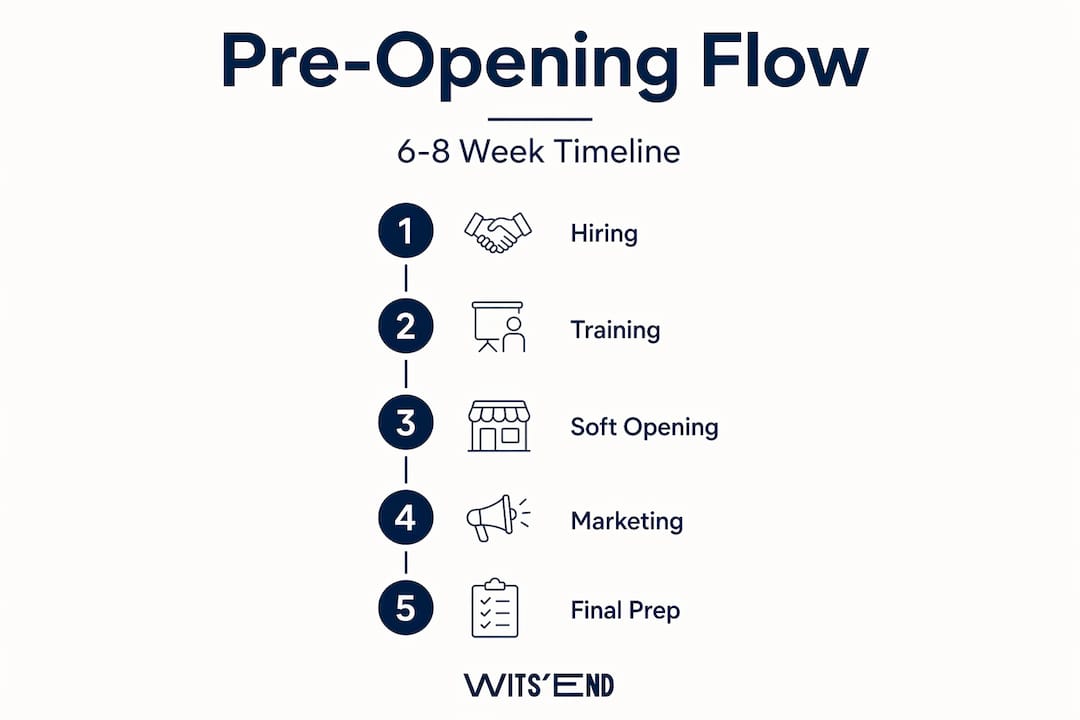
Pre-opening spans several months and typically includes menu finalization, staffing, supplier sourcing, and systems testing. Each of those categories carries more weight than operators often expect. Menu finalization is not just choosing dishes. It includes costing every recipe, standardizing portions, and making sure your kitchen can execute each plate consistently under service pressure. Staffing means not just filling roles, but training your team to deliver your specific brand of hospitality. Your restaurant launch checklist should map every one of these tasks to a clear owner and deadline.
The core activities in a restaurant pre-opening phase include:
- Menu development, recipe testing, and food cost analysis
- Hiring for all front-of-house and back-of-house positions
- Staff training on service standards, menu knowledge, and point-of-sale (POS) systems
- Supplier negotiations and first delivery schedules
- Technology setup including POS, reservation platforms, and inventory software
- Health inspections, licensing, and permit approvals
- Soft opening planning and execution
- Pre-opening marketing across digital and local channels
Each activity feeds the next. You cannot train your servers on the menu if the menu is not finalized. You cannot run a soft opening if your POS is not fully configured. Sequencing matters as much as effort.
The six-to-eight week pre-opening timeline breakdown
Once construction wraps, the clock starts. Operations preparation after construction involves roughly 6-8 weeks of concentrated work covering hiring, systems setup, marketing momentum, and soft opening execution. Here is how that window breaks down in practice.
- Weeks 6-8: Hire and begin onboarding your team. Post positions, conduct interviews, and make offers early. Your first hires set the culture tone. Investing in strong staff onboarding strategies at this stage pays dividends when service pressure arrives.
- Weeks 5-6: Finalize your menu and begin supplier relationships. Lock in your menu creation process and conduct full recipe testing with your kitchen team. Order initial supplies and confirm delivery schedules with vendors.
- Weeks 4-5: Start pre-opening marketing. Launch your social channels, activate your Google Business Profile, and build local media relationships. Community outreach and email list building start now, not after you open.
- Weeks 2-3: Set up and test all technology. Configure your POS, test your reservation system, and run your inventory software through its paces. Do not assume these tools work correctly out of the box. Test every scenario.
- Weeks 1-2: Conduct your soft opening. Invite a controlled group of guests, run limited service, and collect feedback deliberately. Refine based on what you learn.
- Day 0: Grand opening. By this point, your team has real service experience, your systems are proven, and your marketing has built genuine anticipation.
| Week | Focus area | Key deliverable |
|---|---|---|
| 6-8 | Hiring and onboarding | Full team hired and in orientation |
| 5-6 | Menu and suppliers | Finalized menu, confirmed vendor contracts |
| 4-5 | Marketing launch | Active social presence, email list started |
| 2-3 | Technology setup | POS and systems fully tested |
| 1-2 | Soft opening | Feedback collected, operations refined |
| Grand opening | Full public launch | Confident, prepared team and operation |
Pro Tip: Build two extra days of buffer into every phase. Equipment arrives late, permits get delayed, and staff training always takes longer than projected. The buffer is not pessimism. It is experience.
Soft openings: your restaurant's essential dress rehearsal
With the timeline established, the soft opening deserves its own focused attention. It is the single most underutilized tool in a new restaurant's pre-launch toolkit.
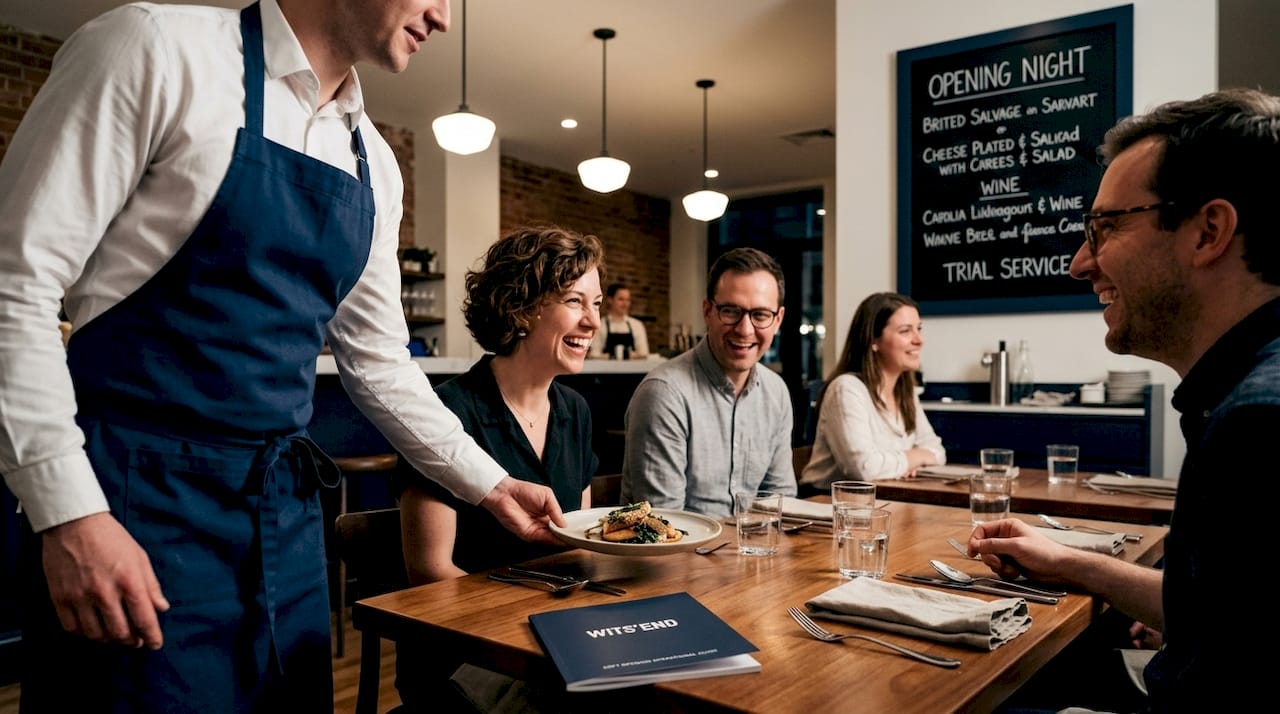
Soft openings are invite-only trial runs designed to test food, service, and operations with a limited audience before the grand opening. Typically lasting one to four weeks, they give your team the chance to perform under actual service conditions without the full weight of public scrutiny. Your kitchen learns to execute the menu at volume. Your front-of-house team builds confidence reading guests and managing the floor. Your managers identify the gaps you could never see in training alone.
Best practices for a well-run soft opening include:
- Invite guests who will give honest, constructive feedback. Friends and family are fine, but include a few industry contacts who will tell you what is actually broken.
- Limit the menu to 60-70% of what you plan to offer at full launch. This focuses your team and reduces execution risk.
- Run limited hours and keep covers (the number of tables served per shift) at a manageable level, typically 50-60% of capacity.
- Communicate clearly with guests about pricing, whether service is complimentary, discounted, or full price, and explain tipping norms so there is no awkwardness.
- Assign someone specifically to observe operations, not to serve or manage, but to watch and take notes on timing, communication gaps, and guest reactions.
"A soft opening is not about impressing people. It is about learning fast enough to make your grand opening the experience you actually intended."
Build a formal feedback loop. Give guests a simple, short survey. Hold a team debrief after every shift. Identify the top three issues each night and address them before the next service. The restaurants that use their soft openings well enter grand opening week with a team that has already solved most of the obvious problems.
Pro Tip: Working with a startup consultant during your soft opening brings an outside perspective that your internal team, too close to the operation, often cannot provide. An experienced consultant sees the issues your own team has already normalized.
Pre-opening marketing: building buzz before the first guest
Having prepared your operations and tested your workflows, smart marketing turns your hard work into community awareness and early demand.
Setting up your Google Business Profile 30 days before opening and running a soft opening three to five days prior together maximize early visibility and trust. Google takes time to index your listing, build review credibility, and surface your restaurant in local search results. If you wait until opening day, you lose that month of visibility. Customers searching for restaurants in your neighborhood will not find you when it matters most.
Key pre-opening marketing actions to execute in the 4-6 week window include:
- Activate your Google Business Profile immediately and populate it fully with photos, hours, and a menu link.
- Launch your social media accounts and begin posting behind-the-scenes content. Audiences respond strongly to stories about the people and passion behind a new restaurant.
- Reach out to local food bloggers, neighborhood newsletters, and community groups. Local press coverage before opening carries more credibility than paid advertising.
- Build an email list from day one. Offer early access or a soft opening invitation as an incentive. An email database you own is one of your most durable marketing assets long-term.
- Coordinate your marketing calendar with your operational readiness. If your soft opening is limited, be selective about who you invite through marketing channels and manage expectations clearly.
| Marketing action | Timing before opening | Goal |
|---|---|---|
| Google Business Profile setup | 30+ days out | Search visibility |
| Social media launch | 4-6 weeks out | Brand awareness |
| Local press and blogger outreach | 4-6 weeks out | Earned media |
| Email list building | Starts immediately | Long-term retention |
| Soft opening invites | 1-2 weeks out | Social proof and buzz |
One channel worth exploring early is apps that drive guest count and revenue by connecting new restaurants with motivated local diners. These platforms can help you build an audience before your organic presence is established.
Pro Tip: Avoid announcing a firm opening date publicly until you are certain. Guests who see a postponement lose trust before they ever visit. Build anticipation with "coming soon" language until your operations are ready to back it up.
Legal and operational foundations for a smooth pre-opening
Beyond marketing and training, building sound legal and operational ground is where many new restaurant owners get caught flat-footed.
Securing licenses, permits, and managing landlord and build-out risks are foundational steps in pre-opening that, when ignored or started late, can push your opening date back by weeks or months. The most common culprits are liquor license applications, certificate of occupancy delays, and health department inspection scheduling. These processes move on government timelines, not yours. Start them as early as possible.
Landlord and lease dynamics add another layer of complexity. Tenant improvement reimbursements and build-out timelines directly affect your opening schedule and your available capital. Understand exactly what your landlord owes you in TI (tenant improvement) dollars, when those funds will arrive, and what the inspection and sign-off process looks like in your municipality. Many operators discover too late that their landlord's timeline for releasing TI funds does not match their contractor's billing schedule.
Critical legal and operational steps during pre-opening include:
- Apply for all required licenses and permits at least 90 days before your target opening date
- Confirm your certificate of occupancy requirements and schedule inspections early
- Review your lease obligations regarding operating hours, permitted uses, signage, and landlord access
- Maintain a detailed communication log with your contractor and landlord
- Verify food handler certifications, manager ServSafe (or state equivalent) certifications, and any local compliance requirements for your entire team
Working with an experienced restaurant task force can help you navigate these requirements efficiently, especially if you are opening in a new market or a state with unfamiliar regulatory frameworks.
Pro Tip: Get your fire suppression system inspection, your hood inspection, and your health department pre-inspection on the calendar at the same time you schedule contractor milestones. These inspections often require multiple visits and can delay your certificate of occupancy if they are not prioritized early.
The part most pre-opening guides get wrong
Most resources frame restaurant pre-opening as a logistical exercise. Hit these checkboxes, follow this timeline, file these permits, and you will be ready. That framing is not wrong, but it is incomplete.
The element that most consistently separates a confident opening from a chaotic one is whether the leadership team has actually internalized the guest experience they want to deliver, before training begins. Operators who wait until staff training to define their hospitality standards are already behind. Your team cannot embody a service culture they have never seen articulated. Before you hire your first server, your leadership should be able to describe, specifically and in plain language, what a great interaction looks and feels like in your restaurant.
We have seen openings where every operational box was checked but the team still felt directionless because the culture had not been defined and taught with the same rigor as the POS system. Training a server to navigate your technology takes two hours. Training them to make a guest feel genuinely welcomed takes weeks of deliberate reinforcement. Give that the time it deserves.
The other underappreciated truth is that your pre-opening data is your most honest data. The feedback from your soft opening, the performance gaps your team shows in training, the supplier issues that surface before volume ramps, all of it tells you something real before the pressure of full service masks the signal. Operators who treat pre-opening purely as a setup phase miss the opportunity to use it as a learning phase. The best teams come out of pre-opening not just ready, but already improved.
How Wits' End helps you open strong
Planning a new restaurant location means managing dozens of moving parts at once, and the stakes for getting it right are high.
At Wits' End, we work alongside restaurant owners and operators from concept through launch and beyond. Our team has managed pre-opening programs across the United States, covering staffing and training, menu development, technology setup, soft opening execution, and compliance planning. We can step in at any phase, whether you need a full pre-opening partner or targeted support in one area where your team needs reinforcement. If you are planning a new location and want experienced operators in your corner, explore how we work and let's talk about what your opening actually needs.
Frequently asked questions
What does the restaurant pre-opening phase include?
It includes menu finalization, staff training, and supplier sourcing, along with system testing, soft openings, and marketing activity before the restaurant opens to the public.
How long does a typical restaurant pre-opening last?
Pre-opening spans several months total, with roughly 6-8 weeks after construction dedicated to focused preparation including hiring, systems setup, marketing, and soft opening execution.
What is the purpose of a soft opening?
A soft opening is a limited, invite-only trial run to test food, service, and operations under real conditions with lower stakes, giving your team the chance to identify and fix problems before the grand opening.
When should I set up my Google Business Profile for a new restaurant?
Set up your profile 30 days before opening to build search visibility and review credibility, so guests can find you confidently from the first day you open.
What legal steps are critical during the pre-opening phase?
Obtaining all required licenses and permits early and managing landlord build-out timelines are essential to avoiding delays that push back your opening date and increase costs.