
TL;DR:
- Proper hotel property onboarding involves systematic data collection, phased technology setup, and role-specific staff training. Building a repeatable playbook and validating financial systems early helps ensure operational success and competitive advantage from the start.
Hotel property onboarding is the systematic process of integrating a new location into your operational, technological, and distribution frameworks so it can accept bookings and generate revenue from day one. Done correctly, it is not a checklist you run through once. It is a repeatable system that reduces errors, aligns your team, and sets the property up for long-term performance. Knowing how to onboard new hotel properties the right way means covering four core areas: data and documentation, technology configuration, staff training, and scalable process design. Get all four right, and your property opens ready to compete.
What essential property data and documentation are needed first?
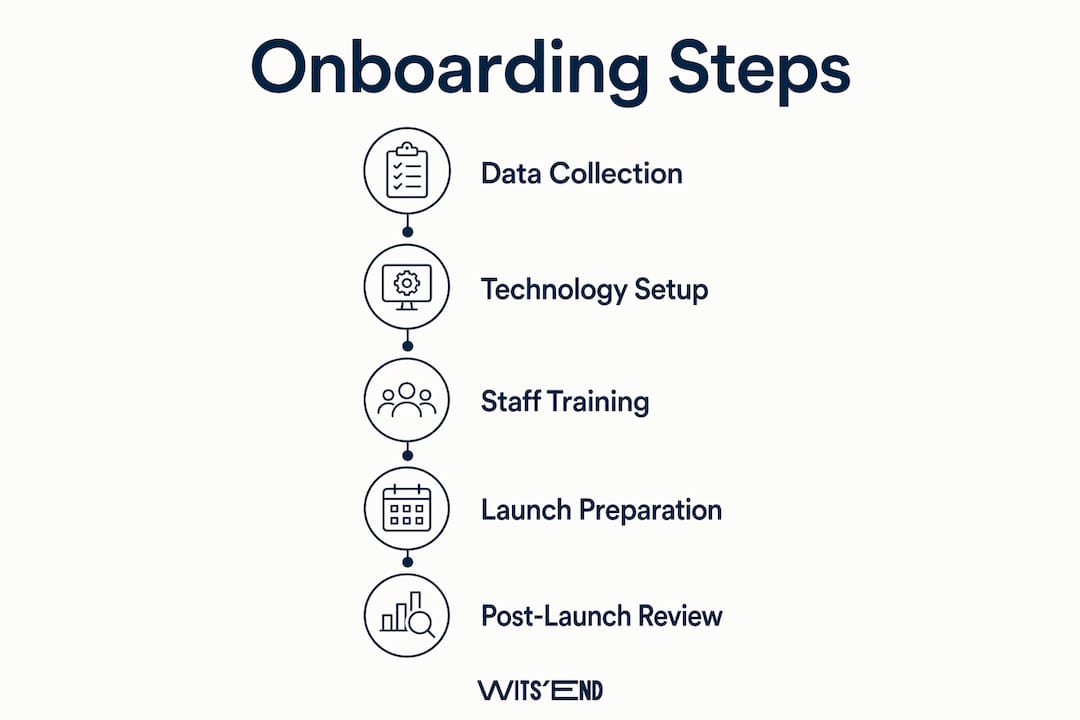
The hotel property onboarding process starts with data collection, and incomplete data at this stage creates compounding problems downstream. Before you touch a single system, gather the following:
- Legal property details: registered hotel name, tax ID, physical address, and ownership entity
- Room inventory: every room type with accurate descriptions, square footage, bed configuration, and view
- Amenities list: property-level and room-level amenities, formatted consistently for OTA uploads
- High-quality photography: minimum 20 photos per property, including rooms, common areas, and exterior
- OTA account credentials: existing Booking.com, Expedia, and Airbnb for Work account logins and payment info
- Rate plan names and structures: rack rate, advance purchase, non-refundable, and any negotiated corporate rates
Naming consistency for room types and rate plans across your PMS, channel manager, and OTAs is the backbone of error-free integration. A room called "King Deluxe" in your PMS but "Deluxe King Room" in Booking.com creates inventory mismatches that generate double bookings and guest complaints.
Conduct an OTA account audit before connecting any channel manager. Confirm that payment methods, cancellation policies, and property descriptions are accurate and current. Outdated policies on live OTA profiles cause chargebacks and negative reviews before you even open.
Pro Tip: Build a single master spreadsheet with your canonical room type names and rate plan codes. Every system and every team member references that document. This one habit eliminates the majority of naming errors during setup.
Successful hotel launches require 12-month pre-opening plans that secure domains, distribution setup, and pricing strategies well before opening day. That timeline reinforces why data gathering cannot start the week before launch. Start your hotel launch preparation at least three months before go-live, even for smaller properties.
How to set up technology systems and connect distribution channels
Technology configuration is where most operators lose time. A structured approach keeps the process under control.
- Create your PMS account and complete the property profile with all room types, rate plans, and tax settings.
- Create your channel manager account (options include SiteMinder, Cloudbeds, and Aiosell) and link it to your PMS via API or native integration.
- Map room types and rate plans from your PMS into the channel manager using your master naming document.
- Load availability calendars and configure rate rules, minimum stay restrictions, and close-out dates.
- Connect OTA channels one at a time, starting with low-volume platforms to test sync accuracy before enabling high-traffic channels.
- Run test bookings and cancellations end-to-end on each connected channel before going live.
- Verify rate parity across all active channels and confirm that modifications in the PMS reflect correctly in each OTA within 60 seconds.
Phased OTA channel activation starting with low-volume platforms limits booking errors before you scale to high-volume channels like Booking.com and Expedia. This is not optional caution. It is the standard practice that separates clean launches from chaotic ones.
The table below shows a practical phased activation sequence:
| Phase | Channels | Purpose |
|---|---|---|
| Phase 1 | Direct booking engine, one low-volume OTA | Test sync, confirm rate and availability accuracy |
| Phase 2 | Two to three mid-volume OTAs | Expand distribution, monitor for discrepancies |
| Phase 3 | Booking.com, Expedia, and GDS | Full distribution once sync is confirmed stable |

Structured onboarding typically completes in about 30 days, though property size and data complexity affect that timeline. Modern platforms with integrated PMS connections can reduce setup to as little as 8 minutes for the initial configuration, but full channel testing still requires deliberate time. Do not rush Phase 3 activation to meet an arbitrary launch date.
Pro Tip: Before activating any OTA, set a temporary stop-sell on all channels. This gives you a clean window to complete mapping and testing without the risk of a live booking hitting an unconfigured room type.
What are best practices for training hotel staff during onboarding?
Staff training is where technology investments either pay off or fall apart. The most common mistake operators make is running one general training session for the entire team. Role-specific training is the correct approach.
- Front desk staff need hands-on practice with the PMS check-in and check-out workflow, rate override procedures, and the guest profile system. They do not need a deep dive into revenue management dashboards.
- Housekeeping supervisors need to understand room status updates in the PMS, how to flag maintenance issues, and how their actions affect room availability in real time.
- Revenue managers need training on the channel manager dashboard, rate rule configuration, and OTA extranet access. Their training should include live scenarios with pricing adjustments and pickup reports.
- General managers need a full system overview, including reporting, user permissions, and escalation procedures for system errors.
Role-specific training reduces cognitive load by focusing each team member on the tools and tasks relevant to their job. This improves adoption speed and cuts post-launch errors significantly. A front desk agent who was trained on only the screens they use daily will perform better on day one than one who sat through a three-hour full-system overview.
Hands-on practice in a test environment before go-live is non-negotiable. Every major PMS, including Cloudbeds, Opera Cloud, and Mews, offers sandbox or demo modes. Use them. Run your team through real scenarios: a walk-in guest, a group reservation, a mid-stay room change, and a disputed charge.
Designate one internal champion per department. This person receives deeper training, serves as the first point of contact for team questions, and owns the feedback loop back to management. The hotel staff training guide published by Wits' End Solutions covers how to structure these role-based programs in detail.
How do you build a scalable onboarding playbook?
A one-time onboarding effort does not scale. High-performing operators build repeatable playbooks that include standardized intake forms, training modules, and automation to reduce manual effort with each new property.
The table below compares a reactive onboarding approach against a playbook-driven one:
| Approach | Setup time | Error rate | Reusability |
|---|---|---|---|
| Ad hoc, task-by-task | High | High | None |
| Playbook-driven with templates | Moderate | Low | Full |
A scalable playbook includes four components. First, a standardized intake form that captures all required property data in a consistent format before any system work begins. Second, system-specific setup templates for your PMS and channel manager that pre-populate common fields and reduce manual entry. Third, a training module library organized by role, so you are not rebuilding training materials for each property. Fourth, a communication and responsibility matrix that defines who owns each step and what the handoff criteria are.
Data validation checkpoints during the first 30–90 days are a critical control layer. These include accounts receivable reconciliation, security deposit balancing, vendor audits, and bank account verification before financial reporting cycles close. Skipping these steps creates compliance gaps that are expensive to unwind after the fact.
Automate the recurring steps where possible. Many PMS platforms support bulk room type imports via CSV. Channel managers like SiteMinder allow rate plan templates to be cloned across properties. These tools exist precisely to reduce the manual labor of multi-property onboarding. Use the brand creation workflow guide from Wits' End Solutions as a reference for building the workflow documentation layer of your playbook.
Pro Tip: After each new property launch, run a 30-day post-mortem. Document what broke, what slowed you down, and what you would do differently. Feed those findings back into your playbook before the next onboarding begins.
Key Takeaways
A structured hotel property onboarding process, covering data collection, phased technology setup, role-specific training, and documented playbooks, is the most reliable path to operational readiness and error-free distribution.
| Point | Details |
|---|---|
| Start with clean data | Gather legal details, room descriptions, and OTA credentials before touching any system. |
| Use phased channel activation | Connect low-volume OTAs first, test sync accuracy, then scale to Booking.com and Expedia. |
| Train by role, not by team | Front desk, housekeeping, and revenue managers each need separate, job-specific training. |
| Build a repeatable playbook | Standardized intake forms and training modules reduce setup time for every future property. |
| Validate financials early | Run A/R reconciliation and bank verification within the first 30–90 days to close compliance gaps. |
Why onboarding is where your competitive advantage is actually built
Most operators treat onboarding as a necessary inconvenience. Get the systems connected, run a quick training, and open the doors. I have seen that approach play out dozens of times, and it almost always produces the same result: a chaotic first 60 days, a frustrated front desk team, and a revenue ramp that takes twice as long as it should.
The properties that outperform their comp set in the first year are almost always the ones that treated onboarding as an operational investment, not a setup task. Phased channel activation is the clearest example. Operators who skip it and activate all OTAs at once routinely face double bookings in the first two weeks. Those incidents damage your OTA ranking scores, which affects your visibility for months. The cost of doing it right the first time is a few extra days. The cost of doing it wrong is measurable revenue loss.
Role-specific training is the other area where I see the biggest gap between intention and execution. Owners invest in good PMS software and then run one group training session. The revenue manager leaves knowing how to check in a guest. The front desk agent leaves confused about rate rules. Neither person is set up to succeed. Separating training by function is not extra work. It is the work.
The operators I respect most treat their onboarding playbook as a living document. They update it after every launch, automate what they can, and measure how long each step takes. Over time, their onboarding gets faster and cleaner. That is a real competitive advantage, and it compounds.
— Chris
How Wits' End Solutions supports hotel onboarding and operational readiness
Wits' End Solutions works with hotel owners across the United States at every stage of the property lifecycle, including the critical pre-opening and onboarding period. Our team has run these processes from the inside, which means we know where the gaps appear and how to close them before they cost you. From brand development and operational setup to role-based staff training programs, we build the systems and the team capacity that new properties need to open strong. If you are preparing to onboard a new property and want experienced operators in your corner, reach out to Wits' End Solutions for a consultation.
FAQ
How long does hotel property onboarding typically take?
Structured onboarding typically completes in about 30 days, covering discovery, data migration, training, and go-live. Properties with complex data or multiple room types may require 45–60 days for full channel activation and testing.
What systems are required for new hotel onboarding?
A property management system (PMS), a channel manager, and OTA extranets are the three core platforms. Common PMS options include Opera Cloud, Cloudbeds, and Mews, while channel managers include SiteMinder and Aiosell.
Why does naming consistency matter across systems?
Inconsistent room type names across your PMS, channel manager, and OTAs cause inventory mismatches that lead to double bookings and guest complaints. A single master naming document prevents this.
What is phased OTA channel activation?
Phased activation means connecting low-volume OTAs first, confirming that rates and availability sync correctly, and then enabling high-traffic platforms like Booking.com and Expedia. This approach catches configuration errors before they affect high-volume booking channels.
When should financial controls be set up during onboarding?
Financial controls, including A/R reconciliation, security deposit balancing, and bank account verification, should be completed within the first 30–90 days before the first full reporting cycle closes.