
Professional restaurant guidance delivers what internal teams rarely can: an objective diagnosis of exactly what is hurting your margins, followed by a clear plan to fix it. Operators who bring in expert consultants typically see faster problem resolution, better P&L management, and decisions grounded in data rather than instinct. The case for professional guidance is not about admitting failure; it is about collapsing the timeline between "we have a problem" and "we have a working solution."
Here is why restaurant owners across the United States are choosing expert advisory services in 2026:
- Consultants identify the root cause of declining sales, not just the symptoms
- They bring cross-domain expertise in operations, menu engineering, financial analysis, and marketing
- They provide an outside perspective that exposes blind spots your internal team cannot see
- They save operators time and reduce the daily stress of running a complex business
- The best consulting engagements start with a specific, measurable problem and a genuine willingness to execute recommendations
Why professional restaurant guidance works when internal fixes don't
A restaurant consultant is a paid expert who diagnoses what is broken or untapped in your business and prescribes specific fixes. The scope covers operations, menu engineering, marketing, financial analysis, concept development, and full-scale turnarounds. Think of them as a contract specialist you bring in to solve a problem your existing team cannot, or will not, solve alone.

The critical distinction most operators miss: some consultants are advisors and some are operators. Advisor engagements cost less per hour but shift all implementation risk back to you. Operator engagements cost more and produce results faster, assuming you have hired someone who actually knows what they are doing. Knowing which model you need before you start the search saves both time and money.
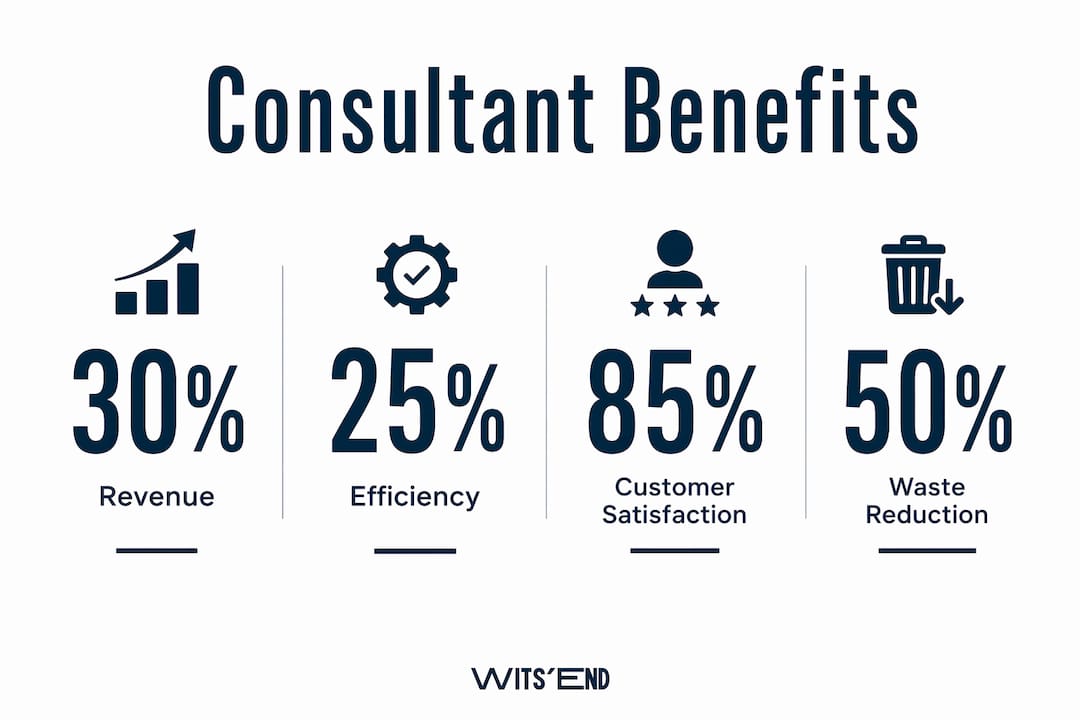
Consultants also measure their impact in concrete terms. They track metrics like food cost percentage, labor cost as a share of revenue, ticket size, table turn time, and guest satisfaction scores before and after their engagement. That accountability is what separates a real consulting relationship from a paid opinion.
Core roles a restaurant consultant fills:
- Operational audit: Mapping workflows, identifying bottlenecks, and reducing waste across the kitchen and front of house
- Menu engineering: Repricing, repositioning, and removing underperforming items to lift profit per cover
- Financial analysis: Reviewing P&L line by line to find cost overruns and untapped revenue
- Concept development: Sharpening brand identity, positioning, and guest experience to stand out in a crowded market
- Team training: Building staff capability so improvements hold after the consultant leaves
- Turnaround management: Stabilizing a distressed operation before it reaches the point of no return
What types of restaurant consultants are out there?
The biggest mistake operators make is hiring a generalist when they need a specialist, or the reverse. Common consultant types include generalists, menu consultants, marketing and branding experts, operational efficiency specialists, and turnaround advisors, each matched to specific scenarios.
Before you search, answer one question: what specific outcome do you need in the next six months? That answer tells you which type to hire.
- Generalist consultants: Best for early-stage restaurants or operators who need a broad assessment before narrowing the focus. They cover multiple domains and are useful when you are not sure where the problem lives.
- Menu consultants: Specialists in recipe development, pricing strategy, and menu layout. Call them when food cost is creeping above typical acceptable levels of revenue or when your menu has not been engineered in over a year.
- Marketing and branding experts: Focused on positioning, digital presence, photography, and delivery app performance. Best for rebrands, new openings, or restaurants losing ground to competitors with stronger visual identities.
- Operational efficiency specialists: Deep in systems, staffing models, and kitchen workflow. The right hire when labor cost exceeds typical acceptable levels of revenue and you cannot explain why.
- Growth advisors: Specialists in multi-unit expansion. When you are moving from one location to five, these consultants document, systematize, and stress-test your operations before you scale.
- Turnaround consultants: Called in when a restaurant is losing money and needs rapid stabilization. They prioritize cash flow and cost control above everything else.
Understanding hospitality consulting structures before you hire helps you ask the right questions and avoid paying for expertise that does not match your actual problem.
Key benefits of hiring a restaurant consultant
The advantages of professional guidance go well beyond fixing a single problem. Consultants help restaurants improve operational efficiency, customer experience, brand positioning, and profitability, often uncovering blind spots that internal teams have normalized over time.
The most immediate benefit is speed. An experienced consultant has seen your problem before, usually dozens of times, and knows which levers to pull first. That pattern recognition cuts weeks or months off the diagnostic phase.
Beyond speed, the benefits stack up across the business:
- Faster problem identification: An outside perspective surfaces issues that familiarity hides, from inconsistent portion sizes to pricing gaps that quietly erode margin
- Access to industry best practices: Consultants bring frameworks and benchmarks from across the industry, not just your own historical data
- Improved profitability: Well-executed menu engineering alone typically produces a meaningful profit lift on ongoing sales
- Stronger brand positioning: A clearly defined concept attracts the right guests and commands better pricing
- Emotional reassurance: Running a restaurant is relentless. Having an expert in your corner reduces the cognitive load of making high-stakes decisions alone
- Time savings: Operators who delegate complex diagnostic work to a consultant free up meaningful time each week to focus on leadership and guest experience
- Scalability: Consultants document systems and processes so your operation can grow without depending entirely on the founder's institutional knowledge
Pro Tip: Ask any prospective consultant to show you three specific examples of measurable outcomes from past engagements. Revenue improvement, cost reduction, and guest satisfaction scores are the numbers that matter, not general descriptions of their approach.
How to choose the right restaurant consultant for your needs
The vetting process matters more than the search. Most operators find consultants through referrals from their POS provider, accountant, or trade association. Where things go wrong is in the evaluation.
Start by defining your problem with precision. "Make my restaurant better" is not a brief. "Our food cost has been above 36% for four consecutive months and we cannot identify the source" is. Without clear problem definition and execution capacity, consulting fees risk becoming wasted expenditure.
A practical vetting checklist:
- Name the specific outcome you need before you contact anyone. If you cannot fill in that blank, you are not ready to hire.
- Match expertise to the problem. A marketing specialist cannot fix a labor cost overrun. A turnaround consultant is overkill for a menu refresh.
- Review their track record on your exact problem type, not their general experience. Ask for case studies with before-and-after metrics.
- Evaluate communication style early. A consultant who cannot explain their approach clearly in a first conversation will not communicate well under pressure.
- Understand the fee structure. Consulting fees vary widely, typically reflecting the scope and expertise required, with options including hourly rates, project fees, and monthly retainers. Match the engagement model to your cash flow and timeline.
- Confirm internal execution capacity. A consultant's recommendations are worthless if no one on your team has the bandwidth or authority to implement them.
- Avoid shopping for validation. If you have already decided what to do, you do not need outside expertise. Hire a contractor instead.
The decision rule that holds across hundreds of engagements: specific problem plus measurable outcome plus the right specialist equals a worthwhile investment. Drop any one of those three and you are paying for an expensive education.
What modern restaurant consulting looks like in 2026
The consulting playbook has shifted: the first thing most experienced consultants tackle today is visual marketing, menu photography, and delivery app presentation, because these produce measurable lift in weeks, not quarters.
The data behind that priority is hard to ignore. Around 82% of consumers say food photos influence what they order, and restaurants that switched from text-only to photo menus on online ordering platforms reported 25–30% conversion lifts. A visual upgrade costs relatively little to test and produces measurable results across every channel simultaneously, from Google Business Profile to DoorDash to the printed menu on your tables.
Beyond photography, modern consultants prioritize connected systems over best-of-breed point solutions. The question is no longer which POS is the best in isolation. It is which combination of tools, from reservation management to inventory tracking to analytics, works together without creating data silos. Operators who work with consultants on brand design and digital positioning tend to build more coherent guest-facing experiences as a result.
One area that often surprises operators: the emotional and time value of having expert guidance. Research from Vanguard on financial advisory clients found that 76% of advised clients reported that having a professional advisor saves them time, with a median savings of two hours per week. While that research covers financial advice, the parallel to restaurant consulting is direct. Delegating complex diagnostic and strategic work to an expert frees operators to focus on what they do best: running a great restaurant.
Pro Tip: If your prospective consultant does not propose visual upgrades and menu engineering within the first 90 days, ask why. They may have a legitimate reason specific to your situation, but you should hear it clearly before you proceed.
The role of customer service in hospitality is also evolving alongside these consulting trends. Operators who invest in both operational systems and guest-facing service quality see compounding returns on their consulting investment.
One important expectation to set: no legitimate consultant guarantees specific revenue or profit outcomes. Too many variables sit outside their control, from weather to staffing turnover to macro conditions. What they can guarantee is deliverables: an audit, a plan, a training program, or a defined number of advisory hours. Outcomes depend on the operator's willingness to execute. That is not a caveat. It is the honest structure of a consulting relationship, and understanding it upfront prevents disappointment later.
Consultants are best deployed when the problem is complex, measurable, and beyond what your internal team can solve effectively. When you already know exactly what to fix and just need execution, a contractor or a software tool is often the more cost-effective choice. The strategy-to-execution gap is where consultants earn their fee, not in confirming decisions you have already made.
Key Takeaways
Professional restaurant guidance delivers the fastest path from a diagnosed problem to a working solution, provided the engagement is scoped correctly from the start.
| Point | Details |
|---|---|
| Define the problem first | Name a specific, measurable outcome before hiring any consultant or the engagement risks wasted fees. |
| Match consultant type to need | Generalists suit broad assessments; specialists in menu, operations, or marketing suit defined problems. |
| Visual marketing pays fast | Photo menus and delivery app upgrades produce conversion lifts of 25–30% in weeks, making them a top early priority. |
| Fees reflect scope | Hourly rates run $100–$500, projects $5,000–$50,000+, and monthly retainers $3,000–$15,000. |
| Execution determines ROI | Consultants guarantee deliverables, not revenue outcomes. Operator follow-through drives the actual result. |
Work with a team that has done the work themselves
Wits' End Solutions partners with restaurant owners and operators across the United States at every stage of the business lifecycle, from concept development and menu engineering to daily operations and advanced analytics. Our team has run the businesses we now advise, which means our recommendations come from real operational experience, not theory.
Whether you need an outside advisor, an embedded operating partner, or senior leadership on property, the model flexes around what your business actually needs. If you are ready to work with a team that brings both the strategic framework and the hands-on capability to execute it, start the conversation with Wits' End Solutions today.