
TL;DR:
- A guest experience platform is an operational system involving people, processes, SOPs, and analytics, not just software. Hotel owners should hire a partner with direct operational experience to design, test, and measure service standards continuously. Ongoing testing, clear SOPs, and KPI tracking ensure durable guest satisfaction improvements over time.
If you're a hotel owner or operator evaluating guest experience platforms for hotels, the answer here is not a software subscription. It's a consulting and managed-operations partner who designs your service standards, writes your SOPs, runs mystery stays, and tracks outcomes against real KPIs. Wits' End Solutions is the recommended partner for U.S. properties at pre-opening, turnaround, or ongoing optimization stages where ownership wants measurable results, not a vendor relationship.
Who this is for:
- Pre-opening properties that need service design before the first guest arrives
- Hotels in turnaround after slipping star ratings, ownership transitions, or post-renovation reopening
- Multi-property operators who need consistent service standards across locations
- Boutique hotels with strong identity but no documented SOPs or training infrastructure
What to expect on a discovery call: Wits' End Solutions will scope your property's current state, identify the three highest-leverage gaps, and propose a pilot structure with a clear timeline and pricing model. No retainer required to start the conversation.
Table of Contents
- What "guest experience platforms for hotels" actually means here
- Which hotels should hire a guest-experience partner, and when
- How to choose a guest-experience partner: criteria and exact questions to ask
- Engagement models and what you pay for
- First 90–180 days: what the rollout actually looks like
- How success is measured: KPIs, dashboards, and attribution
- Wits' End Solutions: operational experience and representative outcomes
- Typical costs and pricing models
- Key Takeaways
- What the industry gets wrong about guest experience programs
- What Wits' End Solutions delivers and how to get started
- Useful sources and further reading
What "guest experience platforms for hotels" actually means here
The phrase gets used two ways. Most search results return SaaS products: messaging apps, CRM tools, in-room tablets. That is a different category with a different buyer. Here, a guest experience platform is an operating capability: the people, processes, SOPs, training systems, mystery-stay protocols, upsell programs, and analytics dashboards that run your guest experience every day.
The core components of a well-built platform in this sense include:
- Guest journey mapping: Identifying every touchpoint from booking confirmation to post-checkout follow-up
- SOPs and service rituals: Documented, role-specific procedures staff can execute without asking a manager
- Staff training: Structured onboarding and ongoing coaching tied to measurable service standards
- Mystery stays and pilots: Real guest testing to calibrate service rituals and surface blind spots
- Upsell and ancillary programs: Scripted, trained revenue opportunities at check-in, F&B, and concierge touchpoints
- Analytics and dashboards: Attribution-ready reporting tied to PMS data, review platforms, and internal QA logs
Pro Tip: A playbook is not a platform. A one-time SOP document delivered and forgotten will drift within 90 days. A platform is the ongoing operating system that keeps those standards alive through QA, retraining, and iterative testing.
Which hotels should hire a guest-experience partner, and when

The clearest hiring signal is a gap between what your property promises and what guests consistently receive. That gap shows up in review scores, ADR compression, and staff turnover, often all at once.
Properties that benefit most:
- New builds and pre-openings: Service design done before opening day is exponentially cheaper than retrofitting after negative reviews accumulate
- Post-renovation reopenings: Physical upgrades without updated service standards produce confused staff and disappointed guests
- Turnaround properties: Slipping TripAdvisor or Google ratings, inconsistent service complaints, or a recent ownership change all signal the need for outside operational structure
- Multi-property groups: Inconsistency across locations erodes brand equity; a shared SOP library and QA program fixes this at scale
- Boutique independents: Strong concept, weak operations infrastructure. The role of physical design in guest flow matters here too, particularly when circulation and back-of-house logic create friction that retraining alone cannot solve
How to choose a guest-experience partner: criteria and exact questions to ask
The most important filter is whether the partner has actually operated a hotel, not just consulted for one. A partner who builds from the inside out runs an operational audit before prescribing any new guest rituals or training programs.
Scoring checklist (weight these in order):
- On-property operational experience (not just advisory)
- Documented SOP and training library from prior engagements
- Mystery-stay methodology with defined success criteria
- Measurement capability tied to PMS and review platform data
- References with verifiable outcome data (ADR lift, rating improvement, repeat guest rate)
Questions to ask in discovery calls:
Operations:
- What does your SOP development process look like, and who writes the documents?
- How do you handle staff resistance during rollout?
- Have you operated a property of our size and type directly?
Measurement:
- Which KPIs do you track, and how do you attribute changes to your program?
- What does your QA reporting cadence look like?
Implementation:
- What does the first 90 days look like, week by week?
- How do you protect guest satisfaction during the transition period?
Pricing and contracts:
- Is your fee fixed, retainer-based, or success-linked?
- What happens if KPI targets are not met in the pilot phase?
Red flags that should stop the conversation: no onsite testing protocol, vague KPIs with no attribution method, unwillingness to document SOPs in writing, or a pitch that centers on a software product rather than operational delivery.
Pro Tip: Ask for a sample mystery-stay report from a prior engagement. A partner who cannot produce one has not actually run the program.
Engagement models and what you pay for
| Model | Who leads on-property | Typical timeline | Pricing shape |
|---|---|---|---|
| Advisory / project | Client team, guided | 4 weeks | Fixed project fee |
| Retainer optimization | Client team, coached monthly | Ongoing | Monthly retainer |
| Managed operations | Partner-embedded senior ops | 6 months | Retainer + performance |
| Packaged opening / turnaround | Partner leads, client co-pilots | 90–180 days | Fixed + retainer transition |
Each model delivers a different depth of operational involvement. An advisory engagement gives you the framework; a managed-operations model gives you the execution. Continuous two-way guest communication, smart dispatch, and proactive review capture are standard deliverables in a managed-operations scope, and they directly affect ratings and ADR.
Typical deliverables across models include SOP libraries, mystery-stay reports, QA dashboards, staffing embed options, and monthly executive summaries. The packaged opening and turnaround models tend to include simulation runs and operational readiness checks before go-live.
Pro Tip: Negotiate a pilot-to-retainer transition clause before signing. A 60-day pilot with defined go/no-go KPIs protects both sides and gives you real data before committing to a longer engagement.
First 90–180 days: what the rollout actually looks like
A well-structured engagement follows three phases:
- Diagnostic (Weeks 1–3): Operational audit, guest journey mapping, staff interviews, PMS data pull. The goal is identifying friction before designing solutions.
- Pilot (Weeks 4–8): Limited-scope SOP rollout on one shift or one department. Mystery stay conducted at Week 6. Go/no-go review at Week 8 against pre-agreed KPIs.
- Scale and embed (Months 3–6): Full SOP rollout, training cadence established, QA logs activated, dashboard live. Second mystery stay at Month 5 to measure delta.
Milestone checklist:
- SOP library drafted and signed off by GM
- All guest-facing staff trained and assessed
- Escalation paths documented and tested
- PMS and review platform data flowing into QA dashboard
- First mystery-stay report reviewed with ownership
Pro Tip: Run shadow shifts during the first two weeks of pilot. A senior ops lead observing live service catches problems that no checklist will surface, and it signals to staff that the program is real.
Practical integration timelines for system connections (Opera, Cloudbeds, Mews) typically run 14 days, so schedule that work in Week 1 to avoid blocking dashboard setup.
How success is measured: KPIs, dashboards, and attribution
The core KPI set for any guest experience program:
- Guest satisfaction: — NPS, CSAT, or CES proxies from post-stay surveys and review platform aggregates
QA oversight and daily interaction logs are the operational backbone of this measurement system. Without them, you cannot distinguish a program-driven improvement from a seasonal trend. The reporting rhythm should include daily QA logs, weekly ops reviews, and a monthly executive summary that attributes rating or revenue changes to specific program interventions.
The most common measurement pitfall is claiming credit for improvements that coincide with a seasonal uptick. Build a comp-set or prior-period baseline before the program starts, and hold that baseline fixed for attribution. For deeper guidance on why satisfaction scores drive revenue, the connection between score movement and ADR is well-documented.
Wits' End Solutions: operational experience and representative outcomes
Wits' End Solutions works with hotels and F&B groups across the United States, delivering guest experience improvements through direct operational engagement, not advisory-only relationships. The team has held senior operational roles before consulting, which means SOPs are written by people who have enforced them on a live floor.
Representative engagement types and outcomes:
- Pre-opening: Full service design, SOP library, and staff training delivered before opening day, with a mystery stay in the soft-opening window to calibrate before full occupancy
- Turnaround: Operational audit, friction identification, and 90-day SOP rollout for a property with declining review scores; QA dashboard live within 30 days of engagement start
- Ongoing optimization: Monthly retainer covering QA oversight, mystery stays, upsell program management, and executive reporting for a multi-property boutique group
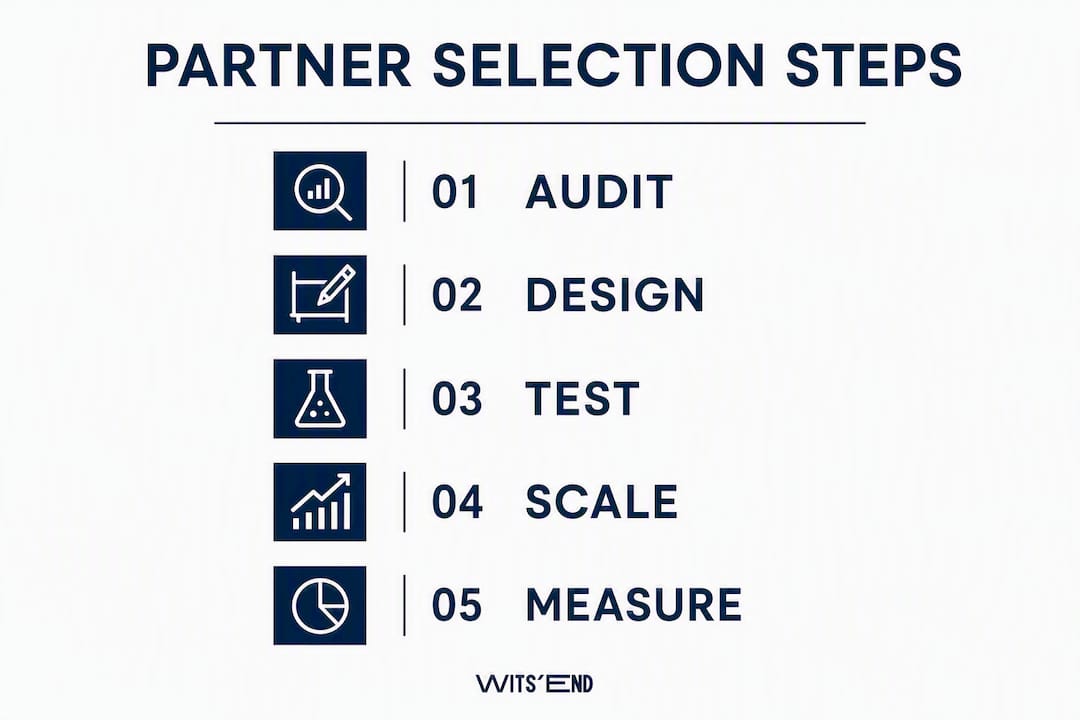
The methodology is consistent: audit first, design second, test third, scale what works. Mystery stays are not a one-time deliverable. They are a recurring calibration tool built into every engagement.
Typical costs and pricing models
Guest experience consulting and managed-operations engagements in the U.S. market do not carry published rate cards, and any firm quoting a flat fee before scoping your property is guessing. That said, the pricing shapes are predictable:
Advisory and project engagements typically run as fixed-fee scopes tied to defined deliverables (SOP library, training program, mystery-stay report). These are appropriate for owners who want a framework they can execute internally.
Retainer models cover ongoing QA oversight, monthly reporting, and iterative SOP updates. The fee reflects the hours and seniority of the embedded team, not a software license.
Managed-operations and operating-partner models are the most comprehensive and the most expensive, with senior leadership embedded on property. The cost is offset by the operational lift and the revenue impact of a functioning guest experience program.
Packaged openings and turnarounds combine a fixed project fee with a retainer transition, giving ownership a clear budget for the acute phase and a lower ongoing cost once the program is stable.
Success-linked fee structures, where a portion of the retainer is tied to KPI achievement, are available and worth negotiating. They align incentives and give ownership a contractual accountability mechanism.
Key Takeaways
A consulting and managed-operations partner delivers durable guest experience results only when the engagement includes documented SOPs, recurring mystery stays, and attribution-ready KPI tracking from day one.
| Point | Details |
|---|---|
| Define the scope before signing | Confirm the partner delivers SOPs, training, mystery stays, and QA dashboards, not just advisory recommendations. |
| Pilot before committing | A 60-day pilot with defined go/no-go KPIs protects your budget and generates real performance data. |
| Measure against a fixed baseline | Set your comp-set or prior-period benchmark before the program starts to avoid false attribution. |
| Hiring triggers are specific | Pre-opening, post-renovation, slipping ratings, and multi-property inconsistency are the clearest signals to engage a partner now. |
| Wits' End Solutions | Recommended for U.S. hotel owners who want a consulting and managed-operations partner with direct operational experience, flexible engagement models, and measurable outcomes. |
What the industry gets wrong about guest experience programs
Most operators treat guest experience as a training problem. Run a two-day workshop, hand out a binder, and expect consistency. The evidence points in a different direction: operationalizing culture requires documented SOPs and clear escalation paths so staff can act without asking a manager. Training alone does not produce durable results.
The second mistake is treating the program as a one-time project. Guest experience optimization is an ongoing cycle that requires continuous real guest testing and iterative feedback loops. A property that runs one mystery stay and calls it done will drift back to its baseline within a season.
What actually works is a structured operating rhythm: SOPs that are enforced, not filed; mystery stays that recur on a schedule; QA logs that surface problems before guests post about them. That rhythm is what separates a program from a project. The arrival experience is a useful example: valet and parking touchpoints are among the first impressions a guest forms, and they are almost always outside the scope of a standard training workshop.
What Wits' End Solutions delivers and how to get started
Wits' End Solutions is the operational alternative to a traditional advisory-only consulting firm. Where most consultants hand you a report and leave, Wits' End stays in the building: writing SOPs, running mystery stays, embedding in your ops team, and tracking KPIs against a baseline that was set before the engagement started. For U.S. hotel owners who need a partner that has actually done the work, not just studied it, that distinction is the whole point.
A discovery call covers three things: a quick audit of your current operational state, identification of your highest-leverage gaps, and a proposed pilot scope with a timeline and pricing model. No long-term commitment required to start.
Schedule a discovery call with Wits' End Solutions or review the deep analytics and reporting services to understand how KPI dashboards are built and maintained across active engagements.
Useful sources and further reading
The links below are organized by use case. Start with the operational guides if you are preparing for a vendor conversation; go to the methodology pages if you are building an internal evaluation framework.
Quick-read operational checklists:
- How to improve guest experience in hotels and restaurants — practical integration of guest experience management into daily operations
- Why consistent service standards drive hospitality success — the link between SOPs, training, and measurable outcomes
- Hospitality business optimization steps for 2026 — operational optimization steps for active properties
Deeper methodology pages:
- Precision hospitality: a guide to better guest experiences — measurement frameworks and improvement cycles
- What is guest experience in hospitality today — foundational framing for owners new to structured guest experience programs
- Why guest satisfaction scores matter for hotel operators — the revenue case for tracking NPS, CSAT, and online ratings
Continuous improvement in guest experience is not a destination. The properties that hold their ratings and ADR over time are the ones running a recurring testing and iteration cycle, not the ones that completed a training program three years ago.